
Grinding Dynamics
Concrete Grinding in Tauranga
Approved PeterFell C2 Applicator
Approved TextureSafe Applicator
Twenty-Five Years Combined Experience
Concrete grinding
Pre-visit fast track questionnaire
A few pertinent questions about your slab and space.
Step 1 of 6
Grinding is the first operation on almost every floor we deliver, and on many projects it is the only one required. Grinding Dynamics grinds concrete across Tauranga for builders, developers, commercial tenants and homeowners.
The work covers preparation grinding before a coating goes down, corrective grinding to flatten a slab, removal grinding to strip glue, paint or coatings, and finish grinding where the concrete itself becomes the floor.
Preparation grinding
Coatings fail on contaminated concrete. Curing compound, laitance, form oil and old adhesive all sit between the coating and the slab, and no product bonds through them. Grinding takes the surface back to clean concrete and opens the pore structure so the coating can key in.
For epoxy, polyurethane and vinyl installs we grind to the surface profile the manufacturer specifies, then vacuum the floor clean before handover to the coating crew. Getting the profile right is the difference between a floor that lasts and a floor that lifts in eighteen months.
Corrective and removal grinding
Trowel ridges, cold joint steps and slab humps can be ground flat where the tolerance is within reach. We measure the deviation first and tell you plainly whether grinding will solve it or whether a topping is the better answer.
Removal work covers carpet and vinyl adhesive, thin coatings, paint, levelling compound and surface laitance. Tauranga has a large stock of nineteen seventies and eighties slabs under carpet, and most of them come up well once the adhesive is off.
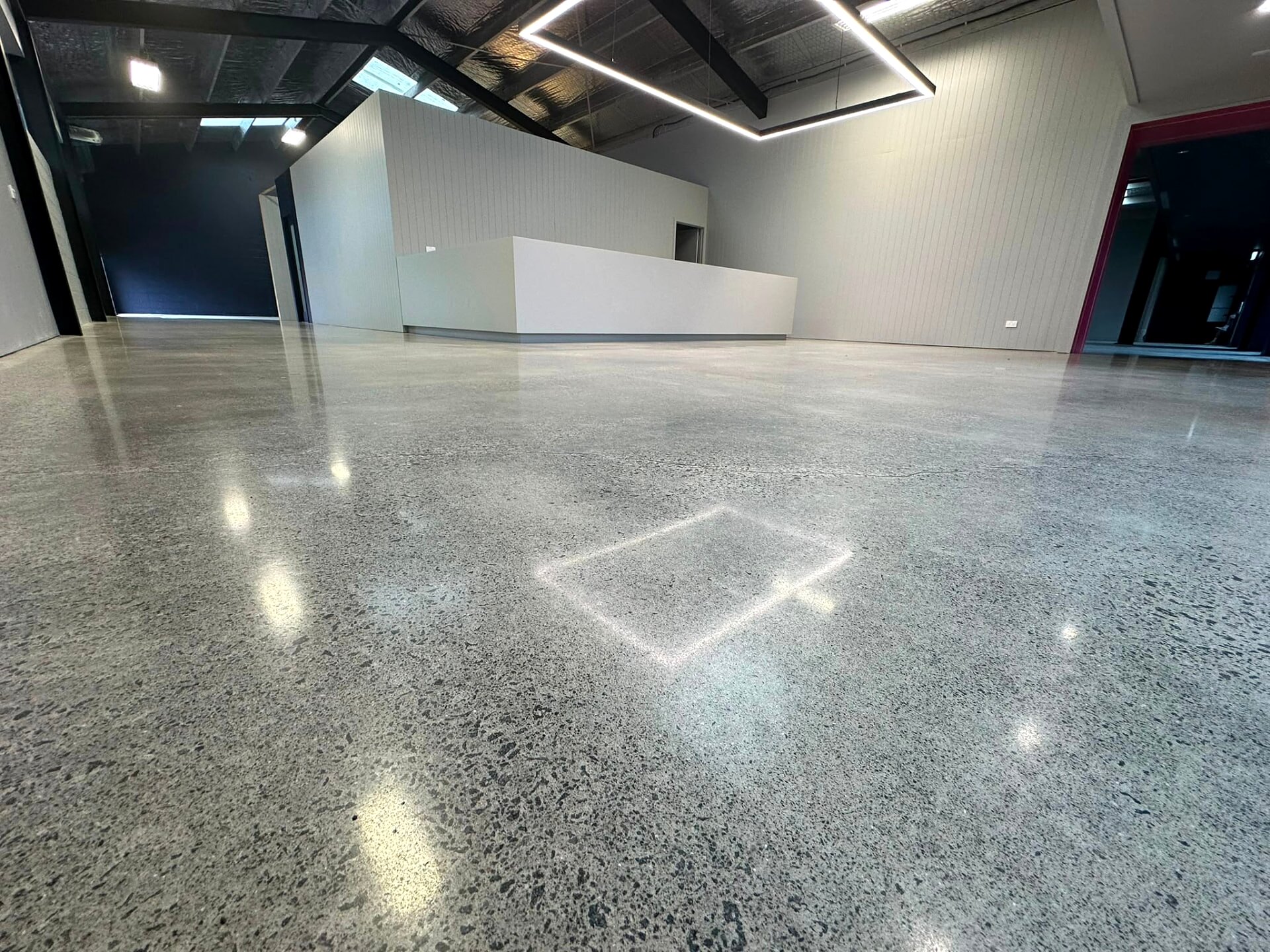
Grinding opens the surface. It does not cover it.
Dust and site control
All grinding is run with extraction at the head. Dust is captured at the point it is made rather than chased around the room afterwards, which keeps the work viable inside occupied buildings and tenanted commercial spaces.
On staged commercial jobs we work in sections around trade access so the rest of the building keeps operating. On residential sites we seal doorways and protect adjacent finished surfaces before the first pass.
Grinding as a finished floor
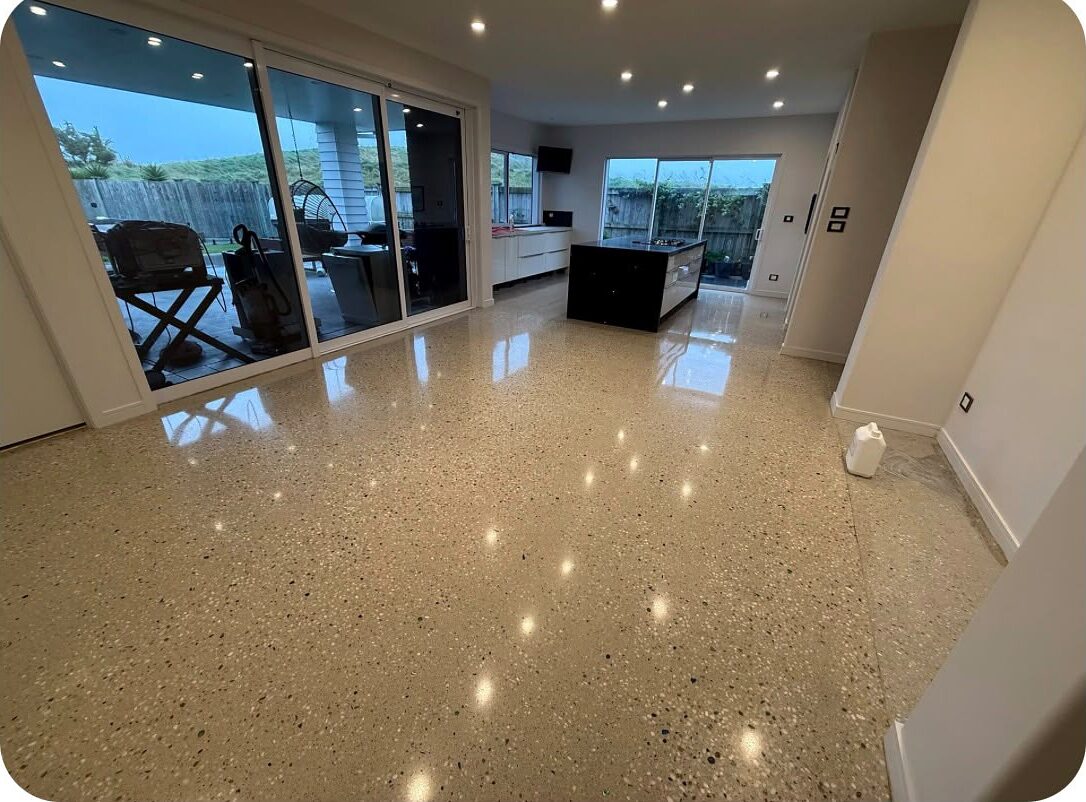
Where the slab is sound, grinding can stop at a matte ground finish and be sealed as it is. That is a common choice for garages, workshops, sheds and utility areas where the aggregate look is wanted without a polished sheen.
If you want the floor taken further, the same grind becomes the first stage of a polished finish. Nothing is wasted by deciding at that point rather than at the start.
Common questions
How soon after the pour can a slab be ground?
A minimum of 28 days from the date of pour, which is a curing requirement. Existing slabs can be ground at any time. Provide the confirmed pour date when programming the works.
Will grinding remove carpet glue?
Yes. Adhesive removal is routine work. Very thick or rubbery adhesives take more passes, which we account for after inspecting the floor.
Do you grind garage and workshop floors?
Yes. A ground and sealed garage floor is one of the most common jobs we do around Tauranga, and it holds up well to tyres and oil.
How much dust does grinding create?
Very little escapes. Extraction runs at the grinder head throughout, which is why we can work inside occupied homes and tenanted buildings.
A test grind on your slab beats any photograph of a floor.
Site assessment and written quote, no obligation.

Send us the slab details and we will tell you what grinding will achieve.
Site assessment and written quote, no obligation.