
Existing slabs
Rejuvenate your space
The floor you already have is usually the floor you want. Under the glue, the old sealer and years of product, there is sound concrete waiting to be cut back and closed.
Approved PeterFell C2 Applicator
Approved TextureSafe Applicator
Twenty-Five Years Combined Experience
Rejuvenation
Pre-visit fast track questionnaire
A few pertinent questions about your slab and space.
Step 1 of 6
Dull is not worn
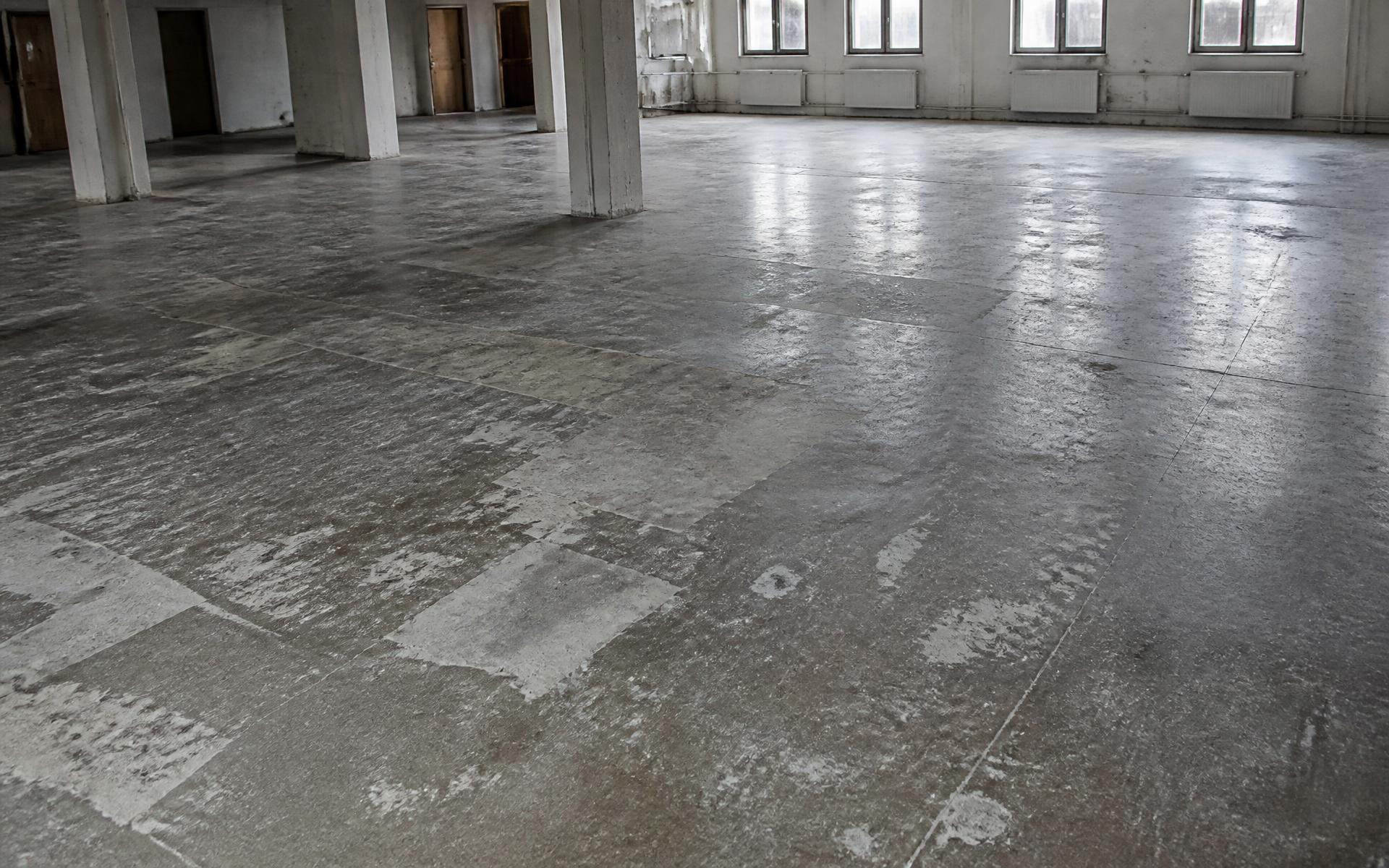
A floor that has gone flat and grey is usually not worn out. It is covered. Old sealer, wax, glue residue, curing compound and years of supermarket floor product build a film on top of the concrete, and the film is what you are looking at.
Grinding takes that layer off and reaches sound concrete underneath. What comes back is not a coating that looks like concrete. It is the slab itself.
Most tired floors are coated, not damaged.
What we can lift
Glue and carpet tack residue after floor coverings come up. Failed paint and epoxy. Old surface sealers that have yellowed or peeled. Light staining and surface marking. Trowel lines and high spots left from the original pour.
Existing cracks can be filled and made sound, though they remain visible. Repairs and patches will not match the surrounding floor exactly. We say so before the work rather than after it.
The process on an existing slab
We grind a test patch on site first, so the decision about depth is made on your own concrete rather than on a photograph. From there the floor is ground in progressive steps to the agreed depth, densified and sealed.
There is no curing wait on an existing slab. The 28 day minimum concrete age applies only to a new pour.
No 28 day wait. An existing slab can be ground at any time.
Coloured concrete
Colour cannot be added to a slab that is already down. It goes into the mix at the pour, so an existing floor is rejuvenated in the colour it was poured in.
What can change is depth and sheen. Cutting deeper brings up more aggregate and shifts the character of the floor considerably, and the sheen level changes how the colour reads under light.
When it is not worth it
Thin toppings and screeds will not take grinding. Slabs with inadequate cover over reinforcement or services limit how deep we can go. Heavy oil and diesel contamination carries into the concrete and can remain visible after grinding. Structural cracking is a structural question first.
Where any of that applies we say so at the assessment. A floor that should not be ground is a floor we do not quote.
We will tell you when the answer is no.
Most tired floors are not worn out. They are covered.
Before and after
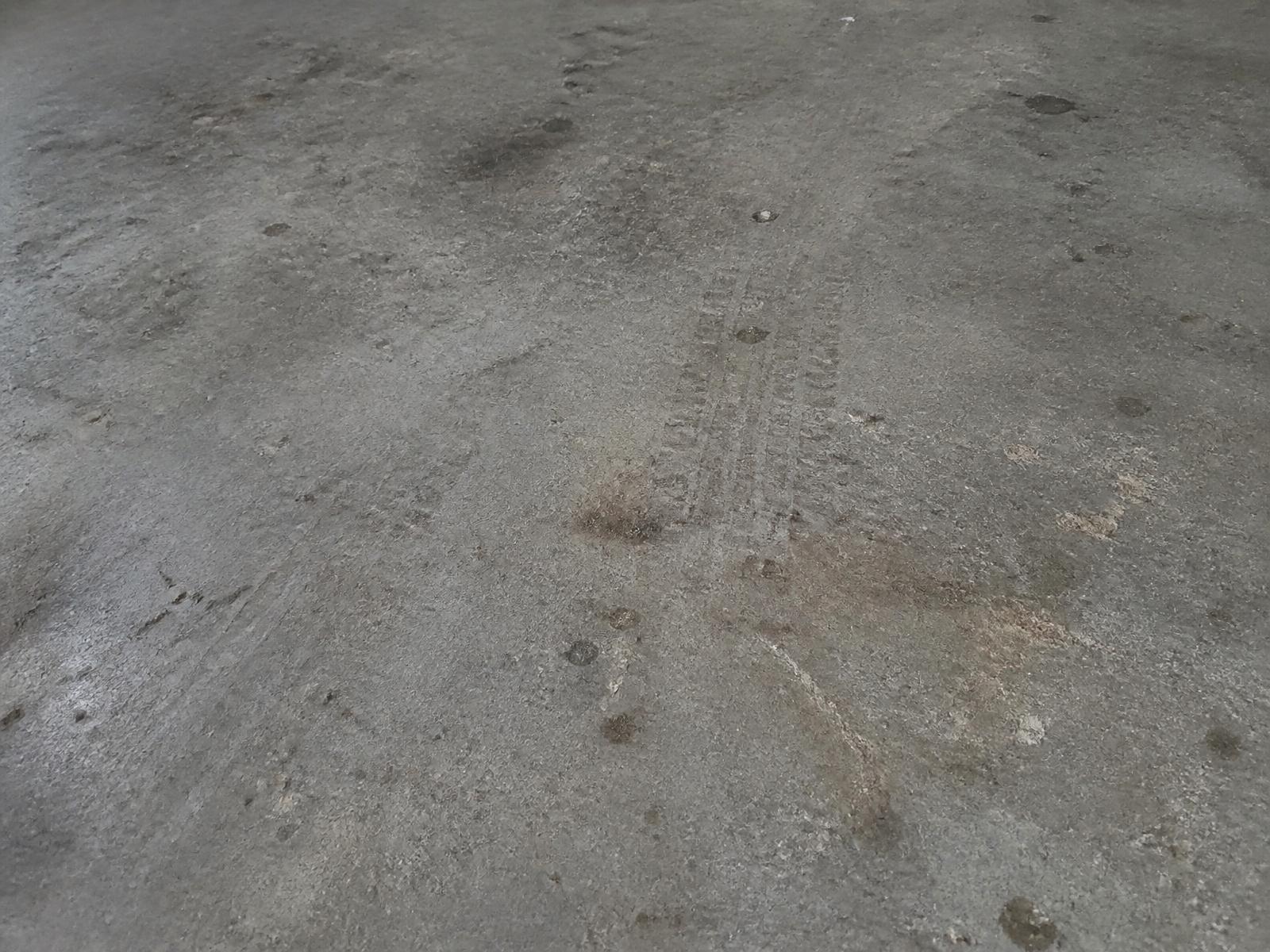
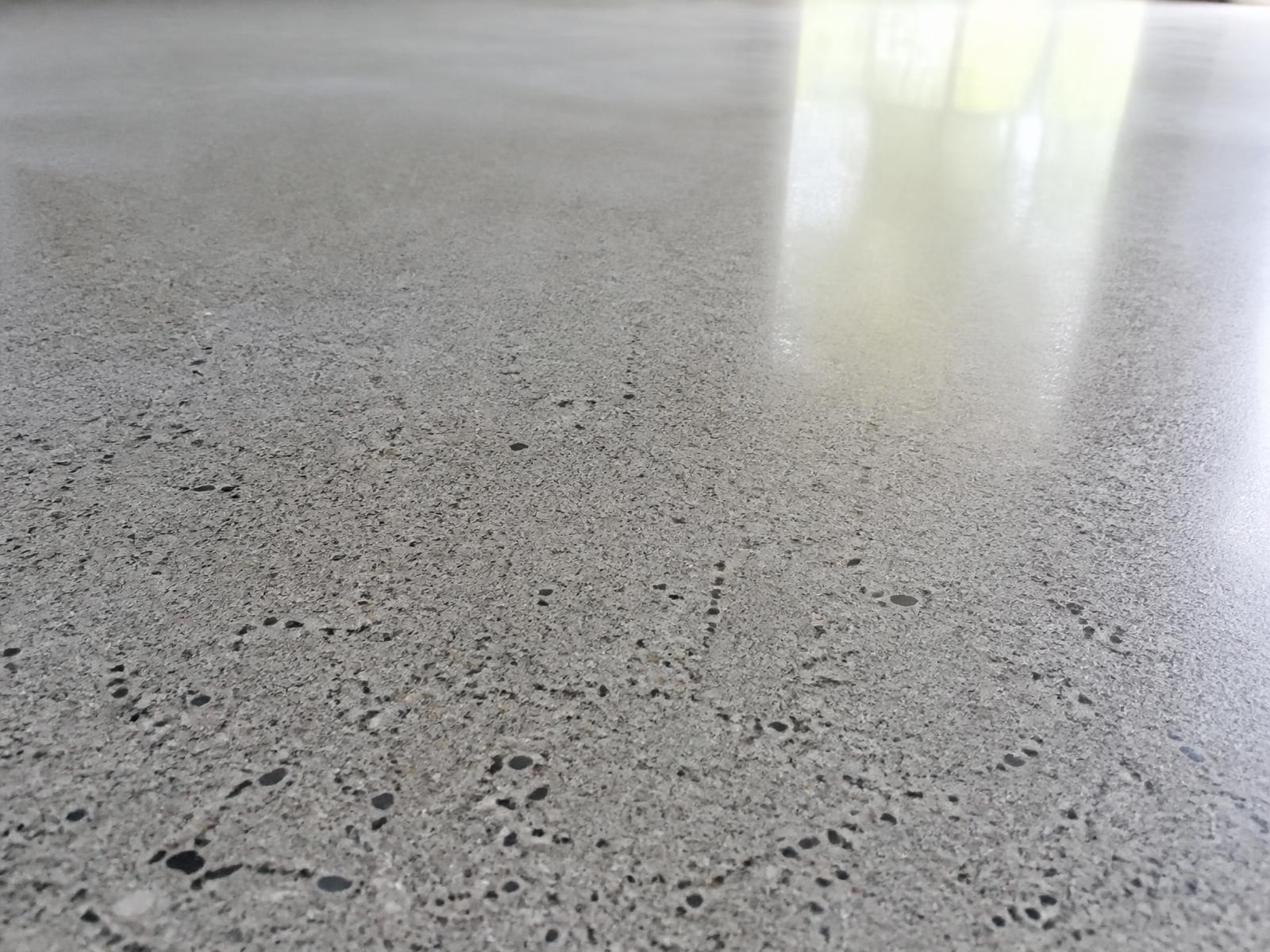
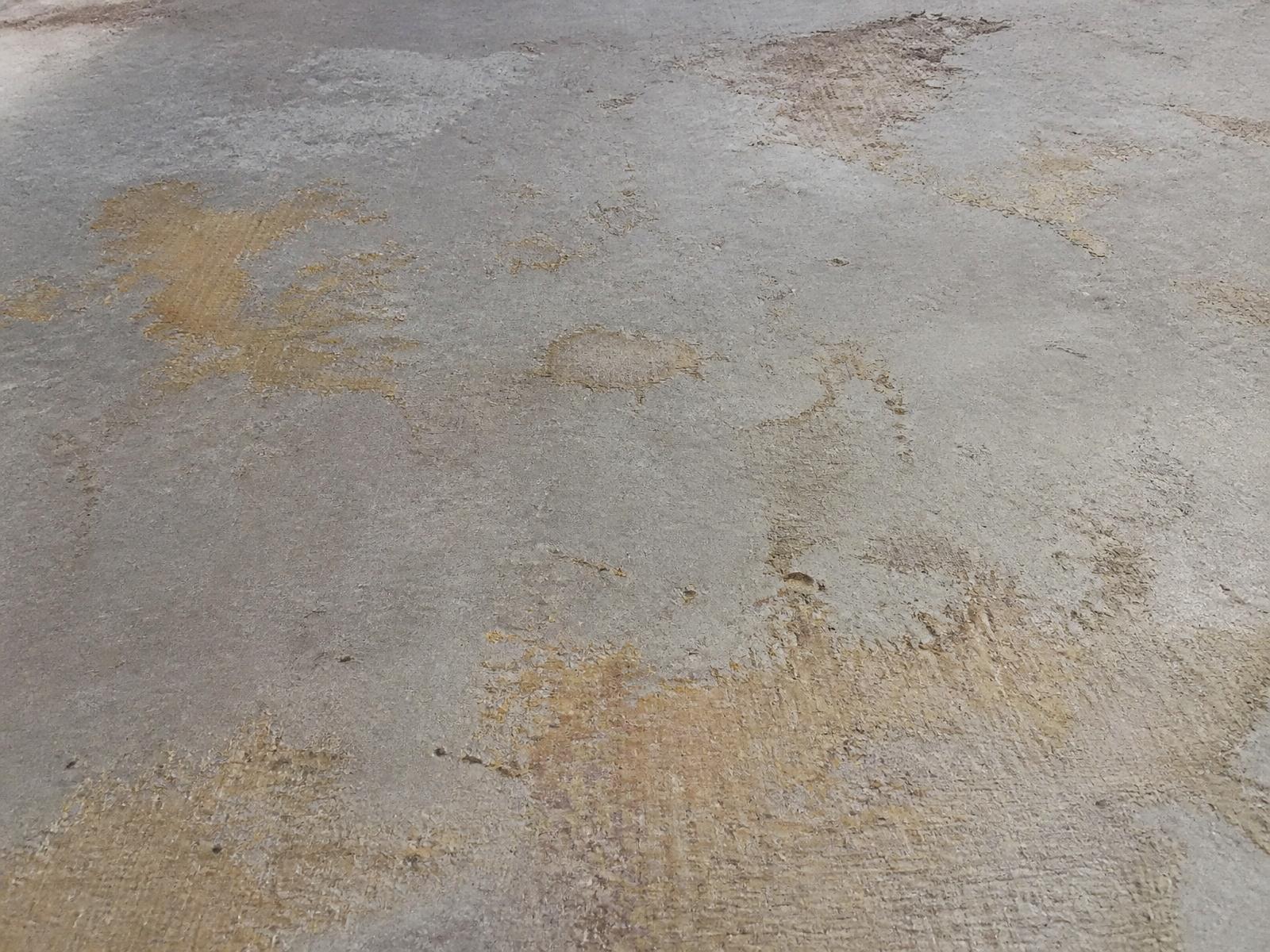
The same slab, before the first pass and after the final cut and seal.
Before
Garage floor. Dusting surface, tyre marking and old staining.
After
Ground to a salt and pepper exposure, densified and sealed.
Before
Interior floor. Glue residue and patchy discolouration after covering removal.
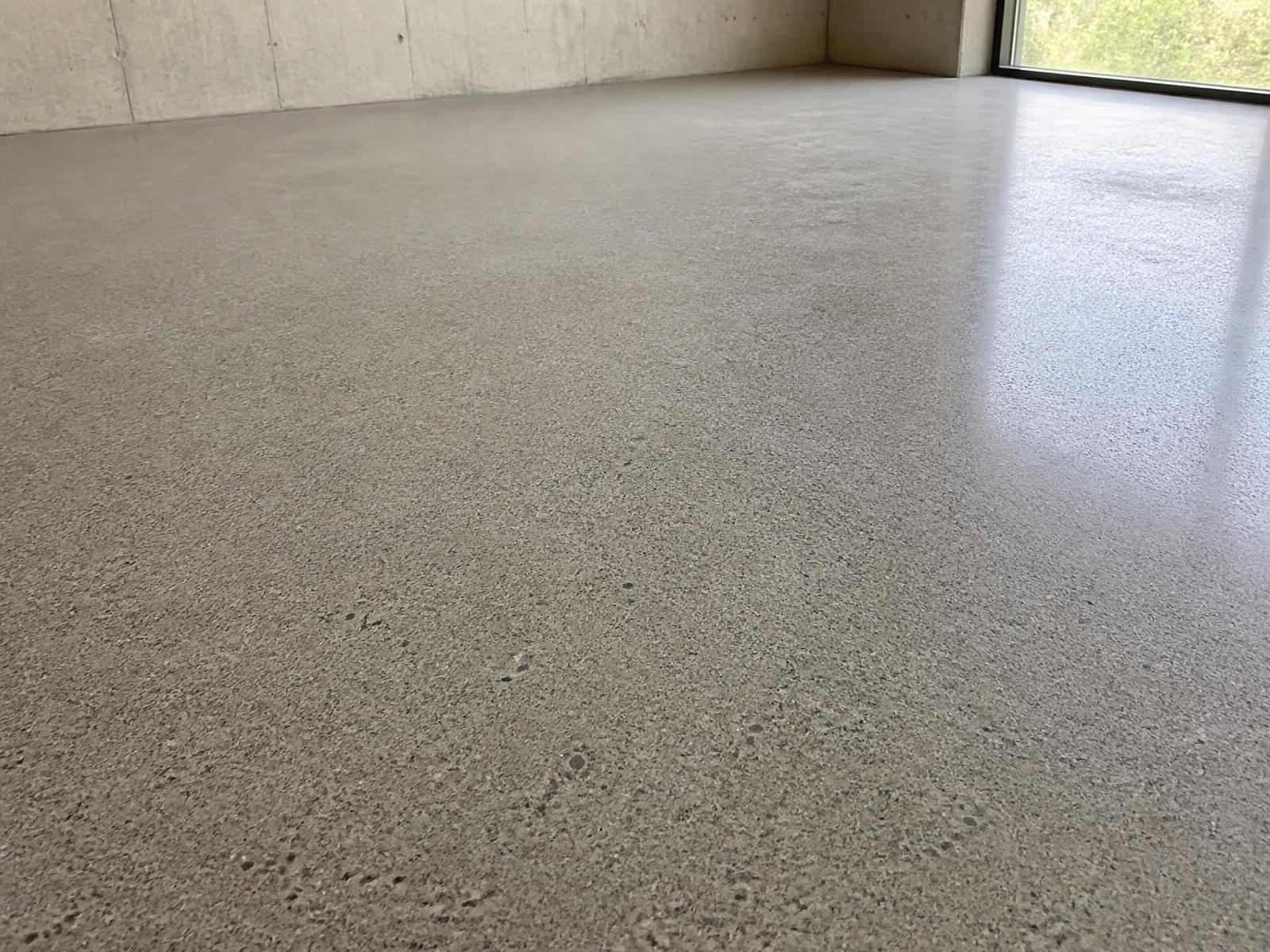
After
Residue ground off, honed to an even surface and sealed.
Imagery on this page is indicative. Client project photography is being collected and will replace these pairs.
Suitability
What we look at first
- Suits
- Sound slabs with adequate thickness and cover
- Suits
- Floors under old glue, paint, sealer or floor coverings
- Suits
- Garages, warehouses, retail floors and tired interiors
- Limits
- Thin toppings, screeds and overlays, which will not take grinding
- Limits
- Deep oil and diesel contamination, which can remain visible
- Limits
- Structural cracking, which is assessed before anything else
Common questions
Can an existing concrete floor be polished?
Usually yes, if the slab is sound and thick enough. We grind a test patch on site to confirm what is under the surface and what depth the floor will take before anything is quoted.
Do I have to wait 28 days?
No. The 28 day minimum concrete age applies to a new pour, because the slab has to reach strength before the aggregate cuts cleanly. An existing slab can be ground at any time.
Can you take up carpet, vinyl or tiles?
Yes. Removal and glue residue grinding is part of the work. Tell us what is down now and we will include it in the quote rather than treating it as a variation.
Can you change the colour of my existing floor?
No. Colour goes into the mix at the pour. On an existing slab what we change is depth of cut and sheen, both of which alter how the floor reads considerably.
Will the cracks disappear?
No. Cracks can be filled and made sound but they remain visible, and so do control joints and saw cuts. That is the nature of the material rather than a fault in the work.
Send us a photo of the slab and we will tell you what is under it.
Site assessment and written quote, no obligation.

An existing floor can be assessed on site with a test patch before you commit.
Site assessment and written quote, no obligation.