
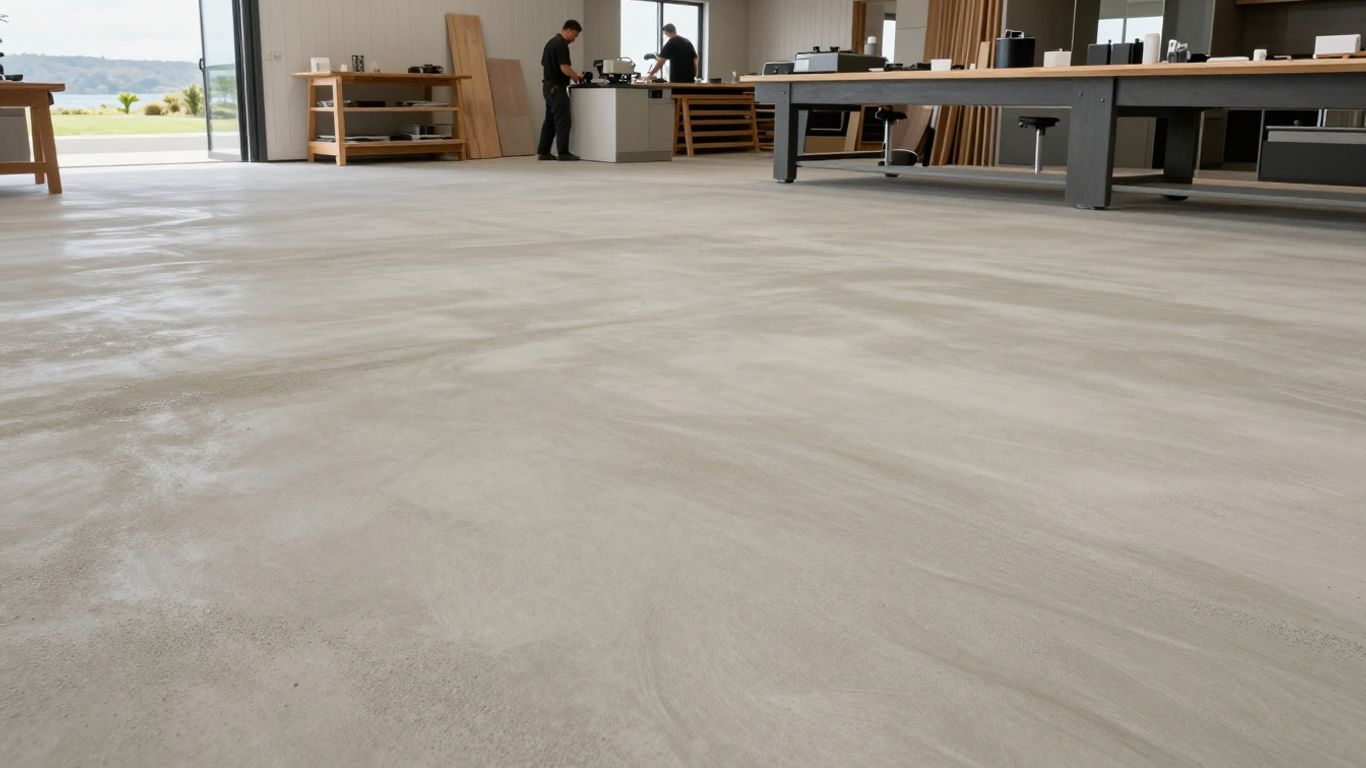
Concrete grinding Tauranga: A complete guide to smoother, safer concrete floors
Concrete grinding Tauranga guide: costs, process, finishes, preparation, and care for smoother concrete floors.
Published 8 September 2026
Key Takeaways
Concrete grinding can correct surface problems, prepare a slab for another finish, or reveal concrete as the finished floor. The final result depends heavily on the slab, the tooling, the intended finish, and the quality of preparation.
- Grinding removes or reduces surface imperfections using diamond tooling.
- Existing concrete, rather than a generic sample, determines much of the finished character.
- Costs vary with slab condition, access, edge work, repairs, and the selected finish.
- Dust control, site preparation, and clear finish decisions make the work easier to manage.
- Good cleaning, sealing, and sensible traffic protection help the surface last.
What concrete grinding involves
Concrete grinding Tauranga projects can range from removing a thin layer of contamination to correcting a more substantial surface problem. The work is not simply a cosmetic pass over the floor: it changes the concrete surface through controlled abrasion. The right depth and finish depend on what is already in the slab and what the space needs to do afterward.
How diamond grinding removes surface imperfections
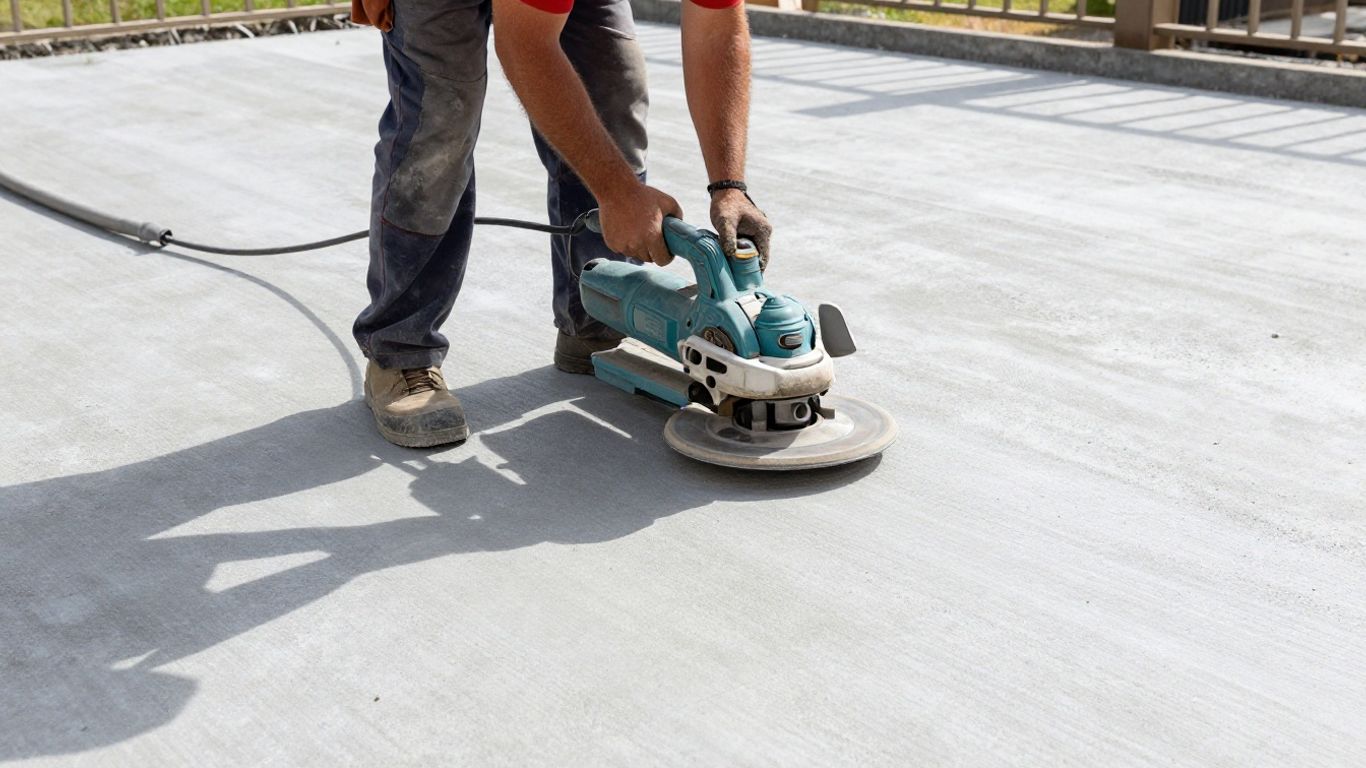
A grinder uses rotating diamond tooling to abrade the upper layer of concrete. Coarser tooling cuts more aggressively, while finer tooling refines the surface and reduces visible marks from the earlier stages. This can expose sound concrete beneath glue, paint, old sealer, laitance, or shallow surface damage.
The operator normally works progressively, checking the slab as material is removed. The slab sets the limits: grinding can improve a surface, but it cannot erase every crack, joint, color variation, or deep repair without changing the floor more substantially.
When grinding is different from polishing
Grinding is often a preparation or correction stage. It may leave a flat, clean, suitably keyed surface for flooring or another finish, without taking the concrete through the finer stages associated with a polished floor.
Polishing continues through progressively finer abrasives and may include densification and sealing. A polished floor is still the concrete slab itself, not a coating laid over it. The chosen sheen, depth of cut, and degree of aggregate exposure are separate decisions, so “ground” and “polished” should not be treated as interchangeable terms.
Concrete issues the process can correct
Grinding may reduce raised edges, remove adhesive residue, take off old coatings, and smooth minor surface irregularities. It can also help prepare concrete where a new flooring system needs a clean and appropriately profiled base. More serious movement, structural cracking, moisture problems, or badly uneven slabs need assessment rather than a promise that grinding alone will solve them.
For a broader explanation of available concrete finishing options, consider how the desired appearance and the practical use of the room fit together. A garage, retail floor, workshop, and living area may each call for a different balance of texture, sheen, maintenance, and slip resistance.
Surfaces and areas suitable for grinding
Existing interior slabs, garages, workshops, commercial floors, and some exterior concrete areas may be suitable. Access, edges, columns, drainage, moisture, and the condition of the slab all affect the approach. Small rooms can be technically demanding when equipment has limited clearance, while large open areas may require careful staging to maintain an even result.
A site assessment is particularly useful where the concrete is old, covered, contaminated, or visually inconsistent. A test patch on the actual slab gives a more dependable indication than a photograph of another floor.
When your Tauranga property may need concrete grinding
Property owners usually consider grinding when the existing surface is getting in the way of a renovation or has become difficult to clean and use. It can be a practical alternative to removing an otherwise serviceable slab, although the condition of the concrete still has to justify that choice. In Tauranga, homes, workshops, retail spaces, and commercial buildings can all present different access and scheduling challenges.
Removing old coatings, glue, paint, and stains
Old adhesive, paint, sealer, and surface staining can prevent a new finish from bonding or make the slab look tired. Grinding removes suitable surface contaminants and opens the way for a clean assessment of the concrete underneath. Deep oil contamination, moisture movement, or staining that has penetrated far into the slab may require additional treatment.
A rejuvenation project should begin with an honest look at what is removable and what is part of the concrete’s permanent character. This is where existing slab rejuvenation is a useful reference for owners deciding whether restoration is realistic.
Leveling uneven slabs and trip hazards
Grinding can reduce localized high spots and raised edges, including some uneven transitions that create trip concerns. It is not a substitute for correcting a slab that has settled, moved, or failed structurally. The contractor should identify whether the problem is a removable high point or evidence of a deeper issue before setting expectations.
Edges, joints, doorways, and transitions deserve particular attention because a broad machine may not reach them in the same way as the main floor. The final result should be judged across the whole walking area, not only in the open center of the room.
Preparing concrete for new flooring
A clean, sound, appropriately profiled slab can give a new flooring system a better starting point. Grinding may remove laitance, loose material, old adhesive, or incompatible finishes, but the required profile depends on the product that will follow. The flooring manufacturer’s preparation requirements should be confirmed before work begins.
Preparation also provides a chance to identify moisture, cracks, joints, and repairs. Resolving those issues early is usually less disruptive than discovering them after the next floor has been installed.
Improving the appearance of worn concrete
Worn concrete can have dull traffic lanes, patchy color, trowel marks, or layers of old treatment. Grinding may reveal a more coherent surface, but natural variation in aggregate and color will remain part of the floor’s character. A deeper cut can expose more stone and change the appearance, while a lighter treatment may preserve more of the existing surface.
The most useful decision is often made with a sample area on the customer’s own slab. It shows how the actual mix, aggregate, repairs, and previous use respond to the proposed depth and refinement.
The concrete grinding process from assessment to finish
A well-managed project is a sequence of decisions rather than one machine pass. Assessment establishes what the slab can reasonably deliver, tooling controls how quickly material is removed, and finish selection determines how far the process continues. Good communication also matters because access, dust, noise, and occupied spaces can affect the schedule.
Inspecting the slab and identifying problem areas
The first inspection should cover slab age, flatness, cracks, joints, contamination, previous coatings, repairs, moisture concerns, and access. It should also identify edges, steps, drains, columns, and areas where hand work may be needed. For new concrete intended for polishing, timing matters; concrete is generally allowed a minimum 28 days to cure before polishing work is undertaken.
A test patch can clarify the likely depth of cut, aggregate exposure, color variation, and response to refinement. That small piece of evidence is more useful than treating a catalog image as a guarantee of the finished floor.
Selecting the right grinding equipment and diamond tooling
Tooling is selected according to the material to be removed and the condition of the slab. Coarse diamonds are suited to heavier removal, while successive grades refine scratches and prepare the surface for a smoother or polished finish. Equipment size, edge tools, and access also influence the method.
The process described by concrete grinding specialists may include preparation, corrective, removal, and finish grinding, with dust-controlled work used to reduce disruption in occupied buildings. The exact tooling plan should still be based on the site rather than assumed from the room’s size alone.
Managing dust, noise, and site access
Grinding is mechanical work, so it produces noise, vibration, and debris unless carefully controlled. Dust extraction, suitable barriers, planned equipment routes, and regular cleanup help protect adjacent rooms and workers. Occupied buildings may need work staged around staff, customers, residents, or other trades.
Before booking, confirm where equipment can enter, whether power is available, how waste will be removed, and which areas need protection. A clear access plan can prevent delays that have nothing to do with the concrete itself.
Choosing between a smooth, honed, or polished finish
A smooth ground finish may be enough for preparation or a utilitarian area. A honed finish generally involves finer refinement with a relatively low sheen, while a polished finish continues further toward a more reflective surface. Texture may be the better choice where wet grip is more important than visual smoothness.
The finish should match use, lighting, cleaning expectations, and exposure to water. For exterior steps, ramps, pool surrounds, and entryways, the TextureSafe System is documented as a texturing option designed to provide built-in grip on slippery surfaces.
Concrete grinding costs in Tauranga
There is no reliable single price for every concrete grinding Tauranga job. A simple open slab with easy access is different from a contaminated floor with adhesive, tight edges, repairs, and a higher finish requirement. A useful quote explains those differences instead of relying only on a headline rate per square meter.
Factors that influence the project price
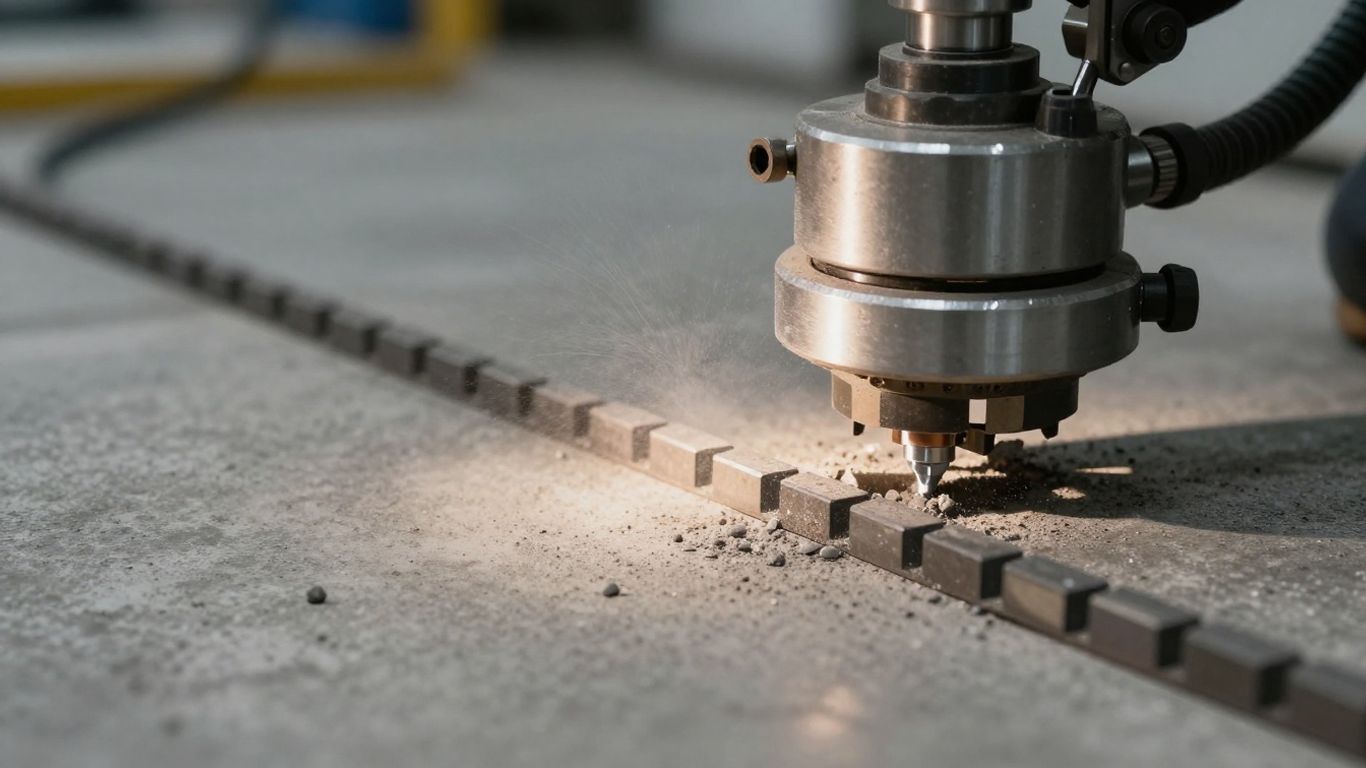
Area is only one part of the calculation. The contractor may also consider the depth of cut, existing coatings, edge work, repairs, access, dust control, waste disposal, finish level, sealing, and the amount of testing required. Small rooms can carry a higher unit cost when setup and hand work take a large share of the project.
The guide to polished concrete costs is useful when comparing allowances for slab condition, sheen, sealer, edge work, and preparation. Those categories help a property owner see what is included and what may become a variation.
How slab condition affects labor and materials
A hard, sound slab may need less removal than one covered in thick adhesive or multiple layers of paint. Cracks, failed repairs, soft areas, unevenness, and contamination can add preparation steps. If the slab requires deeper grinding to reach a consistent surface, tooling wear and labor time may also increase.
Natural variation matters financially as well as visually. A client seeking a particular aggregate exposure or sheen may need test grinding and additional refinement before approving the final direction.
Comparing grinding with replacement or resurfacing
Grinding can preserve an existing slab when the underlying concrete is sound, which may reduce demolition and disposal. Replacement may be more suitable when the slab has major movement, structural failure, severe settlement, or problems that cannot be corrected at the surface. A topping or other resurfacing approach may be worth discussing when the existing concrete cannot provide the required appearance or level.
The comparison should include downtime, access, waste, moisture, repairs, and the finish expected at the end. The cheapest initial method is not always the least disruptive choice once those items are included.
Questions to ask when reviewing a quote
A written quote should make the proposed process understandable. Ask whether the price includes preparation, edge work, dust control, cleanup, repairs, sealing, waste removal, and a test patch. Also ask what assumptions apply if the slab reveals unexpected contamination or damage.
These questions help separate a realistic scope from an attractive but incomplete number:
- What depth of grinding and finish level are included?
- How will dust, noise, access, and occupied areas be managed?
- Are cracks, joints, edges, and repairs included or priced separately?
- What sealer, curing period, cleanup, and handover information are provided?
The answers should be specific to the property. If a quote cannot explain how the slab will be assessed, it is difficult to compare it fairly with another proposal.
How to choose a concrete grinding contractor
The right contractor should be able to discuss limitations as comfortably as possibilities. Look for evidence of work on similar slabs, a clear preparation method, appropriate equipment, and a sensible explanation of the proposed finish. Local experience can help with access, weather, scheduling, and the practical realities of Tauranga properties.
Checking local experience and relevant project examples
Ask to see projects with a similar use, size, slab age, and finish. A polished interior, a workshop preparation grind, and a wet external walkway do not demand the same treatment. Examples should be accompanied by an explanation of the slab condition and the work carried out, not presented as a promise that another floor will look identical.
Experience across ground, polished, sealed, textured, and rejuvenated surfaces can be useful when the correct solution is not obvious at the outset. The contractor should still recommend only the process that fits the actual site.
Confirming insurance, equipment, and safety practices
Confirm that the contractor carries appropriate insurance and has equipment suited to the area and removal required. Ask how electrical leads, extraction, barriers, ventilation, and personal protective equipment will be managed. Safety planning is especially important in occupied buildings and around other trades.
The business should also be willing to explain who is responsible for isolating services, protecting adjoining finishes, and keeping people away from active work zones. Clear responsibility reduces confusion once the project starts.
Evaluating preparation, cleanup, and dust-control methods
Preparation is often where the quality of the final result is decided. Find out whether the contractor will clean the slab, remove incompatible materials, complete a test patch, protect nearby surfaces, and inspect the floor between stages. Dust control should be described as a practical system, not just a general assurance.
Cleanup should include the work area and any agreed adjacent spaces. Ask how equipment will be moved through the property and how collected dust and waste will be handled at the end of each shift.
Comparing warranties, timelines, and customer reviews
Reviews can reveal punctuality, communication, and cleanup, but they should not replace a technical discussion about your slab. Compare the proposed timeline, curing or drying requirements, sealer information, maintenance guidance, and what happens if hidden damage is found.
A sensible contractor explains natural variation and the limits of surface grinding before work begins. That honesty is more valuable than a guarantee based on a photograph or an unrelated project.
Preparing your site for concrete grinding
Site preparation protects belongings, keeps the work moving, and gives the contractor room to inspect the floor properly. It is worth agreeing on responsibilities before the start date, particularly where a home or business remains occupied. A few practical decisions can prevent avoidable labor and delays.
Clearing furniture, vehicles, and stored materials
Remove furniture, vehicles, shelving, loose tools, stock, and stored materials from the work zone unless the quote specifically includes moving them. Items left nearby can collect dust or restrict the machine’s path. Fragile objects should be moved farther away because grinding creates vibration and ongoing site activity.
If a garage or commercial room cannot be emptied completely, identify a clear working area and discuss whether staged sections are possible. The contractor can then plan edges and transitions rather than discovering obstructions on the first day.
Identifying plumbing, electrical, and structural concerns
Tell the contractor about floor outlets, drains, underfloor services, expansion joints, cracks, previous repairs, and any known moisture issue. Grinding should not begin over uncertain services or unstable concrete without a suitable plan. Structural concerns belong with the appropriate building professional rather than being treated as a surface defect.
Marking sensitive areas and sharing drawings or prior repair information can make the initial assessment more accurate. It also helps avoid assumptions about what lies beneath the slab.
Planning around access, ventilation, and occupied spaces
Agree on entry routes, loading areas, working hours, ventilation, noise limits, and temporary closures. Residents, staff, customers, and other trades need to know which paths will be unavailable. Doors and nearby finishes may need protection, while ventilation must be balanced with dust containment.
For larger projects, dividing the work into zones may keep essential areas operating. The schedule should allow time for setup, grinding, cleanup, and any sealer or curing requirements rather than counting only machine hours.
Confirming the desired finish before work begins
Decide whether the goal is preparation, a smooth ground surface, a honed appearance, a polished finish, or a textured surface for wet grip. Discuss depth of cut, aggregate exposure, sheen, color expectations, sealer, and maintenance before the first full pass. If the slab is existing, approve a test patch where possible.
For a polished project, polished concrete guidance explains why color and aggregate originate in the concrete mix while depth of cut and polish level are later decisions. That distinction prevents an owner from expecting grinding to add a new color that was never present in the slab.
Caring for concrete after grinding
After grinding, the floor needs suitable cleaning and protection while the chosen finish settles into service. Maintenance is usually straightforward, but the right approach depends on whether the concrete is left ground, polished, sealed, or textured. Traffic, grit, water, oil, and cleaning chemicals all influence how quickly the surface shows wear.
Cleaning methods that protect the finished surface
Use a soft dust mop, vacuum, or clean microfiber mop to remove abrasive grit before it is walked across the floor. Follow with a pH-neutral cleaner appropriate for the sealer or finish, and avoid harsh chemicals unless the product manufacturer approves them. Spills should be dealt with promptly, especially on porous or lightly protected concrete.
A cleaning routine should reflect the space. A busy workshop may need more frequent grit removal than a lightly used interior, while an exterior area needs attention to leaves, sand, and standing water.
Sealing options for stain and moisture resistance
Sealing can help protect suitable concrete from stains and moisture, but the product must match the environment and the finish. Interior floors, driveways, patios, and areas exposed to salt or oils may need different approaches. Preparation before sealing is critical because trapped dust, moisture, or contamination can affect penetration and appearance.
For guidance on concrete sealing solutions, consider the environment, the likely contaminants, and whether the surface needs a particular visual effect as well as protection. Sealer is not a cure for a weak slab or unresolved moisture movement.
Preventing scratches, marks, and surface wear
Use entrance mats where grit is carried indoors, add protective pads beneath furniture, and avoid dragging heavy items across the floor. Lift equipment when possible and use suitable wheels for polished or sealed surfaces. Exterior areas benefit from keeping sand and debris from accumulating in traffic paths.
Scratches and dull patches are often linked to abrasive dirt rather than a failure of the concrete itself. Early, simple protection can therefore reduce the need for later refinishing.
Knowing when maintenance or recoating is needed
Signs of wear include recurring staining, reduced water resistance, visible traffic lanes, loss of sheen, or areas where the sealer has thinned. The response may be a deeper clean, a maintenance coat, localized repair, or renewed grinding and refinement. Do not apply a new product over an uncertain old sealer without checking compatibility.
Keep records of the finish, sealer, cleaning products, and installation date. That information gives the next contractor a better starting point and makes future maintenance less speculative.
Conclusion
A successful concrete grinding Tauranga project begins with the slab rather than a stock image or a fixed promise. Careful assessment, suitable diamond tooling, realistic finish decisions, controlled preparation, and regular maintenance can turn an ordinary existing floor into a practical finished surface while keeping its natural variation visible.
Frequently Asked Questions
How long does concrete grinding take?
The duration depends on floor area, access, coating removal, edge work, repairs, dust control, and the selected finish. A site assessment is the best way to establish a realistic schedule.
Can grinding remove paint and adhesive?
Grinding can remove suitable surface coatings, glue, and paint, but the number of layers, their thickness, and how deeply they have bonded affect the method. Some contamination may require additional treatment.
Can every concrete slab be polished?
No. The slab’s strength, flatness, cracks, repairs, contamination, aggregate, and overall condition influence whether polishing is suitable. A test patch can help establish what the existing concrete can deliver.
Does grinding remove cracks?
Grinding can reduce raised edges and improve the surrounding surface, but it does not eliminate structural movement or every crack. Cracks should be assessed and repaired using an appropriate method.
Is polished concrete slippery when wet?
A smooth polished finish can require careful consideration in wet areas. Where grip is essential, a suitably textured finish may be more appropriate than a highly smooth surface.
How much dust does concrete grinding create?
The amount depends on the equipment, extraction, material removed, and site conditions. Proper dust-control equipment, barriers, ventilation, and cleanup can substantially reduce disruption.
How should a freshly finished concrete floor be maintained?
Remove grit regularly, clean with a suitable neutral product, deal with spills promptly, and follow the sealer manufacturer’s guidance. Periodic assessment can identify when maintenance or recoating is needed.