
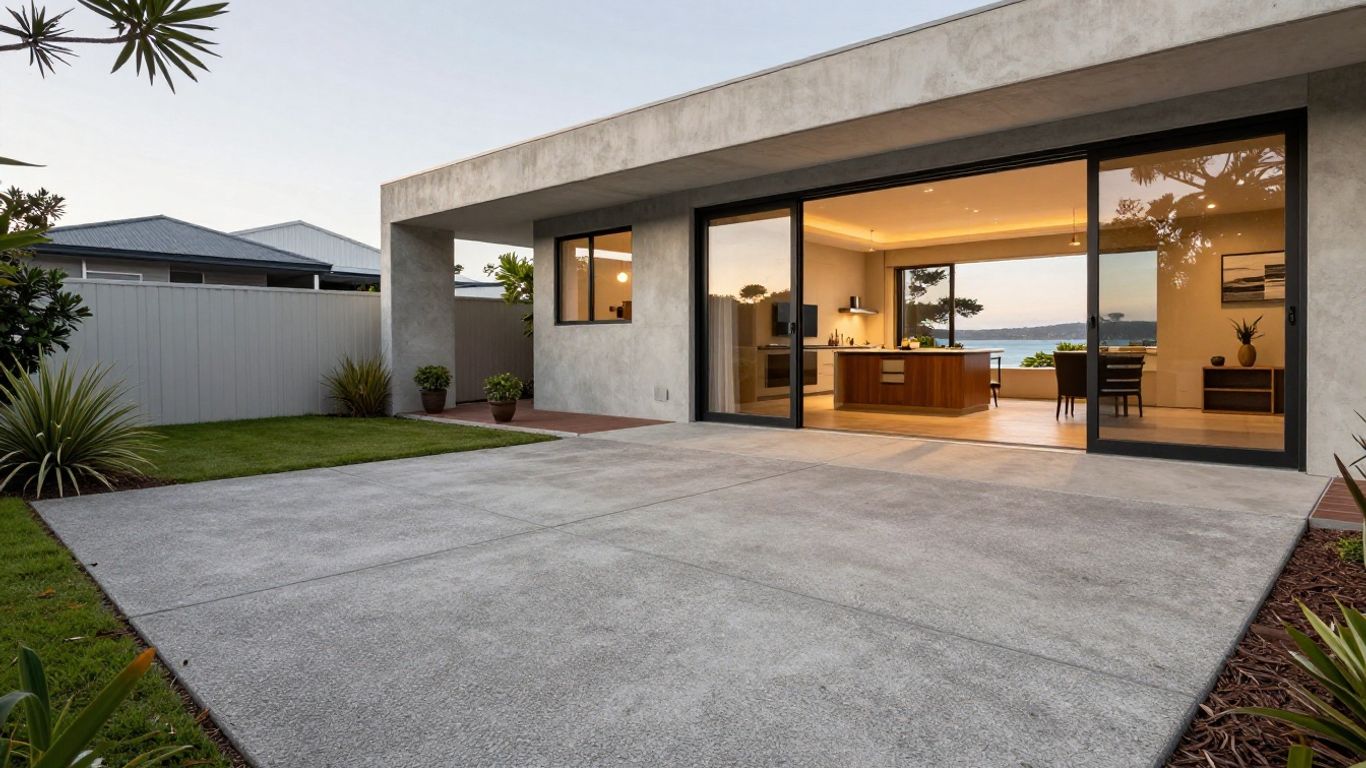
Concrete sealing Tauranga: A practical guide to protecting and restoring concrete
Concrete sealing Tauranga: choose, prepare, apply, and maintain the right concrete sealer.
Published 8 September 2026
Key Takeaways
Concrete sealing Tauranga projects need to account for the slab’s condition, the coastal environment, and how the surface will be used. A suitable sealer, careful preparation, and realistic maintenance plan matter more than gloss or colour alone.
- Sealing helps reduce water, oil, salt, and dirt penetration into suitable concrete.
- Penetrating and film-forming sealers solve different surface and appearance needs.
- Cleaning, repairs, moisture checks, and weather conditions affect sealer performance.
- Professional preparation often determines whether the finished surface looks even and lasts well.
- Maintenance and timely resealing help protect concrete from traffic, stains, UV, and coastal exposure.
Understanding concrete sealing in Tauranga
Concrete sealing is a way to protect a finished slab while keeping its existing character visible or adding a controlled surface appearance. It can be suitable for driveways, patios, paths, pool surrounds, garages, workshops, and interior floors, but the right system depends on porosity, traffic, moisture, and the desired finish. The aim is not to make every slab look identical; the existing concrete remains a major part of the result.
In Tauranga, exposed concrete may face salt air, strong sunlight, rain, sand, and frequent wetting and drying. Those conditions can gradually affect both the concrete and the sealer. Good advice starts with understanding the slab rather than choosing a product from a colour chart alone.
What concrete sealing does for different surfaces
A sealer can reduce the absorption of water and some contaminants, limit dusting, make routine cleaning easier, and alter the surface sheen. On a driveway, resistance to tyre marks, oil, and weather may be more useful than a high-gloss appearance. On an interior floor, the priorities may instead be cleanability, a natural look, or compatibility with grinding and polishing.
Sealing does not repair structural movement, make a weak slab sound, or hide every variation in the pour. A sound assessment is essential, particularly where the concrete has cracks, previous coatings, patch repairs, or signs of rising moisture.
Why Tauranga’s coastal climate affects concrete
Coastal air brings salt, while wind can carry sand that abrades exposed surfaces. UV exposure can also accelerate the ageing of some surface products, and shaded damp areas may encourage organic growth. This is why a sealer that performs well indoors may not be the best choice for an uncovered path or pool surround.
A useful local reference is this guide to coastal concrete sealing, which explains why salt air, UV, and sand exposure make sealer inspection and maintenance especially relevant. The practical lesson is simple: resealing should be based on the surface’s condition and exposure, not on a rigid calendar alone.
Signs your concrete needs sealing
Concrete may benefit from assessment when water darkens it quickly, stains are becoming harder to remove, or the surface is dusty and more porous than it used to be. Fading, patchy sheen, flaking product, and visible salt deposits can also indicate that an earlier treatment is no longer performing well. These signs are clues, not proof, because contamination and underlying moisture can create similar symptoms.
Look closely at areas exposed to vehicle fluids, splashback, irrigation, pool water, or heavy foot traffic. A small test area can reveal how absorbent the slab is and whether old product needs to be removed before anything new is applied.
Sealing compared with painting, coating, and polishing
Sealing generally protects or enhances the concrete that is already there. Painting and thicker coating systems create a more substantial layer with their own colour and wear characteristics, while polishing uses mechanical refinement to expose and smooth the concrete surface before protection is applied. These approaches should not be treated as interchangeable.
For a polished floor, the final appearance depends on the original mix, aggregate, depth of cut, and polish level as well as the sealer. A helpful overview of concrete finish choices can assist homeowners and builders in comparing those decisions before committing to a system.
Choosing the right concrete sealer
There is no single best sealer for every Tauranga slab. The choice should follow the concrete’s porosity, location, expected traffic, exposure to water and chemicals, and the appearance the owner wants to retain. A natural finish may suit one project, while another may need colour enhancement, a controlled sheen, or extra grip.
It is also worth separating appearance from performance. A glossy finish can make colour and texture more noticeable, but it may show scratches, marks, or application inconsistencies more readily than a low-sheen finish.
Penetrating sealers for moisture and salt protection
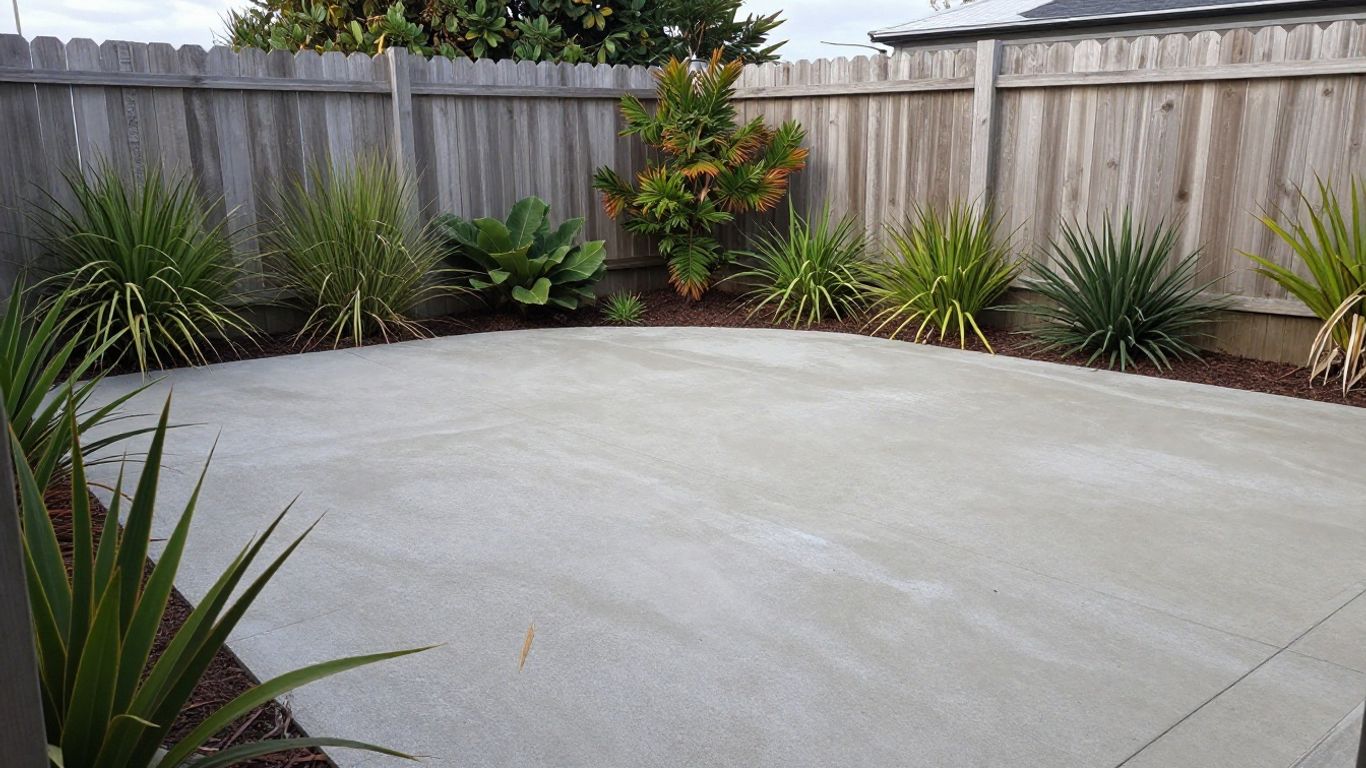
Penetrating sealers move into the pores of suitable concrete rather than leaving a prominent surface film. They may be useful where the goal is to reduce absorption while keeping the slab’s texture and natural appearance. Their performance still depends on the substrate, application rate, moisture conditions, and the particular product system.
They are not a cure for active leaks, hydrostatic pressure, or serious rising damp. Where moisture is moving through the slab, the source needs investigation before sealing, otherwise the treatment may fail or trap a problem beneath the surface.
Film-forming sealers for color and surface enhancement
Film-forming sealers sit at or near the surface and can provide a more noticeable change in sheen, depth, or colour. They may suit decorative concrete where the owner wants the aggregate or pigment to appear richer, but they also require careful preparation and an even application. Scratches, peeling, or delamination can become visible if the substrate is contaminated or damp.
The finish should be discussed in ordinary terms: natural, satin, matte, or gloss, along with how it may look when wet and dry. A sample on the actual slab is more useful than relying on a photograph of another pour.
Sealers for driveways, patios, paths, and commercial floors
An outdoor driveway usually needs a different balance from an indoor floor. Vehicle loading, turning, grit, oil, rain, and UV exposure all affect the selection, while a commercial floor may add cleaning chemicals, forklifts, abrasion, or hygiene requirements. Pool surrounds and ramps bring wet grip into the decision as well.
For floors where a polished finish is appropriate, PeterFell C2 is documented as a system used for grinding, polishing, and sealing existing slabs. That does not mean it is suitable for every surface; the slab and intended use still need to be assessed first.
Slip resistance, UV stability, and maintenance considerations
A sealer should not make a wet area unnecessarily slippery. Where grip is the main concern, a textured treatment may be more appropriate than simply adding grit to a smooth film. TextureSafe is documented for creating built-in grip on surfaces such as pool surrounds, ramps, and entryways through texturing rather than relying on a temporary coating.
Before choosing, ask how the surface will be cleaned, whether the product is suitable for UV exposure, how repairs will be handled, and what happens when the finish wears. Those questions often produce a more durable decision than focusing on initial shine.
Preparing concrete before sealing
Preparation is the part of sealing that is easiest to underestimate. Dirt, oil, algae, laitance, old product, and trapped moisture can prevent a sealer from bonding or penetrating evenly. A clean-looking surface is not necessarily a prepared surface.
The age and history of the concrete matter too. New slabs need sufficient curing, while older slabs may need grinding, repairs, or removal of previous coatings before a new system can be considered. Preparation should be matched to the intended finish, not applied as a generic sequence.
Checking whether the concrete is ready
The slab should be checked for soundness, contamination, porosity, cracking, and moisture before work begins. New concrete also needs adequate age and strength for the proposed process; polishing guidance commonly uses a minimum 28-day period before grinding, although the project conditions still need review.
Existing concrete deserves equal care. A slab may look dry at the surface while retaining moisture below, or it may have a sealer that prevents a new product from bonding. Small tests can help establish what is actually present.
Removing dirt, oil, moss, and existing coatings
Cleaning methods may include degreasing, pressure washing where appropriate, mechanical abrasion, grinding, or targeted coating removal. Moss and organic growth need to be removed rather than sealed beneath a new layer. Oil can migrate into concrete and may require more than one cleaning stage.
For difficult floors, concrete grinding and preparation can remove adhesives, old finishes, and surface imperfections while preparing the slab for a new finish. The depth and method should be controlled so that the surface is not needlessly altered.
Repairing cracks, chips, and surface damage
Minor chips, open cracks, and worn edges can affect both appearance and water entry. Repairs should be compatible with the proposed sealer and allowed to cure properly before the main application. A flexible joint should not be treated like a static crack, and movement-related damage needs a different response from simple surface wear.
Repairs will remain part of the slab’s history to some degree. The goal is a sound, serviceable surface with realistic expectations, not an assurance that every variation will disappear under sealer.
Managing moisture and weather conditions
Sealing during rain, heavy dew, high humidity, or rapidly changing temperatures can produce clouding, poor penetration, or uneven curing. Outdoor work also needs protection from wind-blown dust and nearby activity. Moisture testing and a suitable weather window are especially important in coastal conditions.
The work should be planned around the concrete, not just the contractor’s preferred date. If moisture is active or the forecast is unstable, postponing the application is usually safer than trying to force the programme.
How professional concrete sealing works
A professional sealing job is a sequence of decisions rather than a quick product application. It begins with the slab and its intended use, then moves through testing, preparation, application, and curing. Each stage affects the next one.
The finished surface may be natural, enhanced, smooth, or textured, but it should still be judged against the concrete underneath. Preparation controls performance more reliably than a sealer label by itself.
Inspection and surface assessment
The first step is to inspect the slab for age, previous treatments, cracks, stains, porosity, exposed aggregate, and areas of differing wear. The assessor should also ask how the surface will be used and what cleaning or traffic it will receive. A garage, home entry, exposed patio, and warehouse each create different demands.
Where appearance matters, a test area or sample grind can reveal how the concrete responds. This is particularly useful when the result depends on aggregate exposure or when existing staining may remain visible after preparation.
Cleaning, grinding, and preparation methods
The preparation method may range from careful cleaning to mechanical grinding or removal of an old film. Grinding can open the surface, level minor irregularities, and remove unwanted material, but it also changes the amount of concrete exposed. Dust control, access, water, and protection of nearby finishes need to be planned.
The correct level of preparation is the least that produces a clean, sound, compatible surface. Over-preparation can create unnecessary cost, while under-preparation commonly shows up later as uneven appearance or early failure.
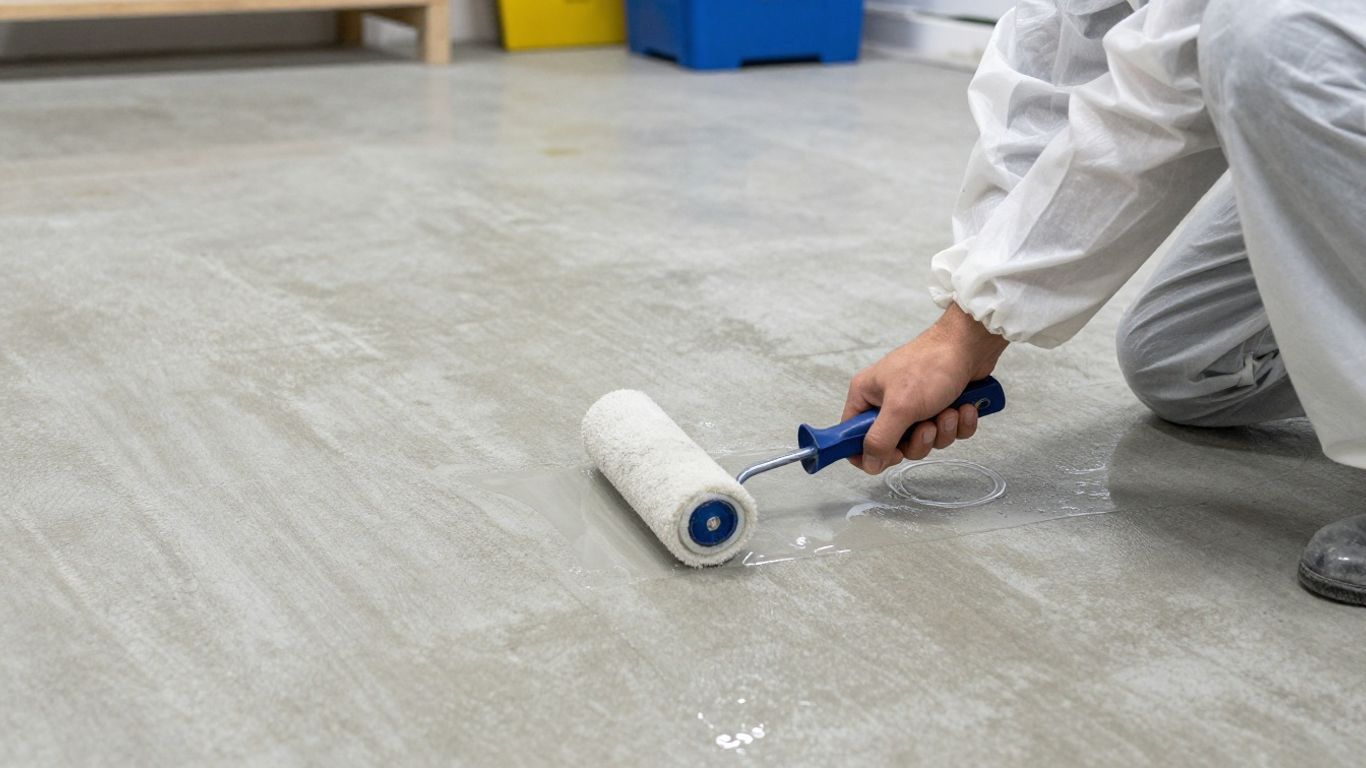
Applying the sealer evenly
Application requires attention to coverage, edges, joints, laps, temperature, and the working time of the product. Too much material can leave a sticky or cloudy film; too little may produce weak protection or visible variation. The applicator must also avoid trapping dust, moisture, or debris in the finish.
A small section is often checked before the full area proceeds. That gives the owner and applicator a chance to confirm the appearance under the actual light and to identify any issue with colour, sheen, or texture.
Curing times and when the surface can be used
A surface may feel dry before it has reached its working strength. Light foot traffic, furniture, vehicles, washing, and exposure to rain may each require different waiting periods, depending on the product and conditions. Instructions should be treated as part of the installation rather than an afterthought.
Keeping the area clear during curing protects the finish from marks and contamination. It is also sensible to agree in advance how access will be managed, especially for driveways, retail areas, and occupied commercial buildings.
How much concrete sealing in Tauranga costs
The cost of concrete sealing in Tauranga varies because the work is rarely just a matter of multiplying area by a fixed application rate. Surface condition, access, preparation, product choice, repairs, and the required finish can all change the scope. A small, clean slab may be straightforward, while a larger worn surface can demand substantial preparation.
A useful quote describes what is included and what is excluded. It should make clear whether cleaning, grinding, crack repairs, old coating removal, testing, edge work, and return visits are part of the price.
Main factors that influence the price
Area is one factor, but it is not the only one. Porosity, contamination, coating removal, access, furniture or vehicle movement, masking, waste handling, and the number of coats can all affect labour and materials. Outdoor surfaces may also need weather contingency.
The desired appearance matters as well. A simple penetrating treatment and a mechanically prepared, colour-enhancing film are different jobs even when they cover the same square metres.
Residential versus commercial sealing projects
Residential work often involves driveways, paths, patios, garages, or interior floors with relatively simple access. Commercial projects may involve larger areas, staged work, stricter curing windows, heavier traffic, and coordination with other trades. The surface may need to remain operational during the project, which adds planning.
Commercial decision-makers should ask for information about expected traffic, cleaning routines, chemical exposure, slip requirements, and maintenance. The lowest initial price may not be the best value if the system does not suit the building’s use.
When repairs or resurfacing increase the budget
Cracks, spalled edges, deep oil contamination, uneven areas, and failed coatings can all increase the preparation required. In some cases, sealing remains sensible after repairs; in others, rejuvenation, grinding, texturing, or a new topping may be more appropriate. The decision depends on whether the underlying slab is sound and whether its natural variation is acceptable.
Cosmetic work should not be used to disguise structural movement. A clear assessment of what can realistically be improved helps prevent a disappointing result and an expanding budget.
How to compare quotes from local contractors
Compare the scope, not just the total. A quote should identify the preparation method, sealer type or finish, number of applications, repair assumptions, curing guidance, and maintenance expectations. It should also explain whether the price is based on measurements supplied remotely or on a site assessment.
The following questions help make different proposals easier to compare:
- What condition does the slab need to be in before application?
- Which cleaning, grinding, or coating-removal steps are included?
- How will cracks, joints, edges, and stains be treated?
- What finish, slip performance, and curing period should be expected?
Once those details are clear, price becomes a more useful comparison. A credible contractor should be willing to discuss limitations as well as the attractive parts of the finish.
Maintaining sealed concrete over time
Sealed concrete is easier to maintain when the right routine starts early. Dirt, grit, salt, oil, and plant debris should not be allowed to sit for long periods, particularly in textured or exposed areas. Maintenance cannot prevent every mark, but it can slow the wear that makes resealing necessary.
The surface should be watched for changes in water behaviour, sheen, texture, and staining. Coastal exposure may shorten the useful life of a sealer, while a sheltered interior floor may remain serviceable for longer.
Cleaning products and routines that protect the finish
Use a gentle, compatible cleaner and remove grit before it is dragged across the surface. Avoid assuming that strong chemicals or abrasive pads will improve the result; they can dull a finish or affect the sealer. Spills should be addressed promptly, especially oil, rust, food colouring, and leaf tannins.
Routine sweeping or dust mopping followed by suitable damp cleaning is often enough for lightly used areas. Commercial floors may need a documented cleaning schedule matched to the sealer and the site’s chemicals.
Preventing stains, mold, and salt damage
Good drainage and ventilation help keep outdoor and damp areas from staying wet. Leaves, soil, and standing water around edges can create conditions for staining and organic growth, even when the concrete itself was sealed properly. Salt deposits should be rinsed away with an appropriate method rather than scrubbed aggressively.
Pool surrounds and coastal paths deserve regular inspection because splash, sand, and bare feet bring different contaminants than an indoor floor. If mold returns quickly, the source of the moisture should be addressed instead of repeatedly applying cleaner.
When to reseal different concrete surfaces
There is no universal resealing interval. A driveway exposed to sun, rain, tyres, and oil may need attention sooner than a lightly used indoor floor. The more useful indicators are reduced water resistance, visible wear, fading, scratches, chalking, or a finish that no longer cleans as it once did.
A small test can show whether the existing sealer is still functioning and whether a new application will bond. If the old product is failing, removal and preparation may be necessary before resealing.
Mistakes that can shorten the life of a sealer
Applying over damp concrete, skipping degreasing, using incompatible cleaners, and allowing traffic too soon are common causes of premature wear. So are choosing a smooth finish where wet grip is needed or expecting a sealer to solve movement, cracking, or active water ingress.
A maintenance plan should include sensible cleaning, prompt spill removal, periodic inspection, and early advice when the finish changes. That approach is usually less disruptive than waiting until the surface has widespread failure.
Conclusion
Good concrete sealing in Tauranga starts with an honest look at the slab, its exposure, and its intended use. With suitable preparation, a compatible sealer, realistic curing time, and simple ongoing care, concrete can remain practical and attractive without losing the character that makes each slab different.
Frequently Asked Questions
What is concrete sealing?
Concrete sealing applies a protective or appearance-enhancing treatment to suitable concrete. Depending on the product, it may reduce absorption, simplify cleaning, add sheen, deepen colour, or help protect the surface from everyday exposure.
Is sealing suitable for every concrete surface?
No. Concrete with active moisture, structural movement, severe contamination, weak areas, or failing previous coatings may need repairs, grinding, moisture management, or another treatment before sealing can be considered.
How long should new concrete cure before sealing?
The correct time depends on the concrete, product, weather, and intended process. New slabs generally need adequate curing and strength; a professional should confirm readiness rather than relying only on an appearance check.
Can sealing stop concrete cracks?
Sealing does not stop structural movement or repair a crack by itself. Cracks should be assessed first, and any repairs should be compatible with the proposed sealer and the movement expected at that location.
Is a glossy sealer better than a matte sealer?
Neither is automatically better. Gloss may enhance colour and make the surface more noticeable, while matte or natural finishes can be more forgiving visually. The choice should consider appearance, cleaning, traffic, UV exposure, and slip resistance.
How often does sealed concrete need maintenance?
Maintenance should be ongoing, with regular cleaning and inspections rather than a fixed schedule alone. Resealing depends on wear, exposure, water behaviour, appearance, and the condition of the existing product.
Can sealed concrete become slippery when wet?
It can, depending on the surface texture, sealer, contamination, and conditions. Wet areas should be assessed for grip, and a textured treatment or suitable slip-resistant system may be preferable to a very smooth finish.