
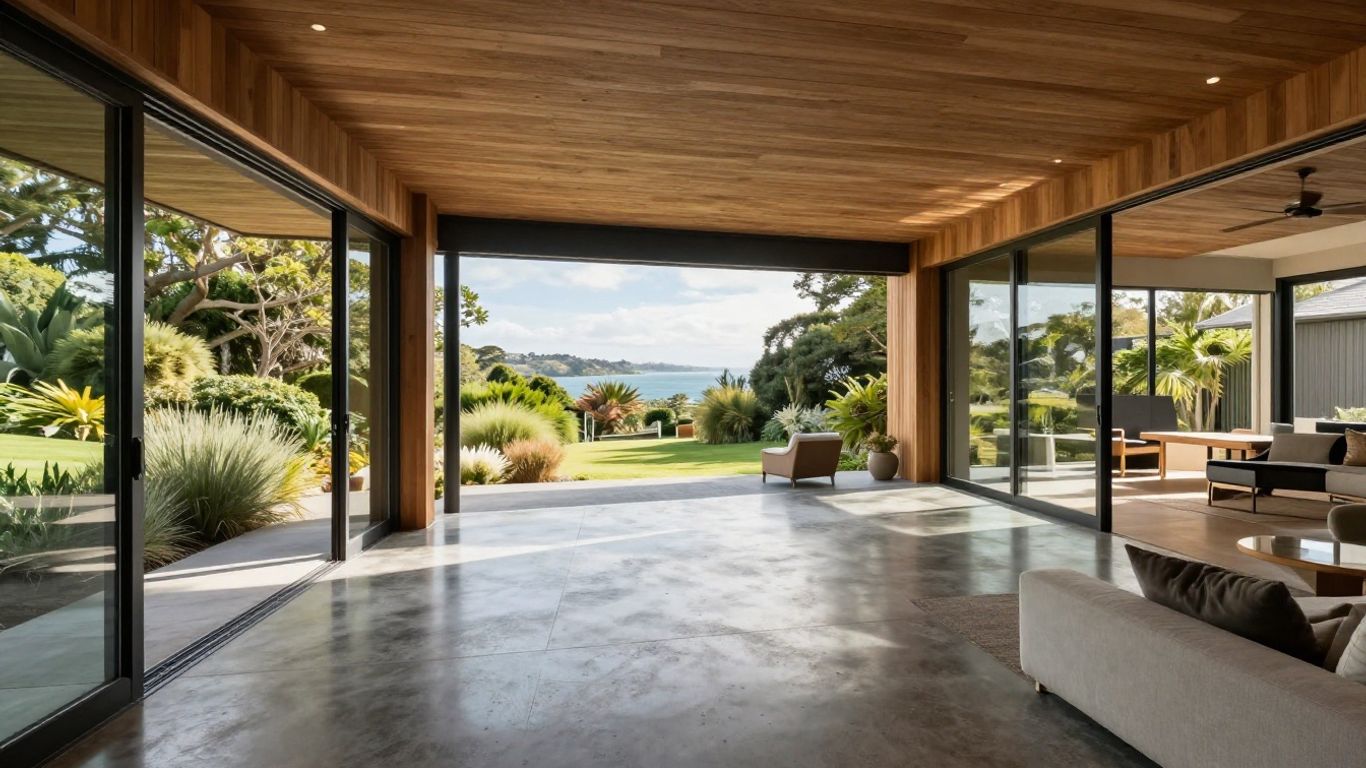
Polished concrete Tauranga: A complete guide to choosing, designing, and maintaining your floor
Plan polished concrete Tauranga floors with practical advice on finishes, costs, contractors, and care.
Published 8 September 2026
Key Takeaways
Polished concrete is shaped by the slab, the preparation, and a series of finish decisions made before and during grinding. In Tauranga, careful planning also means allowing for coastal conditions, access, curing time, and the practical needs of the space.
- The existing slab and the quality of the original pour strongly influence the finished appearance.
- Grinding removes and refines concrete; polishing progressively smooths and refines the surface.
- Aggregate exposure, colour, depth of cut, and sheen should be approved with a sample where possible.
- A clear quote should separate preparation, repairs, edges, sealing, access, and square-metre rates.
- Routine cleaning and sensible protection help a polished concrete floor perform for many years.
What polished concrete is and how the process works
Polished concrete is a finished concrete floor created from the slab itself. Diamond tooling is used to remove unwanted material, refine the surface, and gradually develop the chosen sheen before the floor is densified and sealed where appropriate. The result is never completely independent of the original concrete: its aggregate, colour, joints, trowel marks, repairs, and curing history all remain part of the floor’s character.
How concrete grinding differs from polishing
Concrete grinding is the more aggressive stage, used to remove old finishes, level high spots, expose aggregate, or prepare a surface for later refinement. Polishing follows with progressively finer abrasives that close and smooth the surface to a selected sheen. A floor can be ground without being polished, while polishing normally depends on sound preparation first; confusing the two can make a quote or scope sound clearer than it really is.
For a Tauranga renovation, concrete grinding services may include preparation, corrective, removal, and finish grinding. The right sequence depends on what is already on the floor and how much material needs to be removed.
The main stages from surface preparation to sealing
The work generally begins with a site assessment, removal of coverings or contaminants, and repairs to cracks, holes, or weak areas where they can be addressed. Diamond grinding then establishes the required flatness and depth of cut, followed by finer polishing passes, densification, cleaning, and sealing if the specification calls for it. New concrete should usually reach at least 28 days of age before polishing, while existing slabs can be assessed on their actual condition rather than on age alone.
The order matters because dust, paint, plaster, oil, adhesives, and construction traffic can affect the final appearance. A sample patch on the actual slab is often the most useful way to confirm how much aggregate will appear and how the chosen polish level will look in the room’s light.
Common polished concrete finishes and sheen levels
Finish selection comes down to the relationship between depth of cut, aggregate exposure, and polish level. A shallow cut may produce a restrained salt-and-pepper effect, while a deeper cut can reveal more of the stone and sand in the mix. Sheen can range from a natural matte appearance to a higher-gloss finish, but the same specification may look different on two slabs because their mixes and placement histories differ.
Colour is primarily a new-pour decision because pigment is mixed into the concrete before placement. For an existing floor, the original colour remains the starting point, with grinding depth, aggregate exposure, polish level, and sealer influencing the final reading. Concrete finish options provide a useful way to compare these decisions without treating a catalogue image as a guarantee.
When an existing slab can be polished
An existing slab may be suitable when it has enough sound concrete to grind, can be accessed with the necessary equipment, and does not contain damage or contamination that makes the desired finish unrealistic. Carpet adhesive, tiles, paint, cracks, previous repairs, uneven patches, and moisture concerns all need to be considered before a finish is promised. The assessment should also establish what lies beneath the current floor and whether the slab was intended to remain visible.
A test grind is especially valuable here. It reveals the actual aggregate, colour variation, marks, and repair history in a small area, giving the client a more honest basis for deciding whether to proceed.
Why choose polished concrete in Tauranga
Polished concrete can suit a broad range of Tauranga interiors, from homes and apartments to retail, hospitality, commercial, and civic spaces. It offers a continuous finished surface with relatively few separate materials to coordinate, although joints and natural variation remain visible design considerations. The best choice depends on traffic, wet exposure, acoustics, warmth, maintenance expectations, and the condition of the slab.
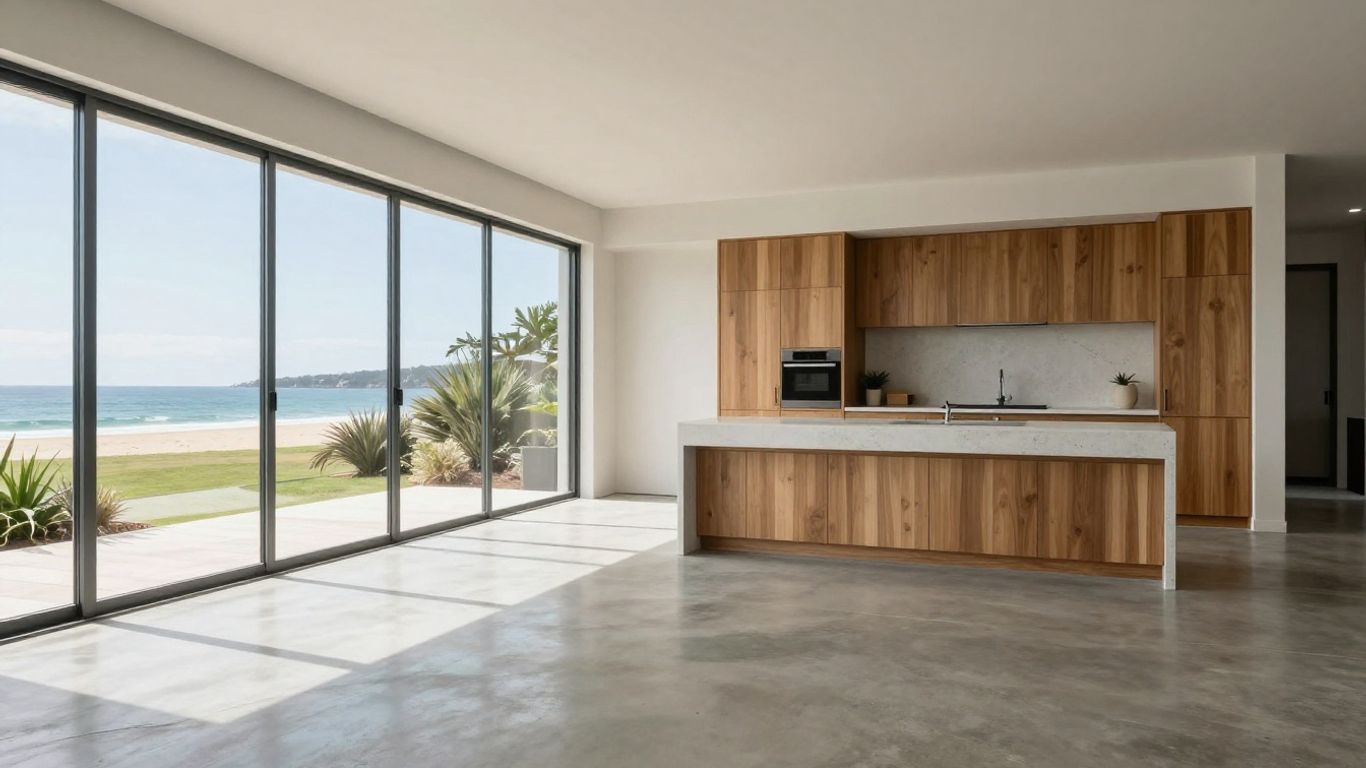
Durability for homes, retail spaces, and commercial buildings
Concrete has the mass to cope with regular foot traffic, provided the slab is sound and the preparation matches the use. In a home, that may mean a carefully finished living area or kitchen; in a shop or commercial building, it may mean planning for trolleys, entrances, grit, and repeated cleaning. Durability is not just a property of the material in isolation: joints, edges, repairs, sealing, furniture movement, and the quality of the original pour all affect service life.
A properly specified floor can age with the building rather than needing frequent replacement, but it should still be inspected and maintained as a working surface. Heavy-use areas may need a different sheen, sealer, or cleaning routine from a quiet residential room.
Low-maintenance cleaning and long-term performance
Polished concrete is straightforward to clean when dust and grit are removed regularly and spills are not left to sit. The floor does not require the same routine replacement associated with some finish materials, but low maintenance does not mean no maintenance. The sealer, traffic level, contaminants, and cleaning products all influence how the surface looks over time.
Simple maintenance protects the finish more effectively than occasional aggressive cleaning. A neutral cleaner, soft dust mop, prompt spill response, and suitable entrance matting usually do more good than harsh chemicals or abrasive pads.
Indoor comfort, light reflection, and design flexibility
A polished floor can reflect natural and artificial light, helping a room feel more open, particularly when the colour and sheen are selected with the surrounding walls and joinery. It also works with timber, rugs, plants, cabinetry, and upholstered furniture rather than locking the interior into one decorative style. Concrete’s thermal mass can contribute to a steadier indoor feel, though the floor may still feel cool underfoot depending on insulation, sun, heating, and the season.
It is worth considering sound as well as appearance. Rugs, soft furnishings, and acoustic treatments can make a large open room more comfortable, especially where hard surfaces extend across the entire plan.
Suitability for Tauranga’s coastal climate
Salt-laden air, moisture, sand, and strong sunlight can place extra demands on entrances, patios, garages, and other exposed areas around Tauranga. The concrete should be clean and adequately prepared before sealing, and the chosen sealer should match whether the area is interior, exterior, wet, or exposed to contaminants. Polished interiors and textured outdoor or wet-area surfaces are not interchangeable; grip may be more important than sheen in an entry, ramp, or pool surround.
For practical background on protecting different concrete surfaces, Tauranga concrete sealing explains why preparation and the environment should guide the sealing choice. Exterior areas may also need a texture designed for wet grip rather than a highly polished finish.
How to plan a polished concrete project
Planning should begin before the machinery arrives, and for a new slab it should begin before the concrete is ordered. The colour, mix, aggregate, joints, access, curing period, and construction sequence can all affect the finished floor. A good project brief acknowledges that polished concrete contains natural variation rather than treating it as a perfectly uniform manufactured sheet.
Assessing the slab, subfloor, and surrounding structure
Start by checking slab age, thickness where known, visible cracks, moisture, contamination, flatness, edges, penetrations, and the condition of adjoining surfaces. Existing floor coverings can hide repairs or weak areas, while structural movement may continue to show through after grinding. For a new build, the builder, concrete placer, and finishing specialist should agree on levels, falls, joints, protection, and the required finish before the pour.
The building also needs to be sufficiently enclosed and watertight before polishing begins. Plaster, paint, rust, oil, and adhesive contamination can become visible in the finished surface, so protecting the slab during the rest of construction is part of the floor plan, not an optional afterthought.
Choosing aggregate exposure and colour options
Aggregate exposure is controlled largely by how deeply the slab is cut, while colour begins with the concrete mix and the chosen pigment for a new pour. Local stone and sand can give a Tauranga floor a distinctive appearance, and the same nominal colour may read differently under warm lamps, daylight, or coastal glare. For that reason, samples from the customer’s own slab are more dependable than photographs from another project.
A useful decision sequence is to settle the visual variables in a deliberate order:
- Decide whether the floor should retain a subtle, natural look or reveal more aggregate.
- Confirm the colour and aggregate together for a new pour.
- Select the depth of cut after considering the slab’s condition and desired exposure.
- Choose a matte, satin, or higher-sheen polish level for the room’s lighting and use.
This process helps separate decisions made before the pour from those available later during grinding. It also reduces the risk of expecting an existing slab to take on a colour that was never present in its original mix.
Comparing residential and commercial requirements
A residential floor may prioritise visual continuity, furniture protection, warmth, and coordination with cabinetry. Retail, hospitality, and commercial floors usually require closer attention to opening dates, traffic paths, dust control, cleaning equipment, delivery access, and after-hours work. Civic and larger projects can add documentation, staged handovers, public safety, and coordination with several trades.
Grinding Dynamics works across residential, commercial, and civic projects, with projects primarily in the Bay of Plenty and larger work in the Waikato and Auckland. Its documented scope includes ground, polished, sealed, textured, and rejuvenated concrete surfaces, so the brief should identify the actual need rather than assume every area should receive the same finish.
Allowing for access, disruption, and project timing
Measure the route from the equipment delivery point to the work area, and identify stairs, narrow doorways, lifts, occupied rooms, ventilation limits, and nearby finished surfaces that need protection. Grinding is dust-controlled when properly set up, but the project still creates noise, movement, and temporary loss of access. New slabs also need curing time, and the wider building programme must allow the floor to be protected after finishing.
A realistic programme includes assessment, sample approval, preparation, grinding, polishing, cleaning, sealing, cure time where relevant, and handover. Rushing one stage can create more disruption later, especially if contamination or damage means the floor must be reworked.
How much polished concrete flooring costs
Polished concrete pricing in Tauranga cannot be understood reliably from a single square-metre figure. The rate reflects the slab’s condition, the depth of cut, the desired sheen, access, edge work, repairs, waste handling, sealing, and the amount of preparation required. A lower initial rate may not include the items that determine whether the floor is actually ready for use.
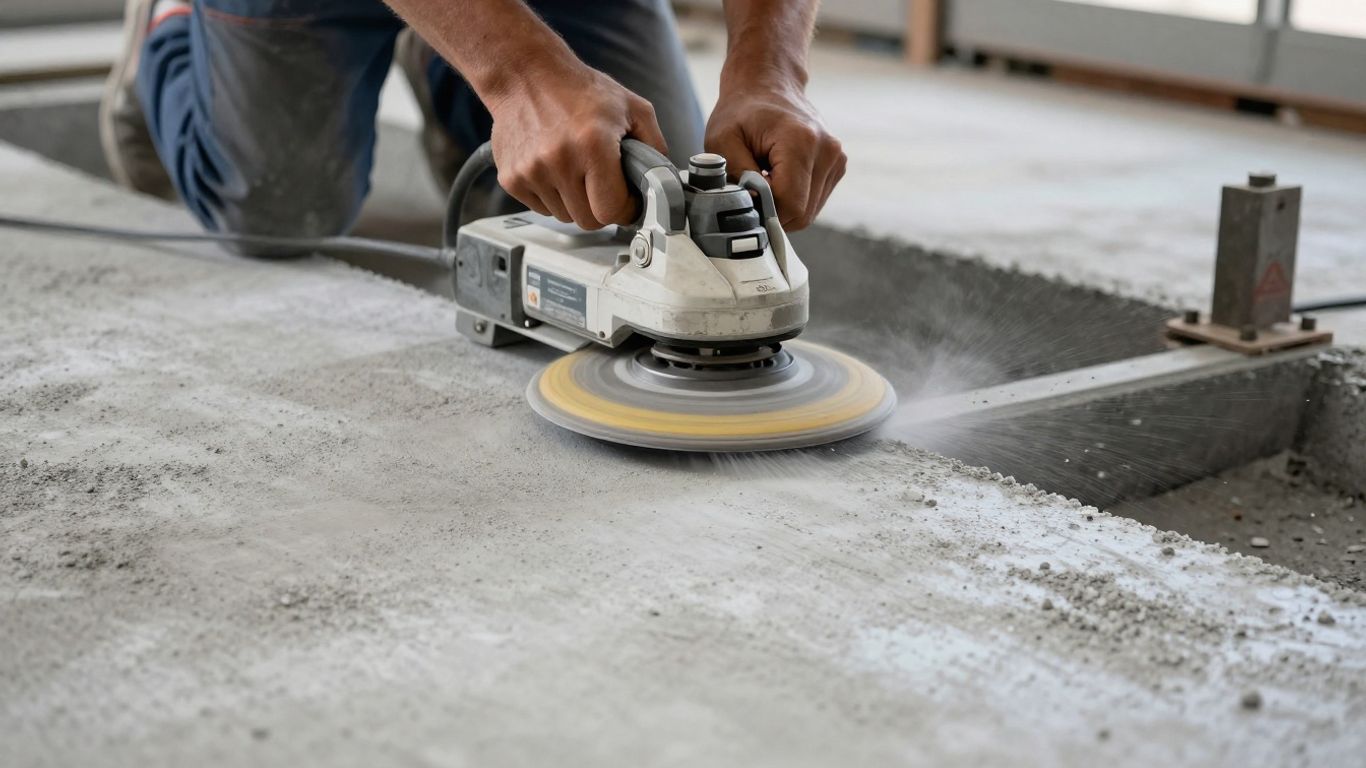
Factors that influence the price per square metre
Large, open areas with good access are generally simpler to prepare than small rooms divided by walls, columns, fittings, or narrow thresholds. The amount of material removed and the level of aggregate exposure also change the tooling, labour, and time required. Sealer selection, repairs, difficult edges, contamination, and the required finish level should all be visible in the scope.
The main cost drivers can be compared like this:
| Cost factor | Why it affects the quote | What to clarify |
|---|---|---|
| Slab condition | Repairs, contamination, and unevenness add preparation | What defects are included or excluded? |
| Depth of cut | Deeper exposure usually requires more grinding and waste handling | What exposure is being priced? |
| Polish level | Finer refinement takes additional passes | Is the finish matte, satin, or high sheen? |
| Access and edges | Tight areas and handwork reduce production efficiency | Are thresholds, stairs, and edges included? |
| Sealing and protection | Product choice and application affect the completed system | Which sealer and number of coats are specified? |
This makes quotes easier to compare because the price is connected to a defined result rather than a vague promise of “polished concrete.” A contractor should also explain what happens if the slab reveals unexpected damage once coverings are removed.
Comparing new pours with polishing an existing floor
A new pour gives more control over concrete colour, mix consistency, aggregate selection, levels, joints, and the conditions before grinding. It also adds the cost and coordination of demolition or construction, formwork, concrete placement, curing, and protection. An existing slab may avoid those stages, but its original colour, aggregate, repairs, and flatness limit what can be achieved.
Neither option is automatically cheaper. An existing floor with adhesive, paint, deep damage, or difficult access can require substantial preparation, while a new slab may be efficient when it is already part of a planned build. A test patch and a clear assessment are better guides than assuming the older floor is the economical choice.
Additional costs for repairs, edges, and difficult access
Small rooms can cost more per square metre because machinery has less uninterrupted space to work. Hand grinding around walls, steps, drains, thresholds, posts, and cabinetry is slower than open-area production, and repairs may need separate treatment before the main polishing sequence. Removing old flooring, disposing of waste, protecting adjacent finishes, and working in an occupied building can also affect the total.
Ask whether the quote allows for crack repair, patching, glue removal, edge work, masking, moisture-related delays, and final cleaning. These are not incidental details; they are often where the difference between an initial allowance and the finished account appears.
How to compare quotes from Tauranga contractors
Compare like with like: the same area, depth of cut, aggregate exposure, sheen, repairs, sealer, access assumptions, and completion standard. The quote should state what the client supplies, what the contractor removes, how variations are approved, and whether a sample grind is included. It should also identify natural variation as a characteristic of the slab rather than implying a perfectly identical result across every room.
The polished concrete cost guide is useful when checking whether a quote has addressed condition, access, edge work, repairs, waste, and sheen. The cheapest number is not necessarily the best value if it leaves essential preparation outside the agreed scope.
How to choose a polished concrete contractor
The contractor is responsible for translating a broad visual idea into a sequence of practical decisions. Look for someone who discusses the slab, aggregate, depth of cut, polish level, curing, sealing, access, and maintenance rather than talking only about shine. Local experience matters because the team will understand the building types, climate, and project conditions encountered in the Tauranga area.
Checking local experience and completed projects
Ask to see completed work that resembles your project in scale, slab type, finish, and use. A residential living room does not demonstrate the same planning as an occupied retail floor, a warehouse, or an exterior area requiring wet grip. References and photographs can help, but they cannot replace a sample on your own concrete when appearance is critical.
Grinding Dynamics is a Tauranga-based team with 25 years of combined experience and documented work across residential, commercial, and larger urban projects. That kind of information is most useful when it is matched to the actual demands of your site rather than treated as a substitute for a written assessment.
Reviewing equipment, preparation methods, and finishes
Ask what diamond tooling, dust control, repair methods, densifier, and sealer will be used, and how the contractor will handle edges and inaccessible areas. The explanation should make clear whether the proposed work is grinding only, a full polished finish, sealing, texturing, or rejuvenation. It should also explain how the selected finish will provide the required appearance and practical performance.
A documented system can help make the specification more consistent. Grinding Dynamics is an approved applicator for the PeterFell C2 Polished Concrete System and PeterFell TextureSafe Systems, with the latter intended for built-in grip on suitable textured surfaces. Those are distinct applications: a polished interior should not be specified as though it were a wet-area grip treatment.
Confirming insurance, warranties, and written scope
Before work starts, confirm public liability insurance, responsible site supervision, payment stages, variation procedures, completion standards, and any warranty terms. The written scope should state the expected depth of cut, aggregate exposure, polish level, sealer, repairs, exclusions, protection requirements, and cleaning handover. It should also explain how natural variation, existing cracks, joints, and previously hidden contamination will be treated.
A warranty cannot remove the underlying characteristics of an existing slab. Clear documentation is therefore more useful than broad assurances because it records what was inspected, what was agreed, and which conditions may change the result.
Questions to ask before signing a contract
A short conversation before signing can expose assumptions that would otherwise become expensive variations. Ask who prepares and protects the slab, how the sample is approved, when the area can be used, and what happens if the concrete is weaker or more contaminated than expected. Also ask how the finished surface should be cleaned and when future maintenance may be needed.
Useful questions include:
- What exact finish, depth of cut, and sheen are included?
- Will you complete a test patch on this slab?
- Are repairs, edges, waste removal, and sealing included?
- What access, power, ventilation, and protection do you require?
- How will variations be priced and approved?
The answers should be specific enough to place in the contract. If a point affects cost, appearance, programme, or safety, it should not be left as an informal assumption.
How to maintain polished concrete floors
Maintenance begins with keeping abrasive grit and staining liquids under control. A polished floor is durable, but it is still a finished surface that can be scratched by dragged furniture, dulled by unsuitable chemicals, or marked by spills left unattended. The correct routine depends on traffic, sealer, location, and whether the floor is indoors or exposed to weather.
Recommended cleaning products and routines
Dust mop or vacuum regularly, then damp mop with a pH-neutral cleaner suitable for polished concrete and the specified sealer. Use clean water and a clean mop, particularly in entrances where sand and salt may be carried inside. Avoid leaving standing water on areas with joints, porous repairs, or vulnerable edges, and follow the sealer manufacturer’s directions rather than adding wax or polish by habit.
Commercial spaces may need a scheduled machine-cleaning routine, while a home may only need frequent dry removal and occasional damp mopping. The key is consistency: small amounts of grit repeated over thousands of footsteps can create more wear than a single ordinary spill.
Preventing stains, scratches, and surface wear
Use entrance mats, felt pads, lifting techniques, and protective boards when moving furniture or completing later building work. Wipe wine, oil, food, rust, and salty water promptly, since sealers reduce absorption but do not make every contaminant harmless. Keep outdoor sand and grit from being tracked across the floor, especially near open doors and driveways.
Do not use abrasive pads, strong acids, aggressive solvents, or unapproved coatings without checking the floor specification. A cleaning product that is acceptable on one sealed surface may dull or soften another, so the maintenance instructions should be retained with the handover documents.
When resealing or professional maintenance is needed
Resealing is not automatically required on a fixed calendar. It depends on traffic, the sealer used, exposure to staining materials, cleaning practice, and the visual or practical condition of the floor. Areas that begin to absorb spills quickly, lose their intended protection, or show uneven wear should be assessed rather than simply covered with another product.
Professional maintenance may include deep cleaning, inspection, light refinement, or resealing after suitable preparation. A contractor should first identify whether the problem is sealer wear, contamination, polishing marks, a repair, or a characteristic of the underlying concrete.
Repair options for chips, cracks, and uneven patches
Repairs are possible, but they rarely disappear completely because a new material may differ in colour, aggregate, texture, or reflectivity from the surrounding slab. Small chips can sometimes be filled and refined, while larger cracks may need investigation to determine whether movement is continuing. Uneven patches may require local grinding, broader blending, or acceptance that the floor will retain a visible repair history.
A sensible repair starts with diagnosis rather than another coat of sealer. The contractor should explain whether the proposed treatment restores function, improves appearance, or does both, and whether the repaired area will be visible under raking light.
Conclusion
Polished concrete Tauranga projects are easiest to manage when the slab is treated as the starting point for a series of practical choices, not as a blank surface with a guaranteed appearance. Assess the concrete, approve a sample, define the depth and sheen, allow for curing and access, and compare quotes by their complete scope. With realistic expectations and a simple maintenance routine, a well-prepared floor can remain a durable and adaptable part of a home, commercial space, or civic building.
Frequently Asked Questions
Is polished concrete suitable for every Tauranga home?
Not necessarily. Suitability depends on the existing slab, moisture, cracking, levels, access, desired appearance, and how the room will be used. A site assessment and test patch are the best ways to establish what is realistic.
Does polished concrete always look completely uniform?
No. Natural variation in aggregate, colour, placement, curing, trowel marks, joints, repairs, and contamination can remain visible. A sample from the customer’s own slab gives a more reliable expectation than a photograph from another project.
How long should new concrete cure before polishing?
A new concrete slab generally needs a minimum curing period of 28 days before grinding and polishing. The project team should also consider moisture, construction progress, and whether the slab has been protected from contamination.
Can an old concrete floor be polished?
Often, yes, but the result depends on its condition and what lies beneath or within the existing surface. Adhesive, paint, cracks, repairs, unevenness, and weak concrete may affect the finish or require additional preparation.
Is polished concrete slippery when wet?
A polished surface can require careful consideration in wet areas. Where grip is the priority, a suitably textured concrete finish may be more appropriate than a highly polished sheen, alongside sensible drainage and design.
How do you clean polished concrete?
Regular dust removal, prompt spill cleaning, and damp mopping with a suitable neutral cleaner are typical. Abrasive pads, harsh chemicals, and unapproved waxes or coatings should be avoided unless the floor specification confirms they are appropriate.
How often does polished concrete need resealing?
There is no universal resealing interval. Traffic, exposure, sealer type, cleaning, and visible performance determine when an assessment is worthwhile. Resealing should follow proper cleaning and preparation rather than being applied automatically.