
Concrete floor preparation services in Tauranga: a complete guide
Concrete floor preparation services tauranga: methods, finishes, costs, and timing for local projects.
Published 29 October 2026
Key Takeaways
Good preparation starts with understanding the slab and the finish it needs to support. A clear scope helps keep the work, timing, and expectations aligned.
- Cleaning and removing old materials reveals the concrete that needs to be prepared.
- Grinding, blasting, scarifying, repairs, or leveling may be appropriate depending on the slab.
- Moisture, contamination, cracks, and uneven areas can affect the preparation plan.
- The right surface profile depends on whether the floor will be polished, coated, tiled, or covered.
- Compare quotes by checking the included work, site requirements, cleanup, and schedule.
What concrete floor preparation services include
Concrete floor preparation is the work that makes an existing slab suitable for its next use. It can involve removing old flooring and residue, correcting surface irregularities, and repairing areas that could interfere with the finish. The exact scope depends on what is on the floor now and what needs to go on it next.
Surface cleaning and removal of coatings
Before a new finish can be applied or the concrete can be assessed accurately, loose material and surface contamination need attention. Depending on the job, preparation may include lifting floor coverings and removing adhesive, paint, coatings, or other buildup. The aim is to expose a sound surface, not simply to make the floor look cleaner.
Once the slab is exposed, the remaining residue can affect the next steps. A contractor should explain what needs to be removed, how it will be done, and whether the revealed concrete appears suitable for the intended finish.
Concrete grinding and profiling
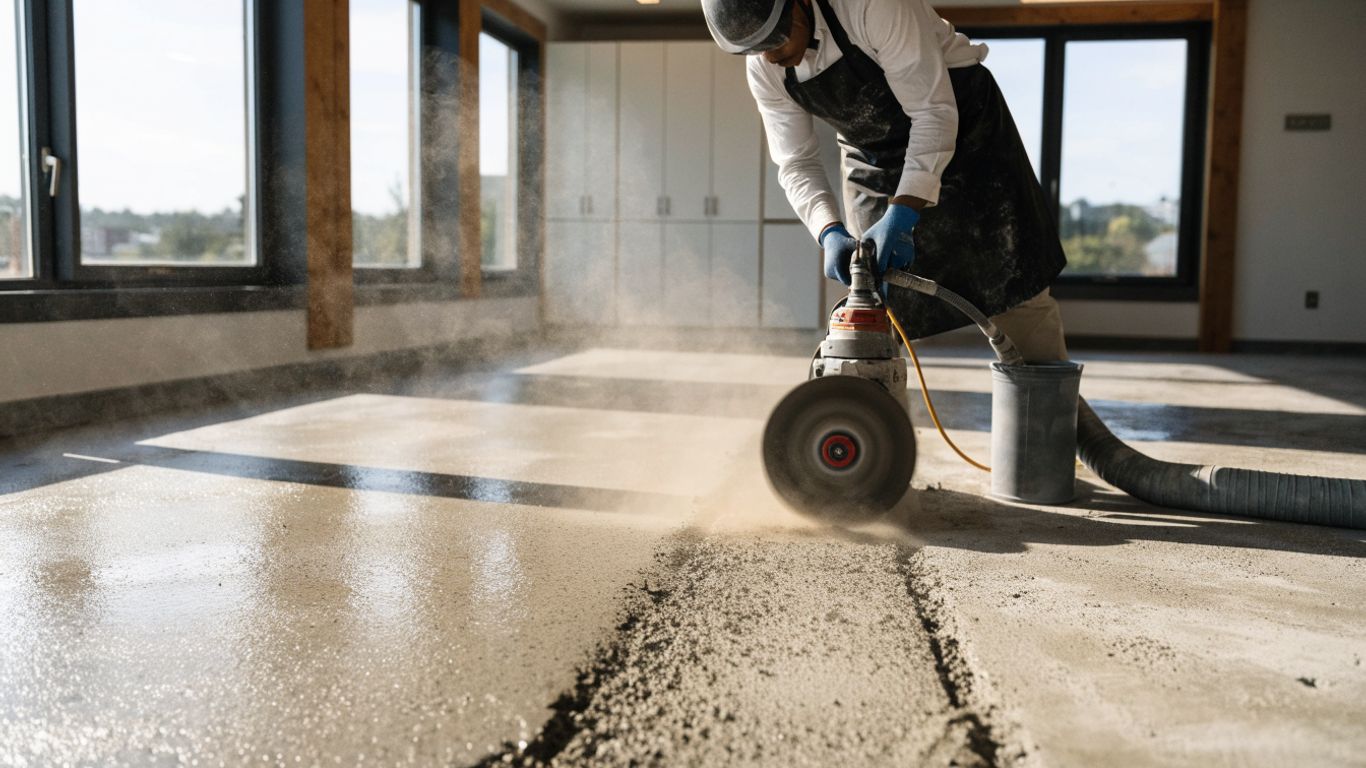
Grinding removes or smooths the upper surface of concrete using abrasive tooling. It can help take down high spots, remove some coatings and adhesives, or prepare the slab for a new finish. The depth and pattern of grinding matter: more aggressive removal may expose additional aggregate, while a lighter pass can retain more of the original surface.
Grinding Dynamics provides Tauranga concrete grinding for surface preparation, coating and glue removal, high-spot correction, and ground-and-sealed floors. For any slab, the contractor should explain how the proposed cut relates to the planned finish, since the concrete itself influences the result.
Crack repairs and floor leveling
Cracks, low areas, and changes in floor height should be identified before the finishing stage. Some defects can be repaired or leveled as part of preparation, while others may remain visible or require a different treatment. The appropriate approach depends on the cause, movement, depth, and location of the defect, as well as the finish being installed.
It is useful to ask which repairs are included in the scope and which are allowances or exclusions. That conversation helps avoid treating every crack or dip as the same problem, and gives the installer a more realistic basis for planning the work.
How contractors assess a concrete floor
A useful assessment connects the current condition of the slab with the requirements of the next floor finish. Contractors look for issues that may affect adhesion, appearance, flatness, or the work sequence. The findings help set a practical scope, though they cannot remove the influence of the original pour or the slab’s history.
Checking for moisture and contamination
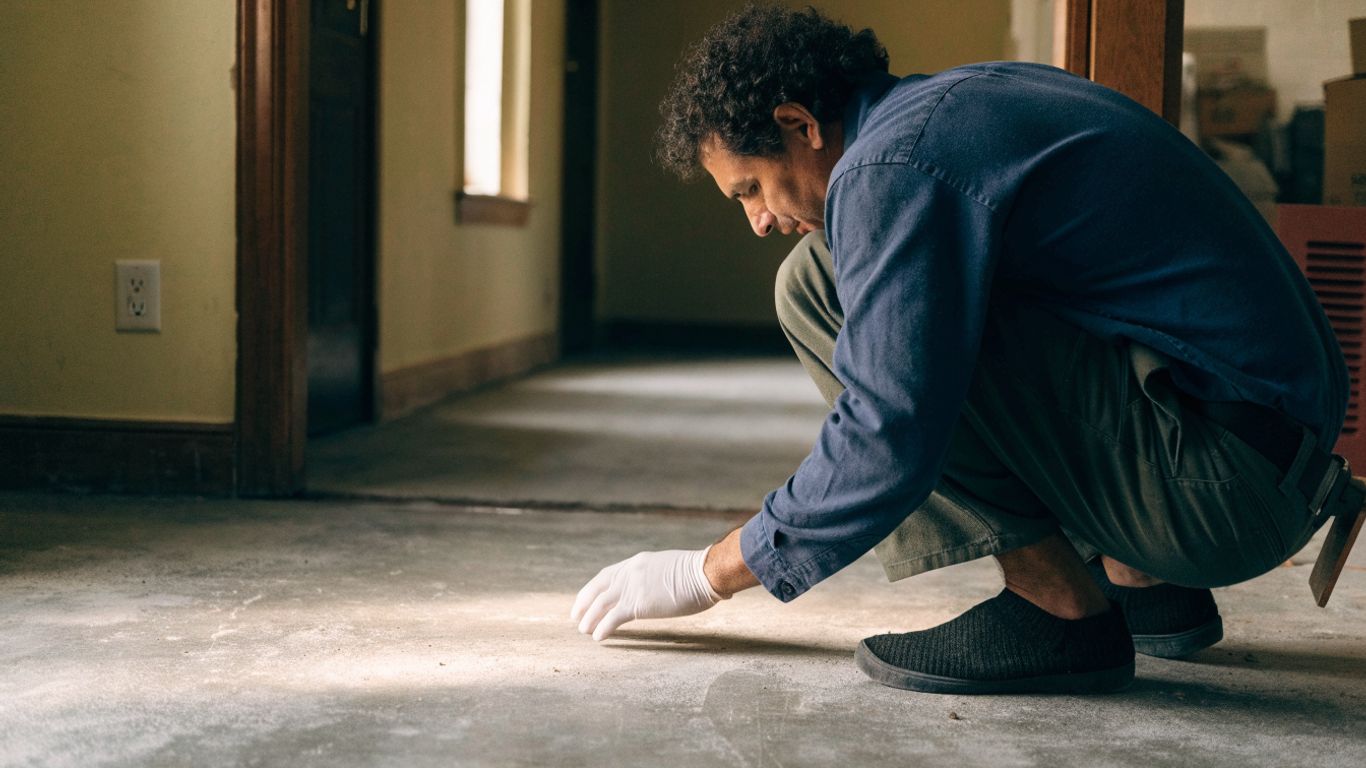
Moisture and contamination can change what preparation is appropriate. A contractor may check for visible dampness, residue, oil, or other substances and discuss whether further testing is needed for the planned finish. If moisture is a concern, ask what evidence the recommendation is based on and whether the finish supplier has requirements that need to be followed.
The floor’s previous use matters too. A garage, workshop, kitchen, or commercial space may have different residues and exposure than a newly exposed interior slab. Identifying these conditions early makes it easier to decide whether cleaning, removal, testing, or another step is needed.
Identifying cracks, weak areas, and unevenness
The inspection should distinguish between surface marks and defects that affect the floor’s performance or appearance. Contractors may look for loose or weak concrete, cracks, hollow-sounding areas, high spots, and low sections. A defect that seems minor before grinding can become more noticeable once surrounding material is removed.
Ask how the findings will be handled and what may remain visible after the work. If the slab is being polished, a test grind can help reveal its aggregate, color, and potential before the final finish is chosen.
Matching the surface profile to the intended finish
A surface profile describes the texture and openness of the prepared concrete. Different finishes call for different surface conditions, so the preparation should be selected only after the intended finish is clear. For example, the requirements for a coating are not necessarily the same as those for a floor that will be ground and polished.
A simple comparison can help make the conversation more concrete. These are broad guideposts rather than a substitute for the finish manufacturer’s requirements or an on-site assessment.
| Intended finish | Preparation question | What the assessment helps clarify |
|---|---|---|
| Epoxy or other coating | Is the surface clean and suitably profiled? | Whether residue, weak concrete, or moisture needs attention |
| Polished concrete | What can the slab reveal at the planned cut? | Likely aggregate exposure and the condition of the concrete |
| Tile or floor covering | Is the substrate suitable for installation? | Whether repairs or leveling may be needed |
The point is to connect each preparation step to the floor that will follow. A contractor should be able to explain the recommendation in those terms, rather than offering the same process for every slab.
Choosing the right preparation method
The method depends on the material to be removed, the condition of the concrete, the area involved, and the required finish. Grinding is common, but it is not the answer to every surface problem. A sound plan may use more than one method, with repairs and leveling scheduled around the main preparation work.
When grinding is the best option
Grinding is often considered when the work calls for removing surface buildup, smoothing high areas, or creating a prepared concrete surface. The scale of the job and the desired cut influence the equipment and tooling selected. Grinding Dynamics provides concrete grinding in Tauranga, and the proposed work should be matched to the slab rather than chosen by machine size alone.
For a polished result, the depth of cut also affects how much of the slab’s aggregate is exposed. If appearance is important, discuss the likely cut and use a test area where appropriate before committing to the full floor.
When shot blasting or scarifying may be needed
Some coatings or surface conditions may call for a more aggressive method than grinding alone. Shot blasting or scarifying can be considered when the required removal or texture calls for it, but the choice depends on the concrete and the finish system. These methods can change the surface substantially, so the contractor should explain why they are being proposed and what the result means for the next stage.
Ask about practical effects such as noise, dust management, access, and whether adjacent areas need protection. A method that suits an open commercial floor may be less suitable in a confined or occupied space, so site conditions belong in the decision.
How repairs and leveling fit into the process
Repairs and leveling are usually planned in relation to the preparation sequence. Loose material may need to be removed before a repair can be made, and the surrounding surface may then need further preparation. Low areas and height changes should be considered in light of the finished floor’s requirements rather than corrected without a clear purpose.
For flooring installations where substrate flatness is a concern, this floor leveling and preparation overview gives a general example of how preparation relates to the floor covering that follows. On a local project, confirm the required tolerances with the flooring supplier or installer before the work is priced.
Preparing floors for different finishes
There is no single preparation standard that suits every finish. A coating, polished concrete, tile, and a floating floor each rely on different characteristics of the substrate. Agreeing on the finish first makes it easier to choose the right preparation and to understand what the existing slab can realistically deliver.
Getting concrete ready for epoxy coatings
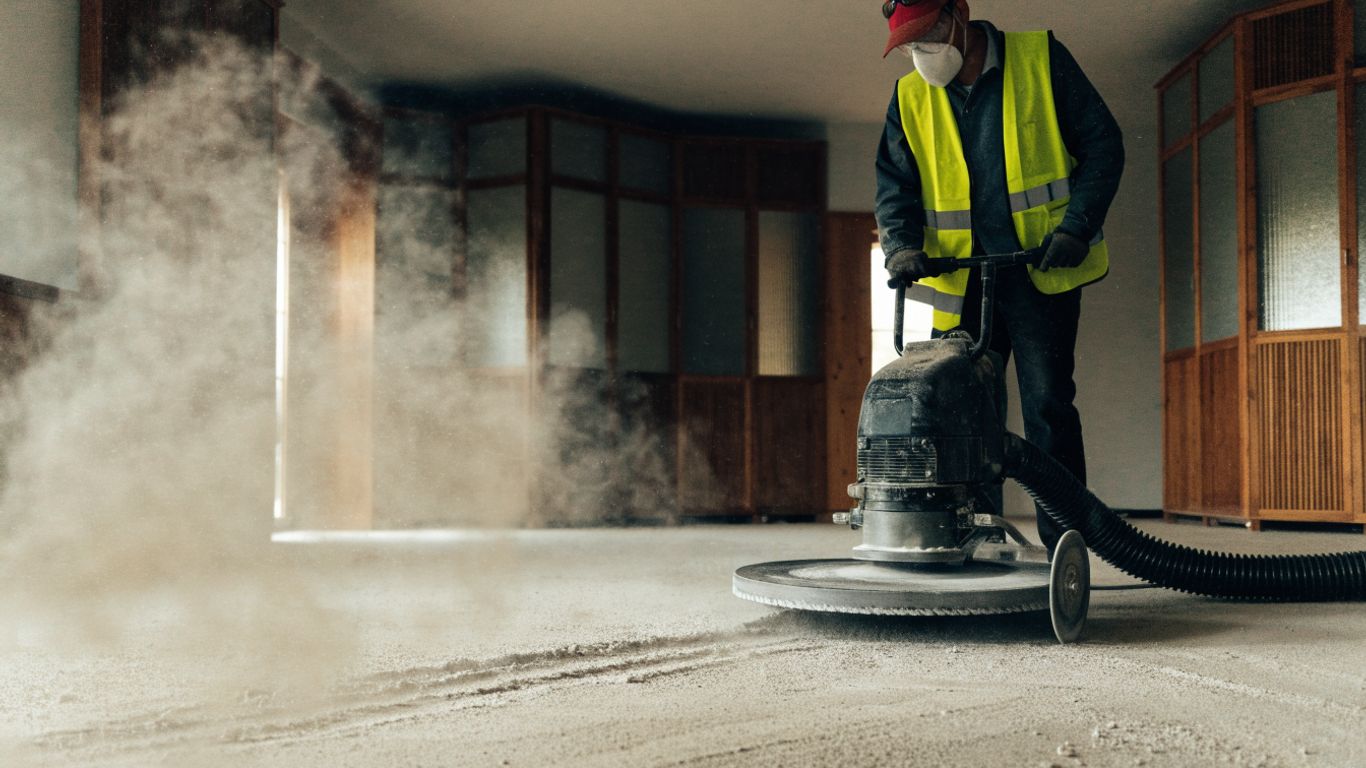
An epoxy coating needs a surface that is appropriately prepared for the coating system being used. Cleaning and removal of incompatible material may be required, along with a suitable profile. Moisture and the condition of the concrete should also be considered in line with the coating manufacturer’s requirements.
Before work begins, confirm who is responsible for preparation and who will apply the coating. If those are separate trades, they should agree on the required surface condition and timing so the slab is not left exposed or contaminated between stages.
Preparing for polished concrete
Polished concrete is created by working the slab itself; it is not a coating laid over the concrete. The finish depends on the slab’s condition, the depth of cut, aggregate exposure, and the degree of polish selected. Grinding Dynamics delivers polished concrete floors in Tauranga and uses the PeterFell C2 system for homes and commercial spaces.
A sample grind on the actual slab is more informative than relying on a photograph of another floor. It can help with decisions about exposure and finish, while also revealing marks or variation that may be part of the concrete’s character. The polished concrete floors page explains the use of an on-site slab assessment and sample grind.
Creating a suitable base for tiles or other floor coverings
Tile and other floor coverings need a substrate that meets the installation requirements for flatness and condition. Preparation may involve removing old adhesive or flooring, addressing high or low areas, and making repairs before the new material is installed. The precise requirements vary with the product and installation method, so check them before finalizing the preparation scope.
If wet grip is the priority for an exterior concrete area rather than a covering, that is a different finish decision. Grinding Dynamics is an approved PeterFell TextureSafe applicator for concrete texturing, a system intended to create built-in grip for suitable surfaces such as pool surrounds, steps, ramps, and driveways.
How to choose a floor preparation contractor in Tauranga
A good contractor should be able to explain what the slab needs and why, in terms that connect to the final floor. Local experience is useful, but the scope and process matter just as much as familiarity with the area. Look for clear answers about assessment, preparation methods, and the limits imposed by the existing concrete.
Reviewing relevant experience and equipment
Ask whether the contractor has worked on floors with a similar finish, condition, and scale. Equipment should suit the job, but it is also worth discussing dust control, access, and how edges or confined areas will be handled. For polished work, ask how slab assessment and sample grinding will inform the proposed finish.
A contractor’s explanation should make clear which parts of the result are controllable and which depend on the slab. That candor is a useful sign that the proposal is based on the site rather than a generic promise.
Comparing quotes and the work included
Quotes are easier to compare when they describe the same scope. Check whether removal, grinding, repairs, leveling, disposal, and cleanup are included, and identify any provisional items that may change after the floor is exposed. A low headline figure can be difficult to evaluate if key preparation steps are missing or left undefined.
A short written checklist makes those differences easier to spot:
- Confirm the areas and materials included in the work.
- Check which repairs or leveling tasks are included or provisional.
- Ask how dust, debris, and removed flooring will be managed.
- Verify what surface condition will be handed over for the next trade.
Once these details are clear, compare the proposed sequence and assumptions as well as the total price. That gives a fairer picture of what each quote covers.
Checking site safety, cleanup, and scheduling
Preparation work can involve noisy equipment, dust, and restricted access, so discuss how the work area will be managed. Confirm which rooms or parts of the site need to be cleared and whether neighboring trades or occupants will be affected. The contractor should also explain how the work area will be left between stages.
Scheduling depends on access, the size and condition of the floor, and what follows the preparation. For polished concrete, new concrete needs to be at least 28 days old before polishing; other finish systems may have their own timing requirements. Confirm the sequence with the contractor and the next trade before setting a handover date.
Understanding project costs and timing
The price and schedule for concrete floor preparation depend on more than floor area. Existing coverings, residue, slab condition, access, and the finish all affect the amount and type of work involved. A site assessment helps turn those variables into a scope that can be discussed and priced.
Factors that affect the quote
The quote may change with the amount of coating or adhesive to remove, the degree of grinding needed, repairs, leveling, and the difficulty of accessing the work area. For polished concrete, slab condition and the desired aggregate exposure or sheen can also influence the work. Make sure the quote states what assumptions have been made about the concrete beneath any existing floor covering.
If you are planning polished concrete, this Tauranga polished concrete cost guide outlines factors such as slab condition, aggregate exposure, repairs, access, sheen, and sealer. It can help you prepare questions, though the floor itself still needs to be assessed for a project-specific estimate.
What can extend the project schedule
Hidden adhesive, unexpected weak areas, or additional leveling can add work after floor coverings are removed. Access restrictions, occupied spaces, and coordination with other trades can also affect timing. If the floor needs to meet a particular moisture or product requirement, allow time for the relevant checks and follow-on work.
Ask for a schedule that separates preparation from the next finish stage. That makes it clearer when the area will be accessible and which conditions need to be met before another trade can begin.
How to prepare the site before work begins
A little planning can reduce delays once equipment arrives. Agree on access, clear the work area, and identify nearby surfaces or belongings that may need protection. Confirm who will handle the removal or disposal of existing flooring and where equipment can be set up.
Before the start date, it helps to confirm a few practical details:
- Remove furniture, stored items, and loose materials from the work area.
- Arrange access to power and any agreed site facilities.
- Tell the contractor about known leaks, spills, or previous floor treatments.
- Coordinate the preparation dates with the flooring installer or builder.
With the site ready and responsibilities clear, the work can proceed with fewer interruptions. Keep the agreed scope and handover condition available to everyone involved in the next stage.
Conclusion
Concrete floor preparation is most effective when the method follows the slab’s condition and the requirements of the intended finish. A careful assessment, clear scope, and realistic schedule help homeowners and project teams make better decisions before the next floor goes down—or the concrete itself becomes the finished surface.
Frequently Asked Questions
What does concrete floor preparation usually include?
It may include removing existing floor coverings, adhesive, coatings, and residue, followed by grinding, surface correction, repairs, or leveling as needed. The scope depends on the slab and the finish planned for it.
How do I know whether my concrete floor needs grinding?
Grinding may be appropriate when coatings or residue need removal, high spots need correction, or the surface needs preparation for a finish. An on-site assessment can help establish whether grinding is suitable and how much work is required.
Can cracks be repaired before a new floor is installed?
Many cracks can be assessed for repair, but the right treatment depends on their condition, location, and movement. Ask which repairs are included and whether any crack may remain visible after the new finish is installed.
Does concrete need to be dry before it is prepared?
Moisture can affect preparation and the suitability of some finishes. The relevant checks and requirements depend on the planned flooring system, so discuss them with the contractor and finish supplier before work begins.
How long does floor preparation take?
Timing varies with floor area, existing materials, slab condition, access, and the work that follows. A contractor can give a more useful schedule after assessing the site and confirming the scope.
Can an existing concrete slab be polished?
Some existing slabs can be polished, but the result depends on the concrete’s condition, previous treatments, cracks, and the aggregate beneath the surface. A sample grind can help show what the particular slab may achieve.
What should I ask before accepting a preparation quote?
Ask what removal, grinding, repairs, leveling, disposal, and cleanup are included, and what assumptions or exclusions apply. Also confirm the expected handover condition and how the schedule fits with the next trade.