
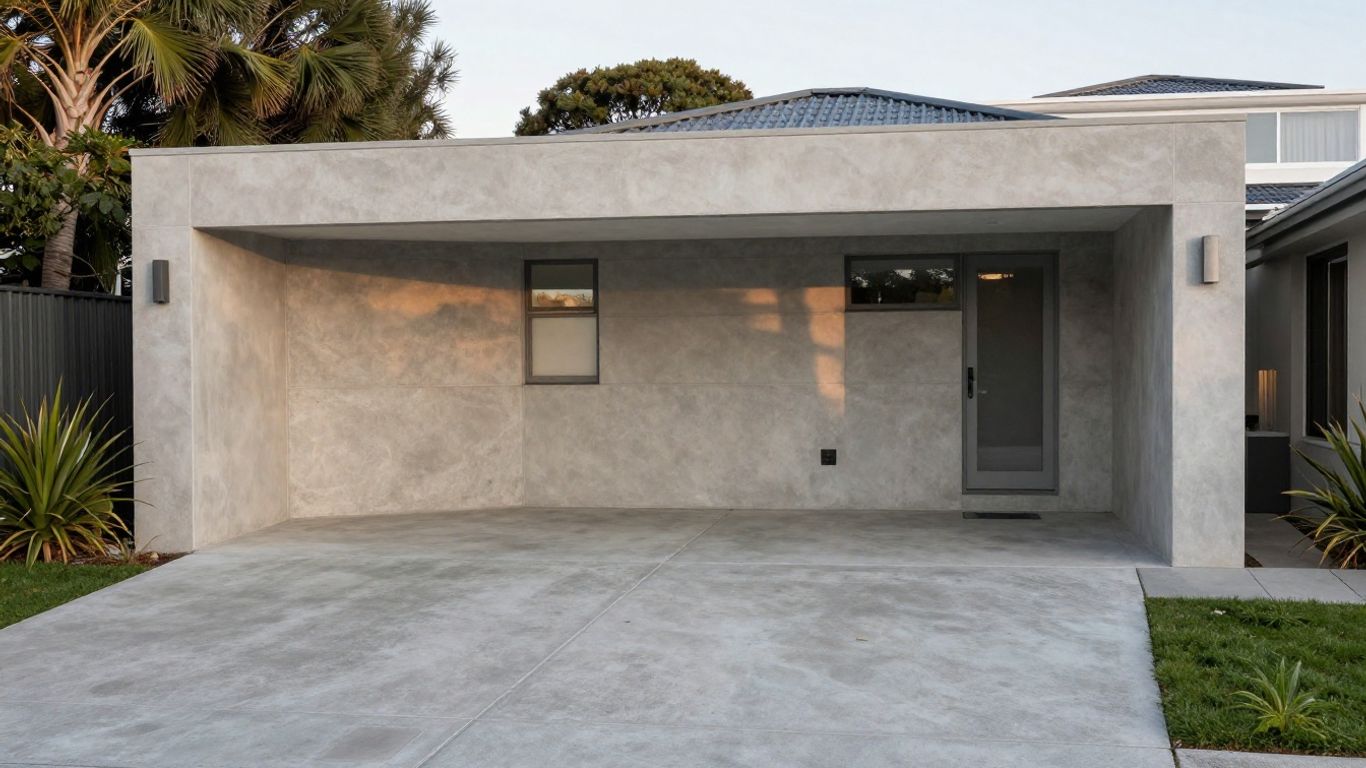
Concrete sealing Tauranga: A practical guide to protecting and restoring your concrete
Practical advice on concrete sealing Tauranga, from sealer choice and preparation to costs and care.
Published 25 August 2026
Key Takeaways
Concrete sealing can help Tauranga surfaces handle moisture, salt, staining, and everyday wear, but the right result depends on sound preparation and a suitable product. The existing slab, its exposure, and the finish you want should guide every decision.
- Inspect and repair the concrete before applying any sealer.
- Choose between penetrating, acrylic, epoxy, and polyurethane systems according to the surface and its use.
- Allow for cleaning, grinding, moisture checks, and curing when planning the work.
- Coastal exposure can shorten sealer life, especially on sunny or frequently wet surfaces.
- Maintenance and timely resealing help preserve both appearance and performance.
Understanding concrete sealing in Tauranga
Concrete sealing Tauranga projects range from small patios and paths to busy commercial floors. A sealer can reduce the movement of moisture and contaminants into the surface, improve cleanability, and change the final sheen or colour. It cannot correct structural movement, poor placement, or deep contamination. The most reliable approach starts with understanding what the slab needs before choosing a finish.
What concrete sealing does and why it matters
A sealer is applied after the concrete has been properly cleaned and prepared. Depending on the product, it may soak into the concrete or form a film over it, helping limit water absorption, staining, dusting, and surface wear. Some sealers leave a natural appearance, while others add a low-sheen, satin, or glossier look. Preparation determines performance more than a quick application alone.
Sealing also makes routine care more straightforward, particularly on floors exposed to food, vehicle fluids, soil, or regular foot traffic. It is not a substitute for crack repair or waterproofing a leaking structure, and it should not be expected to hide every patch, mark, or variation in the slab.
How Tauranga’s coastal climate affects concrete
Tauranga’s coastal conditions bring salt air, wind-blown sand, strong sunlight, and repeated wetting and drying. These influences can make exposed concrete more difficult to keep clean and can affect how a topical sealer ages. Shaded areas may also stay damp for longer, encouraging mould or moss where drainage and cleaning are poor.
The exposure of the particular property matters more than a calendar alone. A sheltered interior floor, a sunny Mount Maunganui driveway, and a pool surround will not place the same demands on a sealer. This coastal concrete guide offers a useful way to think about salt, sand, UV exposure, sealer failure, and resealing intervals without treating every site as identical.
Concrete surfaces that benefit from sealing
Sealing may suit driveways, paths, patios, exposed aggregate, garage floors, workshop areas, and interior concrete where staining or dust is a concern. It can also be considered for older slabs after failed coatings or residue have been removed and the concrete has been assessed. The surface must be sound enough to accept the chosen system.
For areas around pools, ramps, and entrances, appearance is only part of the decision. A smooth sealed finish can become hazardous when wet if slip resistance has not been considered. Where integrated grip is the priority, the concrete texturing option is a separate approach that creates texture in the concrete rather than relying on a temporary surface coating.
Sealing versus painting, coating, and waterproofing
Sealing, painting, coating, and waterproofing are related but not interchangeable terms. A penetrating sealer works within the near-surface concrete, while a film-forming sealer or coating sits at the surface and can provide a stronger visual change. Paint generally adds colour as a surface layer and may require more careful preparation and maintenance. Waterproofing addresses water ingress or moisture movement through a structure and may require a specialist system.
If a basement, retaining structure, or below-ground area is actively leaking, ordinary decorative sealing is unlikely to solve the cause. Specialist waterproofing guidance can help clarify when moisture barriers, leak repair, or structural waterproofing should be considered instead.
Choosing the right sealer for your concrete
The best sealer is not simply the one with the highest gloss or the shortest quoted application time. Start with the concrete’s porosity, age, condition, location, expected traffic, and desired appearance. A domestic patio and a workshop floor may both be called “concrete sealing” jobs, yet they can need quite different preparation and products.
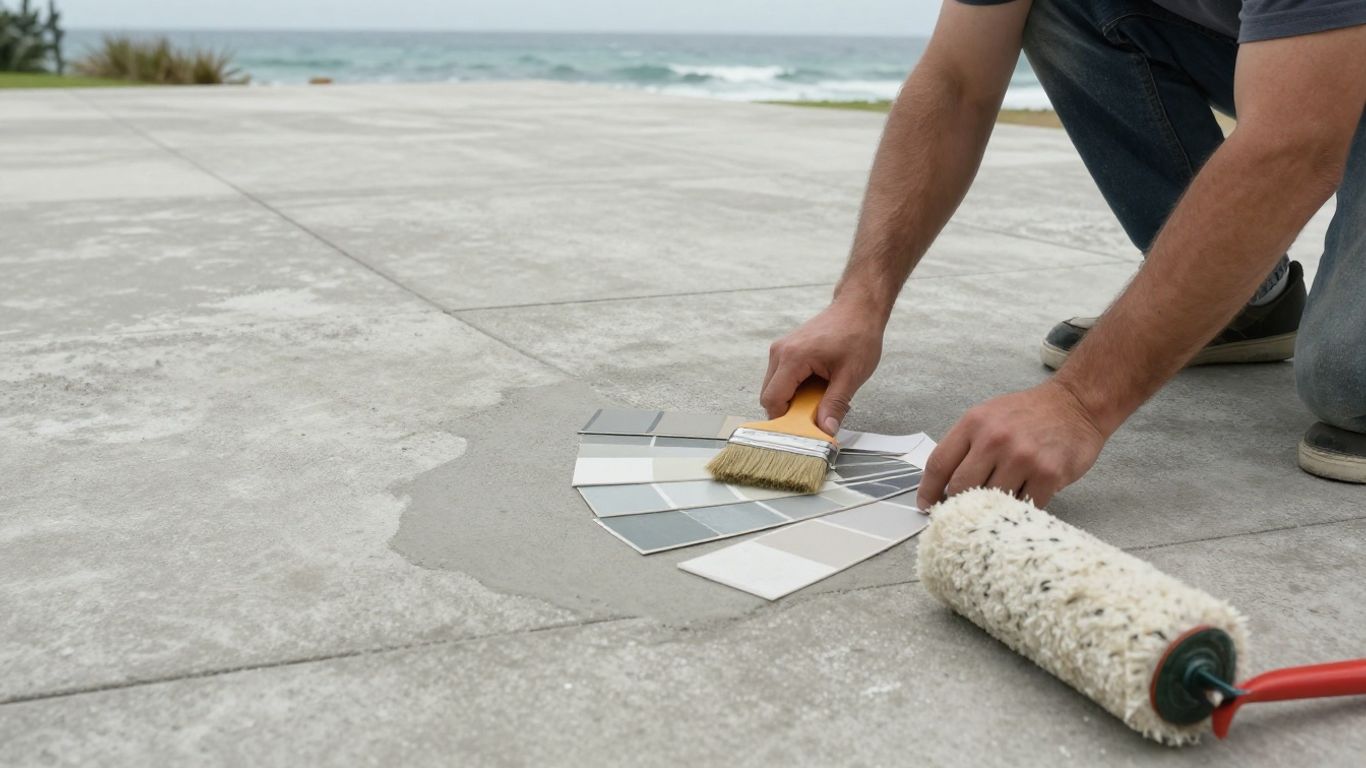
For polished-concrete work, the approved PeterFell C2 Polished Concrete System is a documented system used by Grinding Dynamics for specified polished finishes. That is distinct from choosing a generic sealer for an existing driveway or patio, so the intended finish should be made clear at the quotation stage.
Penetrating sealers for moisture and salt protection
Penetrating sealers enter the concrete rather than leaving a thick visible film on top. They are often considered where maintaining a more natural appearance matters and where reduced absorption is the main goal. The result can be subtle, and a penetrating product will not usually create the same colour change or gloss as a topical system.
They may be suitable for exposed outdoor surfaces, but performance still depends on the concrete’s porosity and exposure. Salt, standing water, poor drainage, and repeated abrasion can all affect the service life, so product selection should be based on the actual site rather than the label alone.
Acrylic sealers for colour enhancement and appearance
Acrylic sealers can enrich the colour of concrete and provide a noticeable change in sheen. They are commonly considered for decorative driveways, patios, exposed aggregate, and surfaces where a refreshed appearance is part of the brief. Some products are available in water-based or solvent-based formulations, with different application and drying characteristics.
Because an acrylic film remains at the surface, scratches, scuffs, whitening, or patchy application may be more visible than with a penetrating product. A small test area can show how the slab will respond and whether the chosen sheen suits the surrounding materials.
Epoxy and polyurethane coatings for heavy-use areas
Epoxy and polyurethane are coating systems rather than simple penetrating sealers. They may be considered for floors that need a more substantial surface layer, such as selected workshops, commercial spaces, or areas with higher chemical and abrasion demands. Their suitability depends on moisture levels, preparation, detailing, and the system specification.
A coating can fail if the slab is damp, contaminated, weak, or poorly prepared. It can also alter the character of the concrete more dramatically than a clear penetrating sealer. Where the floor needs to remain recognisably natural concrete, a ground-and-sealed or polished approach may be a better fit than a thick coating.
How to match the product to the surface and location
Before selecting a product, consider what the surface encounters each week. The following comparison is a useful starting point, not a replacement for inspecting the slab and checking the manufacturer’s requirements.
| Surface or location | Main concern | Sealer direction to discuss |
|---|---|---|
| Driveway or exposed aggregate | Weather, staining, tyres, and UV | Penetrating or suitable decorative sealer |
| Patio or pool surround | Moisture, salt, and wet grip | Weather-resistant system with slip considerations |
| Interior living floor | Appearance, dust, and cleaning | Natural, satin, or polished-compatible finish |
| Workshop or commercial floor | Traffic, chemicals, and abrasion | Specified coating or hard-wearing system |
The table helps narrow the conversation, but the slab’s condition remains decisive. Ask for a test area when appearance is important, particularly because colour, aggregate exposure, and existing repairs can make a generic sample look different from the finished floor.
Preparing concrete before sealing
Sealer cannot turn damaged or contaminated concrete into a new slab. Preparation may involve washing, degreasing, grinding, patch removal, crack treatment, or the removal of an old coating. The aim is to create a clean, sufficiently sound surface with a realistic finish expectation. This stage is often where the most useful decisions are made.
Assessing cracks, stains, and surface damage
Begin by recording cracks, open joints, surface scaling, pitting, delamination, and areas that sound hollow. Hairline cosmetic cracking is different from movement or structural damage, and a sealer will not stop an active crack from opening again. Oil, rust, paint, glue, and previous products should also be identified because they can change how the concrete absorbs the new system.
An existing slab may be suitable for rejuvenation, preparation, or sealing, but it may also have limitations that cannot be removed without replacing or overlaying the concrete. A careful assessment prevents a decorative expectation from being attached to a slab that cannot support it.
Cleaning away dirt, oil, mould, and efflorescence
Cleaning needs to remove more than loose dust. Oil can penetrate deeply, mould may return if dampness remains, and efflorescence can leave pale salt deposits that interfere with appearance and adhesion. The method should suit the surface, with enough rinsing and drying to prevent cleaning residue becoming part of the finished system.
A practical preparation sequence often includes these steps:
- Remove loose material, furniture, and surface debris.
- Degrease oil or vehicle-fluid contamination and treat remaining marks.
- Wash away dirt, mould, salts, and cleaning residue.
- Mechanically prepare areas where the surface is weak, glossy, or coated.
That sequence is not a guarantee that every stain will disappear. Deep contamination can remain visible or affect sealer uptake, which is why a test area and honest discussion of the slab’s history are worthwhile before work begins.
Repairing imperfections before applying sealer
Cracks, holes, chipped edges, and damaged joints should be assessed before sealing. Repairs can improve safety and appearance, but they may remain visible because repair material absorbs, reflects, or colours differently from the surrounding concrete. Overfilling or patching every variation can sometimes create more obvious marks than leaving sound natural character in place.
Grinding can remove old glue, failed sealers, and some surface build-up, while also helping prepare a floor for a new finish. However, it cannot correct deep structural movement or make a thin, unstable topping behave like a solid slab. The proposed repair should match the cause and the desired final appearance.
Checking moisture levels and weather conditions
Moisture is a key check before sealing, especially on ground-level slabs, shaded outdoor areas, and enclosed spaces with limited ventilation. Rain, dew, rising damp, or moisture vapour can affect adhesion, cloud a film, or delay curing. A contractor should assess the conditions and follow the chosen product’s technical requirements.
Outdoor work also needs a suitable weather window. Strong sun, wind, unexpected rain, and cool evenings can all change the working time. Waiting for stable conditions is usually less frustrating than trying to correct a finish that dried unevenly.
The concrete sealing process
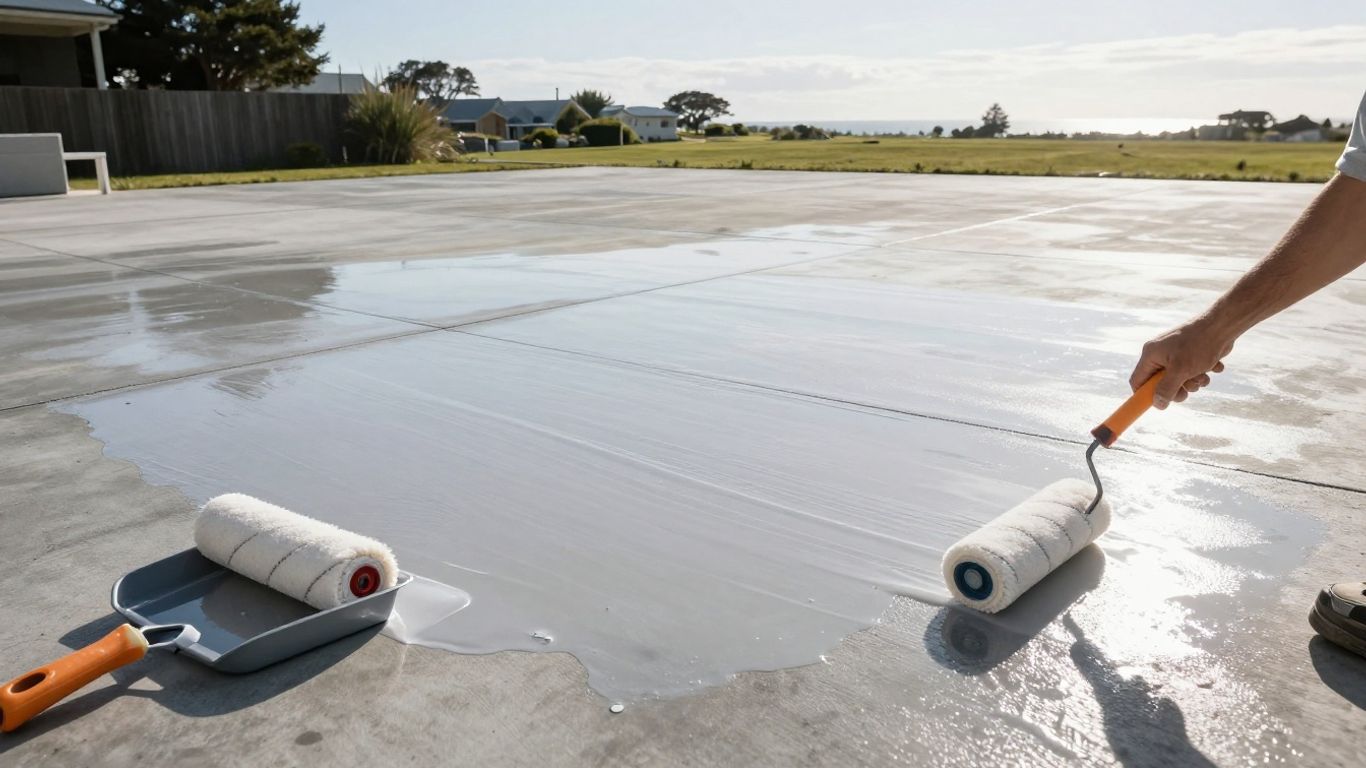
A professional sealing job is a sequence rather than a single visit with a roller. The work usually involves protecting adjacent areas, preparing the concrete, confirming the chosen finish, applying the system, and allowing adequate time before normal use. The exact steps vary with the product and the condition of the surface.
Where a project involves a specified polished finish, Grinding Dynamics works with the approved PeterFell C2 Polished Concrete System. For wet areas where grip is the central requirement, the approved PeterFell TextureSafe System is a documented texturing system rather than a decorative sealer. Keeping those purposes separate helps avoid selecting a smooth finish for a location that needs wet traction.
How professionals prepare the work area
The work area is cleared and adjacent walls, joinery, landscaping, vehicles, drains, and fixtures are protected. Dust, splash, odour, and access need to be considered before preparation starts. On an occupied commercial site, scheduling and isolation can matter as much as the product itself.
The concrete is then inspected again after cleaning or mechanical preparation. This is when hidden cracks, old adhesive, weak zones, and colour variation may become easier to see. If the surface differs from the original description, the sensible response is to review the scope rather than apply sealer and hope the issue disappears.
Applying the first and subsequent coats
Application follows the selected product’s instructions, including coverage rate, tool choice, working time, and recoat window. A first coat may be applied thinly and evenly, with later coats added only when the system allows them. Edges, corners, porous patches, and transitions need careful attention because uneven uptake can produce visible differences.
More product is not automatically better. Excess material can remain tacky, whiten, bubble, or create a patchy film, while too little may leave areas unprotected. The finish should be judged across the whole surface, not only by a small glossy section viewed from one angle.
Drying and curing times to expect
Drying is the point at which the surface feels ready to touch; curing is the longer process by which the system develops its intended properties. Foot traffic, furniture, vehicles, washing, and heavy use may each have different waiting periods. Temperature, humidity, ventilation, product type, and slab moisture all affect the timetable.
A contractor should provide practical handover instructions rather than relying on a generic promise. Keep pets, grit, furniture legs, and vehicle tyres away for the recommended period, and avoid testing the surface early with water or harsh cleaners.
Common application mistakes to avoid
Most visible failures have a straightforward cause: inadequate cleaning, trapped moisture, poor coverage, incompatible products, or work carried out in unsuitable weather. Rushing from washing straight into application is particularly risky because the concrete may look dry while retaining moisture below the surface.
Other mistakes include sealing over active cracks, applying a film across oil contamination, ignoring slip requirements, and assuming a clear sealer will make colour variation uniform. A measured process and a realistic sample are more useful than trying to force every slab into the same appearance.
Concrete sealing costs in Tauranga
The cost of sealing concrete in Tauranga depends on the work required before the sealer is applied as much as on the product itself. Area size, access, surface condition, number of coats, edges, repairs, and the desired appearance all affect the quote. A low initial figure may not include grinding, stain treatment, masking, or return visits.
What influences the price of a sealing project
Contractors typically consider the square metre area, how easily equipment can reach it, and whether the surface is indoors or exposed to weather. Small areas can carry a higher effective rate because setup and protection still take time. A decorative finish, colour enhancement, anti-slip requirement, or specialised coating may also change the scope.
The concrete’s starting condition is just as significant. A clean, sound slab needs less preparation than one with glue, oil, mould, flaking material, or several old coatings. For wider context on how surface condition, access, sheen, and waste affect concrete finishing prices, this Tauranga concrete cost guide is a useful reference.
Comparing residential and commercial sealing costs
Residential projects are often easier to schedule and may involve driveways, patios, paths, garages, or interior floors. Commercial and civic work can involve larger areas, more complex access, moisture or hygiene requirements, traffic management, and staged handover. Those differences make a simple per-square-metre comparison unreliable.
Commercial floors may also need more detailed documentation, specified products, or work outside normal operating hours. The right comparison is between scopes that describe the same preparation, finish, protection, and curing requirements.
When repairs or surface preparation add to the budget
Grinding, coating removal, degreasing, crack repairs, patching, edge work, and efflorescence treatment can all add labour. So can moving stored goods, protecting finished walls, managing drainage, or returning after a failed weather window. These are not necessarily extras added without reason; they may be what allows the sealer to bond and look consistent.
If preparation reveals deep contamination, structural movement, or a weak topping, the most economical choice may be to change the finish or repair strategy. Paying for a proper assessment early can prevent the larger cost of stripping a failed system later.
How to compare quotes from local contractors
Request a written scope that identifies the preparation method, sealer type, number of coats, intended sheen, exclusions, access assumptions, and expected use restrictions. Ask whether repairs and moisture checks are included, and whether the quote is fixed or subject to site conditions. It is also worth asking how the contractor will handle a test area and visible variations in the existing concrete.
A useful quote should explain what you are buying, not simply provide a total. Compare the proposed system and preparation line by line, then check that the appearance and performance expectations are realistic for the slab.
Maintaining sealed concrete for long-term performance
Sealing reduces maintenance but does not make concrete maintenance-free. Grit, leaves, salt, tyres, furniture, chemicals, and standing water continue to affect the surface. Gentle cleaning and prompt attention to spills generally help the finish age more evenly. Maintenance should reflect whether the concrete is indoors, outdoors, decorative, polished, or heavily trafficked.
Cleaning routines for indoor and outdoor surfaces
Indoor sealed floors usually benefit from frequent dust removal followed by a damp mop and a cleaner compatible with the sealer. Avoid abrasive pads, strong solvents, and unapproved acidic products unless the system manufacturer specifically permits them. Outdoor concrete can be swept regularly and washed as needed, with attention to corners where organic matter stays damp.
Oil, food, leaf tannins, and bird droppings are easier to address when they are fresh. Test any cleaning product in an inconspicuous area first, especially if the surface has a coloured or glossy film.
Protecting driveways, patios, paths, and floors
Use mats or trays beneath plant pots and furniture where water can sit, and add protective pads under items that move or scratch. Avoid dragging heavy objects over decorative finishes. On driveways and workshops, clean vehicle fluids promptly and watch for areas where tyres repeatedly turn or brake.
Pool surrounds and other wet areas need a separate check for traction as well as sealer wear. If the surface becomes slippery, resealing alone may not be the appropriate remedy; the texture and drainage should be reviewed.
Signs that your concrete needs resealing
A surface may need attention when water absorbs much faster than it once did, staining becomes difficult to remove, colour looks uneven, or the film shows dull, worn, peeling, or cloudy areas. Flaking and delamination are not always solved by adding another coat. The old material may need to be removed and the concrete prepared again.
Compare a sheltered section with a more exposed one, and look at high-traffic paths, turning points, steps, and edges. Localised wear can reveal how the surface is being used and whether the original product was suitable.
How often concrete should be resealed in Tauranga
There is no single resealing interval that suits every Tauranga property. Exposure, product type, traffic, drainage, cleaning, UV, salt, and the quality of the original application all matter. A sheltered interior may remain serviceable for considerably longer than a sunny coastal driveway or pool surround.
Inspect the surface annually and respond to early wear rather than waiting for widespread failure. If the sealer is no longer performing, obtain an assessment before applying another product, since incompatible layers and trapped moisture can make future preparation more difficult.
Conclusion
Concrete sealing is most successful when it is treated as a considered finish rather than a quick cosmetic layer. Assess the slab, prepare it properly, choose a sealer for the location and use, and allow the system to dry and cure as required. In Tauranga’s coastal climate, sensible maintenance and exposure-based inspections will help protect the concrete while keeping expectations grounded in the surface you actually have.
Frequently Asked Questions
Is concrete sealing suitable for every slab?
No. Concrete should be assessed for structural movement, weak areas, contamination, moisture, and previous coatings before sealing. Some slabs need repair, grinding, removal of old material, or a different finish instead.
Does sealing stop concrete cracks from returning?
No. A sealer may help protect the surrounding surface, but it does not prevent movement or repair the cause of an active crack. Cracks and joints should be assessed and treated appropriately before sealing.
Can a sealer make old concrete look new?
It can refresh colour or sheen and improve the surface’s resistance to staining, but it cannot remove every mark or erase uneven placement and repairs. Preparation and a test area help establish a realistic result.
Is a penetrating sealer better than a topical sealer?
Neither is universally better. Penetrating products can preserve a more natural appearance, while topical products may provide stronger visual enhancement or a surface film. The choice depends on exposure, traffic, moisture, and maintenance requirements.
Can sealed concrete be slippery when wet?
Yes, particularly if the finish is smooth or glossy and water, algae, or residue is present. Wet-area projects should consider drainage, cleaning, surface profile, and slip resistance before the finish is selected.
How long should people stay off newly sealed concrete?
The required time varies with the product, weather, ventilation, and slab conditions. Follow the contractor’s written instructions for light foot traffic, furniture, vehicles, washing, and full use rather than relying on touch-dry time alone.
Should concrete be resealed on a fixed schedule?
Not necessarily. Inspect the surface and consider its exposure and use. Coastal, sunny, wet, or heavily trafficked areas may need attention sooner than sheltered interiors, so resealing should respond to actual wear and product requirements.