

How to choose concrete sealer installers in Tauranga
Concrete sealer installers Tauranga: compare products, preparation, quotes and care before booking.
Published 29 October 2026
Key Takeaways
A good sealer choice starts with the surface and how it will be used, not simply the finish you want. Take time to compare preparation, product details, and the scope of each quote.
- Sealing protects concrete; it is different from polishing or applying a coating.
- Choose a sealer according to the slab, location, traffic, and desired appearance.
- Ask installers how they will assess and prepare the surface before application.
- Compare itemized quotes, including product details and any follow-up work.
- Maintain the surface with suitable cleaning and review it periodically for resealing.
What concrete sealer installers do
Concrete sealer installers assess the slab, prepare it for the chosen product, and apply the sealer according to the conditions on site. The work can be straightforward on clean, sound concrete, but old coatings, residue, moisture, or surface damage may change the preparation required. When comparing Concrete sealer installers Tauranga, ask what they will inspect before recommending a product.
How sealing differs from polishing and coating
Sealing applies a protective product to concrete; polishing is a process that mechanically grinds and refines the slab to create the chosen finish. A coating, by contrast, forms a separate layer over the concrete. Understanding the distinction helps keep the quote aligned with the result you want: for example, polished concrete floors involve working the concrete itself, rather than simply applying a sealer.
Concrete surfaces that can benefit from sealing
Sealers may be suitable for driveways, patios, floors, and other concrete surfaces where protection or easier routine care is a priority. The best approach depends on whether the slab is indoors or outside, how much traffic it gets, and what condition it is in. A professional concrete sealing service can help illustrate how installers consider the surface and its conditions when selecting a sealer.
Signs an existing sealer needs attention
A sealer may need attention if the finish looks worn, patchy, or visibly damaged, or if water behaves differently across areas of the same surface. Those signs do not automatically mean that another coat is the right answer: contamination, moisture, or a failing layer can affect the result. Ask an installer to assess the concrete and identify what is on it before agreeing to a reseal.
Choosing the right sealer for your concrete
There is no single sealer that suits every slab. Product choice affects appearance, maintenance, and how the surface responds to its environment, so it is worth discussing your priorities before work begins. In Tauranga, site exposure and the concrete’s current condition matter as much as whether you prefer a natural look or more sheen.

Penetrating sealers for natural-looking protection
Penetrating sealers soak into the concrete rather than forming a prominent surface film, so they are often considered when retaining a more natural appearance matters. Their suitability still depends on the concrete and the protection required. Ask the installer to identify the proposed product and explain how it is intended to perform on your particular surface.
Film-forming sealers for added sheen and surface resistance
Film-forming products create a layer at the concrete surface and can provide a different look and feel from penetrating products. The finish may be glossier, but sheen alone does not tell you whether a product is appropriate for the site. A supplier’s sealer and coating product information can help you see which technical details are listed, while an installer can explain how those details apply to your slab.
Matching the product to indoor, outdoor, and high-traffic areas
A sheltered indoor floor has different demands from a sun-exposed patio or a busy entrance. Consider expected traffic, cleaning routines, moisture, and whether a wet surface needs additional grip. For areas where wet grip is a priority, the PeterFell TextureSafe System is used for bush-hammer texturing on concrete, including pool surrounds, steps, and ramps; ask whether texturing, sealing, or both fit your project.
Finding a reliable installer in Tauranga
The right installer should be able to explain what they can assess, what preparation they expect, and where the slab’s condition may limit the result. Clear answers are more useful than broad assurances, especially when an existing sealer or coating is involved. Compare the proposed scope and product information alongside examples of work, not just the final price.
Checking experience with your type of concrete
Ask whether the installer has worked on surfaces similar to yours, such as an exterior driveway, a residential floor, or a commercial slab. For polished concrete projects, Grinding Dynamics is an approved PeterFell C2 applicator; that approval is relevant when assessing experience with polished concrete, rather than a general promise about every sealing job. Share details about existing coatings, repairs, or previous treatments so the installer can explain what needs checking.
Reviewing examples of completed local projects
Examples can help you understand the kinds of surfaces an installer has worked on, but photographs cannot predict the exact appearance of your slab. Mix, placement, finishing, and the condition of existing concrete all influence the outcome. If the project involves polishing, ask whether a sample grind on your own concrete would help set expectations more reliably than a generic example.
Confirming insurance, warranties, and product specifications
Before booking, ask what insurance applies to the work and whether any warranty is offered, including its terms and exclusions. Request the product name and specification, along with details about the intended finish and any limits on use. A written explanation makes it easier to compare the proposed system with the installer’s preparation plan.
Understanding the installation process
A well-planned job begins with an assessment, not with opening a container of sealer. The installer needs to understand the surface, identify any existing treatment, and decide what preparation is appropriate. Timing also matters: the slab and weather conditions can affect when the work can proceed and when the surface can be used again.
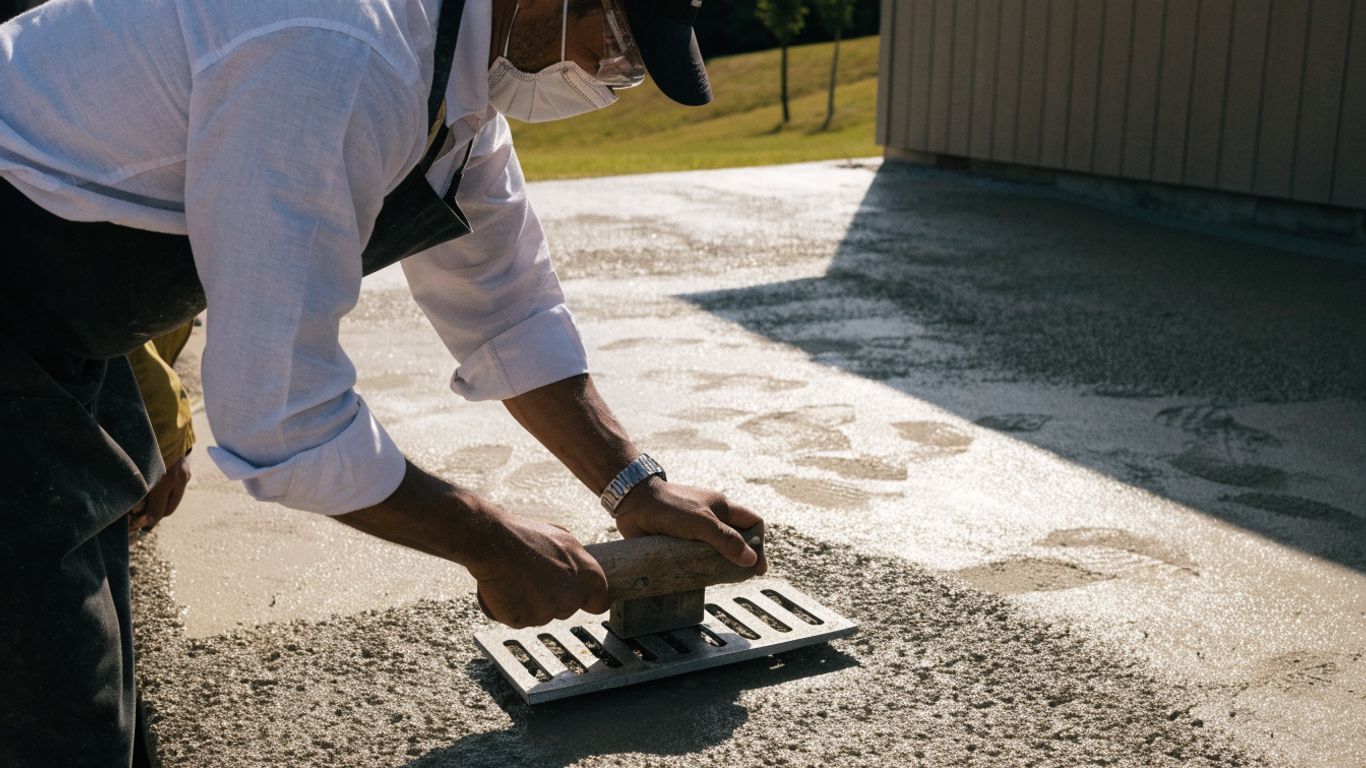
Assessing the slab and identifying existing coatings
An assessment should consider the concrete’s condition, any visible damage or contamination, and whether an existing sealer or coating is present. Old products can affect adhesion or change how a new application looks, so the installer may need to establish what is already on the slab before recommending a system. Ask what they have found and how it affects the scope.
Preparing the surface for an even application
Preparation may include cleaning and removing residue or incompatible material; the exact steps depend on the slab and the product being used. Before work starts, ask the installer to outline the planned preparation so you know what is included. Common points to clarify include:
- How dirt, oil, or other contamination will be addressed.
- Whether old sealer or coating needs to be removed.
- How cracks, damaged areas, or repairs affect the work.
- What the surface should look and feel like before application.
Those details help you understand why two quotes for the same area may allow for different preparation. They also give you a practical way to check that the proposed work matches the condition of your concrete.
Allowing for curing time and weather conditions
Ask when the surface can be walked on or returned to normal use, and whether the installer needs a period of suitable weather to apply the product. Outdoor work can be affected by rain, direct sun, and moisture in the concrete. A clear schedule should explain both the application window and any time needed before regular use.
Comparing quotes and project costs
A useful quote describes the work clearly enough for you to compare it with another proposal. Price can reflect the area, surface condition, preparation, access, and the selected product, so the lowest figure may not cover the same scope as a more detailed one. Ask questions before signing if any part of the work is described only in broad terms.
What should be included in an itemized quote
An itemized quote makes it easier to see what is included and what may be treated as additional work. For polished concrete, cost factors for polished floors can provide a useful reference for why slab condition, area, and finish choices affect pricing. For sealing, look for similar clarity about preparation, product, and application.
| Quote detail | What to check |
|---|---|
| Surface preparation | Cleaning, residue removal, and any coating removal included |
| Product | Sealer type and product specification |
| Application | Areas covered and the proposed number of applications, if specified |
| Additional work | Repairs, access requirements, or exclusions |
Use these details to compare like with like, rather than treating the total as the whole story. If an item is unclear, ask for it to be explained or added to the written scope before work begins.
How surface condition and area affect pricing
A larger area may change the overall price, while a worn, contaminated, or previously coated surface can require extra preparation. Access and the amount of repair work may also affect the proposed scope. An on-site assessment helps the installer identify these variables instead of relying on assumptions from a brief description.
Questions to ask about products and follow-up work
Before accepting a quote, confirm the product, expected appearance, preparation included, and any care instructions you will receive. Ask what happens if the assessment reveals an issue that was not visible beforehand, and how additional work would be priced. It is also worth confirming whom to contact if you have a concern after the job is complete.
Caring for sealed concrete
Care starts with following the installer’s guidance for the specific product and surface. Routine cleaning and sensible attention to moisture or wear can help you spot changes before they become a larger maintenance issue. In a coastal setting, exposure to sun, salt, and moisture can also be part of the maintenance picture.
Cleaning without damaging the sealer
Use cleaning methods and products appropriate to the sealer, and avoid assuming that a harsh chemical or abrasive tool is safe for every finish. Ask the installer what to use for routine cleaning and whether there are products or methods to avoid. Promptly removing dirt and spills can help keep the surface easier to maintain.
Managing moisture, sun, and coastal exposure
Outdoor concrete may face changing weather, direct sunlight, moisture, and coastal conditions, all of which can influence how a sealer holds up. Check for areas where the finish looks worn or water is behaving differently, and discuss any persistent dampness with a qualified installer. This coastal concrete sealer guidance covers factors such as salt, sand, UV, and moisture that can affect concrete near the coast.
Knowing when to reseal the surface
Resealing is not simply a matter of following a fixed interval; the product, site conditions, traffic, and visible wear all matter. If the surface has become patchy or the existing layer appears to be failing, seek an assessment before applying more product. The installer can check whether cleaning, removal, repair, or a new application is appropriate for the slab.
Conclusion
Choosing a concrete sealer installer in Tauranga means looking beyond the product name and comparing the assessment, preparation, and written scope. When the recommendation fits the slab and its conditions, you can make a more informed decision about the finish, cost, and ongoing care.
Frequently Asked Questions
How do I choose a concrete sealer installer in Tauranga?
Look for an installer who assesses the slab, explains the proposed preparation and product, and provides a written scope. Ask about relevant experience, insurance, warranties, and how unexpected surface issues would be handled.
What is the difference between sealing and polishing concrete?
Sealing applies a protective product to concrete, while polishing mechanically grinds and refines the concrete to create a chosen finish. They are different processes and may be specified for different project goals.
How do I know which sealer is right for my concrete?
The choice depends on the slab’s condition, its location, expected traffic, maintenance needs, and the appearance you want. Ask the installer to explain why the proposed product suits those conditions.
Can an existing sealer be applied over without removal?
Not always. The installer should identify the existing treatment and assess whether it is sound and compatible with the proposed product before deciding whether removal or other preparation is needed.
How long does concrete sealer installation take?
Timing varies with the area, preparation required, product instructions, and site conditions. Ask for the expected application schedule and the time required before the surface can return to normal use.
Can sealed concrete be slippery when wet?
Slip risk depends on the surface texture, sealer, and conditions. If the area is frequently wet, raise the need for grip before work begins and ask what options are suitable for that location.
How often should concrete be resealed?
There is no universal interval because wear, exposure, product choice, and maintenance differ. Inspect the surface periodically and ask an installer to assess visible wear or changes before deciding to reseal.