
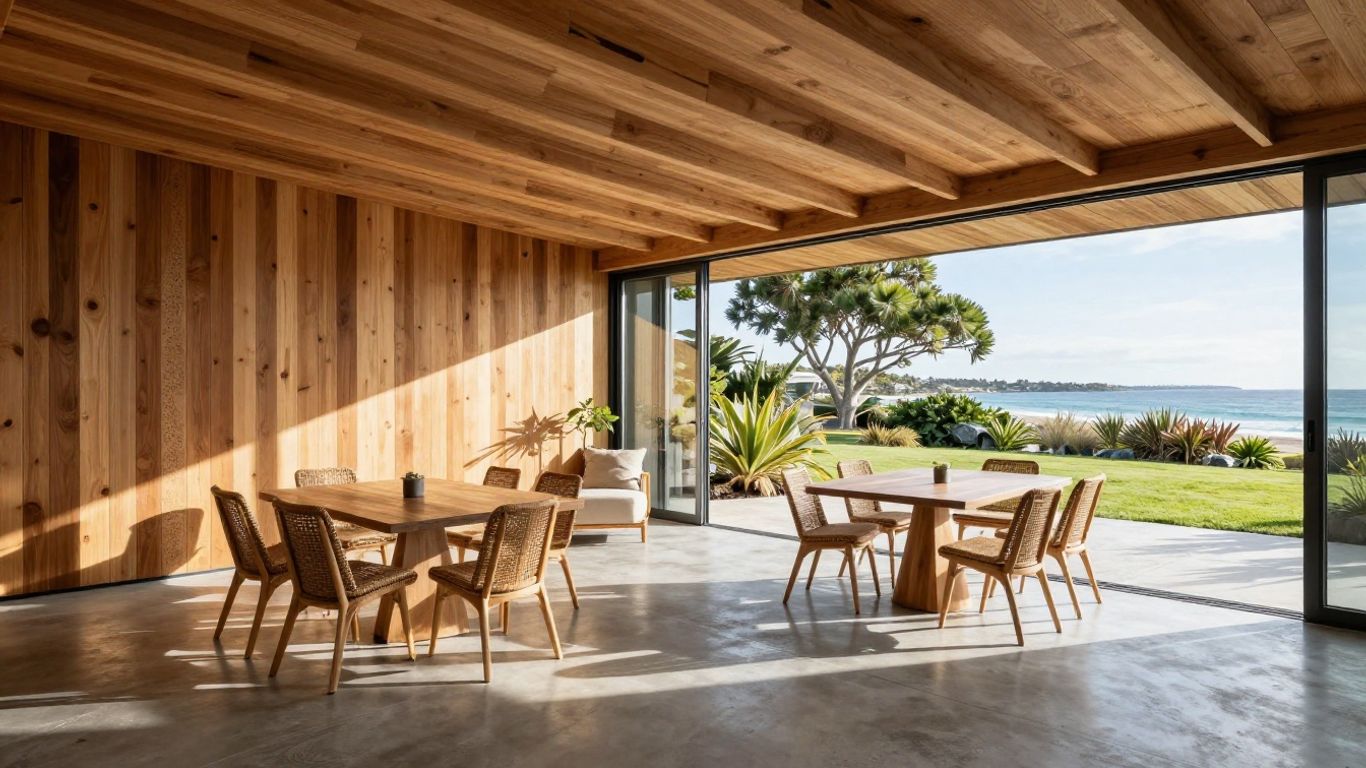
Polished concrete floors Bay of Plenty: Costs, benefits, and what to expect
Polished concrete floors Bay of Plenty: costs, finishes, benefits, installation, and care explained.
Published 25 August 2026
Key Takeaways
Polished concrete can be a durable, low-maintenance flooring choice for Bay of Plenty homes, businesses, and civic spaces. The final result depends heavily on the slab, preparation, and finish decisions made before work begins.
- Existing concrete can often be ground and polished, but its condition influences the finished appearance.
- Colour, aggregate exposure, depth of cut, and polish level shape the floor’s character.
- A good installation includes slab assessment, repairs, diamond grinding, densification, and protection.
- Project costs vary with floor area, access, repairs, edge work, and the finish selected.
- Samples made from the actual slab provide a more dependable guide than photographs or screen colours.
Understanding polished concrete floors in the Bay of Plenty
Polished concrete floors Bay of Plenty projects are not all alike. A new residential slab, an old garage floor, and a busy retail space may each require a different preparation method and finish. The concrete itself remains the finished surface, so the quality of the original pour and the work done to refine it both matter. For practical background on existing slabs, curing, colour, and sealing, the concrete flooring guidance is a useful starting point.
What polished concrete is and how the process works
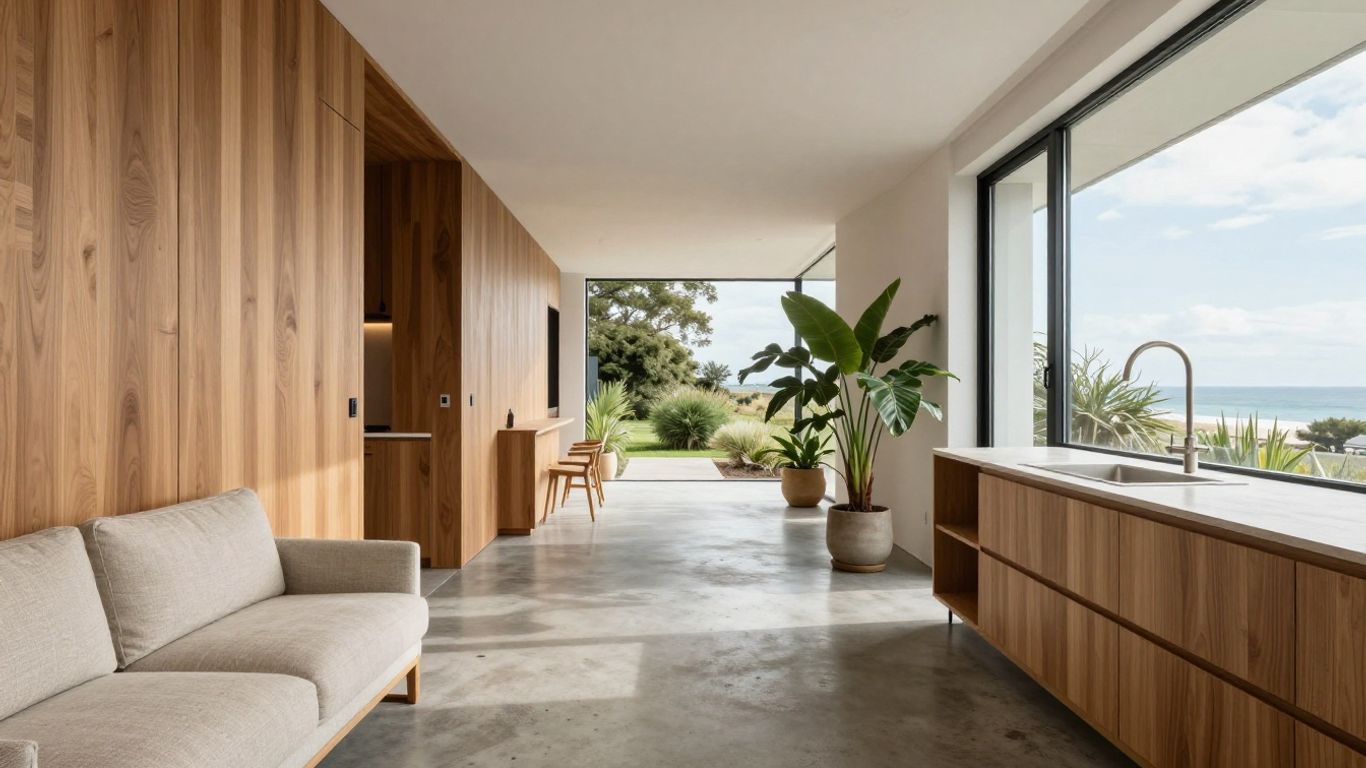
Polished concrete is created by mechanically refining the concrete surface with progressively finer diamond tooling. Grinding removes surface irregularities and can reveal some of the aggregate, while honing and polishing refine the surface to the selected level of sheen. A densifier is commonly used during the process to harden and consolidate the surface before final refinement and protection. The result is an integrated concrete floor rather than a separate floor covering.
How polished concrete differs from sealed or power-floated concrete
A power-floated floor is finished during the original concrete placement, using mechanical equipment to close and smooth the surface. Sealing protects concrete but does not create the same sequence of controlled grinding and polishing, and a sealer alone cannot change the underlying aggregate exposure. Polished concrete is therefore a process of refining the slab itself. A ground-and-sealed finish may be more appropriate when the desired appearance or use does not call for a polished sheen.
Where polished concrete works best in homes and commercial spaces
Polished concrete suits areas where a continuous, hard-wearing floor is useful, including living areas, kitchens, showrooms, cafés, retail spaces, offices, and some civic interiors. It can also work well in garages and renovated spaces when the existing slab is sound enough to refine. Residential interiors often benefit from its connection with timber, rugs, cabinetry, and planting, while commercial users may value the straightforward cleaning routine. The right choice still depends on acoustics, underfoot comfort, wet exposure, and the character of the slab.
Local climate considerations for Bay of Plenty properties
Bay of Plenty properties may experience humidity, coastal air, tracked-in sand, and strong sunlight, particularly around Tauranga, Mount Maunganui, and other exposed locations. Interior polished floors need sensible entry mats and prompt cleaning, while outdoor areas require a finish designed for wet grip rather than a smooth interior polish. Drainage and exposure should be considered before selecting a protective treatment. For pool surrounds and other wet external areas, integrated non-slip texturing addresses grip through texture cut into the concrete rather than relying on a temporary film.
Key benefits of choosing polished concrete
Polished concrete is attractive because it combines a simple visual language with practical performance. It has no grout lines to scrub and can be cleaned without managing multiple floor materials across a large area. It is not indestructible, however, and the installation quality, traffic pattern, and maintenance routine all affect how it ages. The most useful benefits are those that match the way a particular space is used.
Durability for high-traffic areas
A properly prepared and polished slab can handle substantial foot traffic and everyday movement without the peeling associated with some surface-applied finishes. Its performance depends on the concrete underneath, the degree of refinement, and the protection selected for the space. High-traffic commercial floors still need walk-off mats, sensible cleaning, and attention to grit. A floor that looks hard-wearing on day one will last better when those small sources of abrasion are controlled.
Low-maintenance cleaning and long-term care
The continuous surface makes routine cleaning relatively uncomplicated. Dust should be removed with a soft mop or vacuum, followed by damp mopping with a cleaner suitable for polished concrete. Avoid harsh acids, abrasive powders, and products that leave a waxy residue unless the flooring specialist has specifically recommended them. Simple care protects the finish and helps preserve its appearance between professional inspections.
Indoor air quality and dust reduction
Unlike carpet, polished concrete does not hold loose fibres, and its continuous surface offers fewer joints and recesses where dust can settle. It can be a sensible option for occupants who prefer hard flooring and regular damp cleaning. The grinding stage itself must be managed carefully, with suitable dust-control equipment and containment. Once the work is complete, the cleaning routine is generally direct and does not require repeated stripping of a soft floor covering.
Design flexibility for modern interiors
The appearance can be shaped through decisions about colour, aggregate, depth of cut, and polish level. Existing concrete may reveal river stone, crushed rock, or a fine salt-and-pepper pattern, but the result cannot be selected independently of what is already in the slab. For new work, colour and aggregate need to be considered before the concrete is ordered. A physical sample or test grind is much more useful than relying on a screen image.
Choosing the right finish and design
A polished floor is not simply either shiny or dull. Sheen, aggregate exposure, colour variation, texture, and lighting all affect how the surface reads once it is installed. Natural variation is part of concrete, particularly where different pours, curing conditions, repairs, or aggregate types are involved. Good design decisions set a direction while leaving room for the material’s genuine character.
Selecting gloss levels and surface textures
Gloss levels may range from a muted, low-sheen appearance through satin finishes to a more reflective polish. A higher sheen can make a room feel brighter, but it may also show marks and reflections more clearly. Depth of cut determines how much aggregate is revealed, from a subtle surface appearance to a stronger stone pattern. The best combination depends on lighting, furniture, traffic, and how much visual variation the client is comfortable with.
Using decorative aggregates, stains, and dyes
Aggregate is embedded in the concrete mix, so its colour and size have a major influence on the finished floor. New slabs can be planned with selected aggregate and integral colour, while existing slabs offer less control over what is revealed. Stains and dyes may be options in some situations, but they should not be treated as a guarantee of uniform colour. Physical samples made from the project’s own concrete provide a clearer basis for approval.
Matching finishes to residential and commercial settings
Homes often suit a softer sheen and moderate aggregate exposure that works comfortably with warm materials and changing natural light. Retail, hospitality, and civic spaces may call for a finish that remains visually composed across a larger floor and tolerates regular traffic. Furniture movement, entrance grit, cleaning schedules, and accessibility should be considered alongside appearance. A finish selected for a quiet living room may not be the sensible choice for a busy public route.
Balancing appearance with slip resistance
A smooth interior polish should not be assumed suitable for every wet area. Entries, ramps, pool surrounds, and external paths need a considered approach to drainage, surface profile, footwear, and contamination. Polished concrete and textured concrete serve different purposes: one refines the floor’s appearance, while the other can create integrated grip. Grinding Dynamics is an approved applicator of the PeterFell TextureSafe System, which uses bush hammering to create a fine, pitted texture for slip resistance in suitable applications.
The polished concrete installation process
Installation begins well before a machine reaches the floor. The contractor needs to understand what the slab is made of, what has been applied over it, how accessible the area is, and what finish the client expects. Existing floors may have carpet adhesive, tile residue, paint, stains, cracks, or uneven patches that affect both time and appearance. For a new build, site readiness and protection from contamination are equally important.
Assessing the existing concrete slab
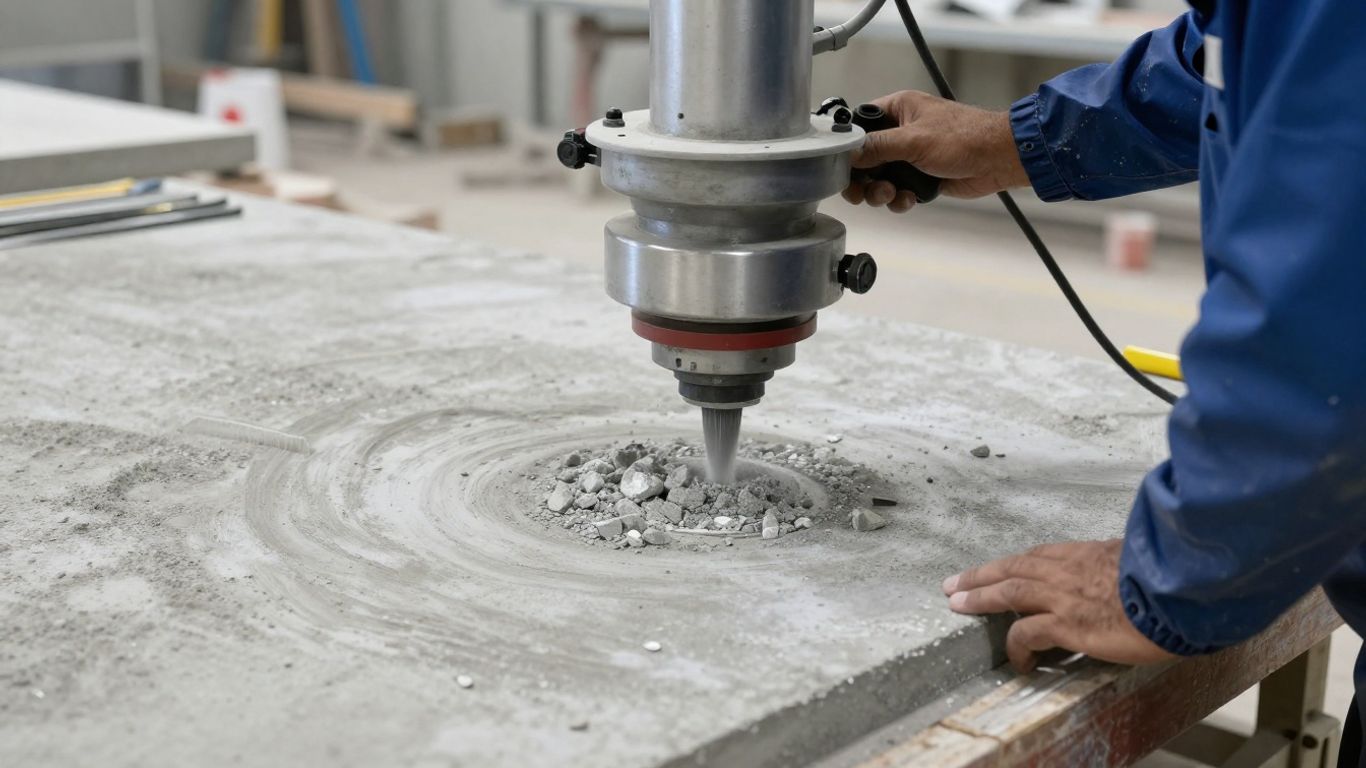
An assessment looks at flatness, hardness, contamination, cracking, previous repairs, and the likely depth needed to reach sound concrete. The age of the slab matters as well; concrete generally needs a minimum 28-day curing period before polishing work begins. Contractors may also check edges, access, moisture-related concerns, and whether coverings can be removed without damaging the surface. A small test area can reveal more about the likely finish than a generic photograph.
Repairing cracks, joints, and surface damage
Cracks and joints are part of the slab’s history and cannot always be made invisible. Repairs may improve safety and appearance, but the repaired areas can remain visually distinct from the surrounding concrete. Adhesive, paint, and other residues may require additional grinding or preparation before polishing. Clients should discuss how existing marks will be treated and what level of variation is acceptable before the main work starts.
Grinding, honing, and polishing stages
The first grinding stages flatten high spots, remove unwanted surface material, and establish the depth of cut. Finer diamond tooling then hones the floor and gradually refines the surface toward the agreed sheen. The sequence and number of passes depend on slab hardness, condition, exposure, and the target finish. A typical project may involve several practical checkpoints:
- Confirming the intended exposure with a test area.
- Removing residues, weak concrete, and surface irregularities.
- Progressing through finer diamond tooling.
- Reviewing the sheen and aggregate before final protection.
This staged approach allows the contractor and client to check the floor as it develops rather than treating the final pass as a surprise. The polished concrete process provides a useful outline of assessment, sample approval, grinding, densifying, sealing, and handover.
Applying densifiers and protective treatments
Densifiers help consolidate the prepared concrete surface during the refinement process. A suitable protective treatment may then be selected according to the floor’s location, exposure, traffic, and maintenance expectations. Interior floors and exposed external concrete do not necessarily need the same product or application method. Grinding Dynamics is an approved applicator of the PeterFell C2 Polished Concrete System, a documented system for specified polished concrete results.
Polished concrete flooring costs in the Bay of Plenty
There is no reliable single rate for polished concrete without understanding the floor and the requested finish. A straightforward open slab with good access may require far less preparation than a divided interior covered in adhesive and damaged concrete. New pours also involve decisions and coordination that do not arise in the same way for an existing floor. A clear scope is more useful than comparing headline square-metre figures alone.
Factors that influence the project price
Floor area, access, slab condition, depth of cut, edge detail, repairs, waste handling, and sheen level all influence the quote. Small rooms can cost more per square metre because setup and edge work are spread over less area. Furniture removal, floor protection, and restricted working hours may also affect labour. A contractor should explain which assumptions sit behind the price rather than presenting an unexplained total.
Comparing new slabs with existing concrete floors
An existing slab may reduce the need for a new floor covering, but it can require substantial preparation before it is suitable for polishing. A new slab offers earlier control over colour, aggregate, flatness, curing, and site sequencing, although those decisions need to be made before the pour. Neither option is automatically cheaper. The Tauranga polished concrete cost guide is useful when considering area, condition, depth of cut, access, and edge work together.
Extra costs for repairs, edges, and decorative finishes
Repairs, grinding around walls, stairs, thresholds, columns, and tight corners can add labour that is easy to overlook in an early estimate. Decorative aggregate, integral colour, deeper exposure, higher sheen, and sample work may also change the scope. If old floor coverings must be removed, the adhesive beneath them may require separate treatment. Ask whether these items are included, provisional, or excluded before comparing offers.
How to compare quotes from local contractors
A useful quote should describe the floor area, preparation method, expected exposure, sheen, repairs, protection, sealing, access assumptions, and cleanup. It should also explain how natural variation and existing defects will be handled. The following comparison points can make two otherwise similar-looking proposals easier to assess:
| Quote detail | Why it matters | What to clarify |
|---|---|---|
| Depth of cut | Influences aggregate exposure and preparation time | Is the exposure guaranteed or indicative? |
| Repairs and joints | Affects appearance, labour, and durability | Which repairs are included? |
| Edge work | Hand work can be slower than open-floor grinding | Are stairs, thresholds, and corners priced? |
| Protective treatment | Influences staining resistance and care | What product and maintenance advice apply? |
Read the exclusions as carefully as the inclusions. A slightly higher quote may simply contain a more complete scope, while a low quote may leave repairs, access, or final protection unresolved.
Maintaining polished concrete floors
Polished concrete is relatively straightforward to care for, but it still benefits from a planned routine. Fine grit brought in from outside is one of the most common sources of avoidable wear, especially near entrances and loading points. Spills should be dealt with according to the substance rather than left to sit. Maintenance expectations should be discussed during handover so the cleaning team or household knows what the floor requires.
Recommended cleaning products and routines
Use a soft dust mop, vacuum, or microfiber mop to remove loose grit, then damp mop with a neutral cleaner approved for polished concrete. Avoid flooding the floor and remove dirty water rather than spreading it across the surface. Cleaning equipment should be clean too; abrasive particles trapped in a pad can mark a floor. Always follow the contractor’s product-specific advice where a particular protective treatment has been applied.
Preventing stains, scratches, and surface wear
Entry mats, felt pads beneath furniture, prompt spill response, and regular removal of sand can make a noticeable difference. Rubber-backed materials should be checked for compatibility, as some can trap moisture or transfer residue. Heavy items should be lifted rather than dragged, and maintenance equipment should use non-abrasive pads. These measures do not prevent every mark, but they slow the accumulation of everyday wear.
When resealing or professional polishing may be needed
The timing of resealing depends on exposure, traffic, the protective treatment, and how the floor is cleaned. External concrete around the coast may need closer observation because salt, sand, and ultraviolet exposure can affect protection. Professional polishing may be appropriate when the surface has lost clarity or developed widespread wear, but it is not a substitute for fixing structural problems. A specialist can inspect the floor and distinguish surface wear from deeper damage.
Maintenance considerations for businesses and busy households
Businesses should include entrance cleaning, spill response, furniture movement, and periodic inspection in their facilities routine. Households may need extra attention around kitchens, patios, garages, and doors opening onto sand or garden areas. Cleaning schedules should suit traffic rather than follow an arbitrary calendar. A written handover routine is particularly helpful when several people or a commercial cleaning contractor share responsibility.
Finding a polished concrete flooring contractor
Choosing a contractor is as much about communication and preparation as machinery. The finished floor reflects the original slab, so a responsible applicator should explain what can and cannot be controlled. Look for someone willing to discuss samples, timing, repairs, finish variation, protection, and maintenance before asking for a deposit. Local experience is valuable because access, coastal exposure, building sequencing, and common slab conditions vary from project to project.
Checking experience, qualifications, and insurance
Ask how long the contractor has worked with grinding, polishing, sealing, and concrete preparation, and request evidence of appropriate insurance. For specified systems, confirm whether the applicator holds the relevant approval rather than assuming that every polished floor is produced in the same way. Dust control, site safety, curing periods, and protection of surrounding areas should be part of the discussion. A contractor who explains limitations clearly is generally easier to work with than one who promises a uniform result without inspecting the slab.
Reviewing local project examples and references
Project photographs can demonstrate workmanship, but they cannot predict the exact appearance of your concrete. Ask to see examples with similar slab conditions, exposure, scale, and use. References are most useful when they address communication, preparation, cleanliness, timing, and how the contractor handled unexpected defects. The wider Bay of Plenty concrete grinding experience also shows why local project context matters, although every slab still needs its own assessment.
Questions to ask before signing a contract
Before committing, ask what the contractor expects to find, how a test patch will be used, and which finish decisions must be made in advance. Clarify the minimum curing period for new concrete, access requirements, noise and dust controls, and how the area will be protected afterward. It is also sensible to ask how cracks, colour variation, aggregate exposure, and patch repairs will appear in the finished floor. These questions turn broad expectations into an agreed, workable scope.
What to include in the installation agreement
The agreement should identify the floor area, preparation, depth of cut, aggregate exposure, colour where relevant, polish level, repairs, edge treatment, protective products, exclusions, programme, payment stages, and cleaning handover. It should state how samples or test patches are approved and acknowledge the natural variation of concrete. Include site access, power, water, protection, waste removal, and responsibility for moving belongings. A detailed agreement protects both sides and makes the final result easier to judge fairly.
Conclusion
Polished concrete can be a distinctive and practical floor for Bay of Plenty properties when the slab, finish, budget, and maintenance plan are considered together. Start with an honest assessment of the concrete, use a sample or test grind to guide expectations, and choose a contractor who explains preparation and limitations clearly. The best result is not simply the shiniest floor; it is one that suits the space, the traffic, the climate, and the people who will use it.
Frequently Asked Questions
Is polished concrete suitable for homes in the Bay of Plenty?
Yes, it can suit living areas, kitchens, garages, and other interiors when the slab is appropriate and the finish matches the household’s needs. Comfort, acoustics, entrances, and wet-area safety should be considered alongside appearance.
Can an existing concrete slab be polished?
Many existing slabs can be polished or ground and sealed, but suitability depends on hardness, cracks, contamination, flatness, previous coverings, and the depth available for grinding. A site assessment and test area provide the most dependable guidance.
How long should new concrete cure before polishing?
A new slab generally needs at least 28 days of curing before polishing work begins. The contractor may also require the building to be enclosed, dry, accessible, and protected from contamination.
Does polished concrete become slippery when wet?
A smooth polished surface can be slippery when wet, depending on the conditions and contamination present. Wet external areas, pool surrounds, ramps, and entries should be designed with suitable drainage, texture, and grip rather than treated like dry interior floors.
How much does polished concrete flooring cost?
Cost depends on area, slab condition, access, depth of cut, repairs, edges, exposure, sheen, protection, and waste handling. An itemised quote based on the actual floor is more useful than a general rate.
Is polished concrete difficult to maintain?
Routine care is usually uncomplicated: remove grit, damp mop with a suitable neutral cleaner, respond to spills promptly, and avoid abrasive products. Busy commercial areas may need a more frequent cleaning and inspection schedule.
Will every polished concrete floor look perfectly uniform?
No. Aggregate, colour, curing, placement, repairs, lighting, and the original slab can create natural variation. A sample made from the project’s own concrete is the best way to establish realistic expectations.