Outdoor

Outdoor
Approved PeterFell C2 Applicator
Approved TextureSafe Applicator
Twenty-Five Years Combined Experience
Grinding Dynamics
Published 16 August 2026 · 9 minute read
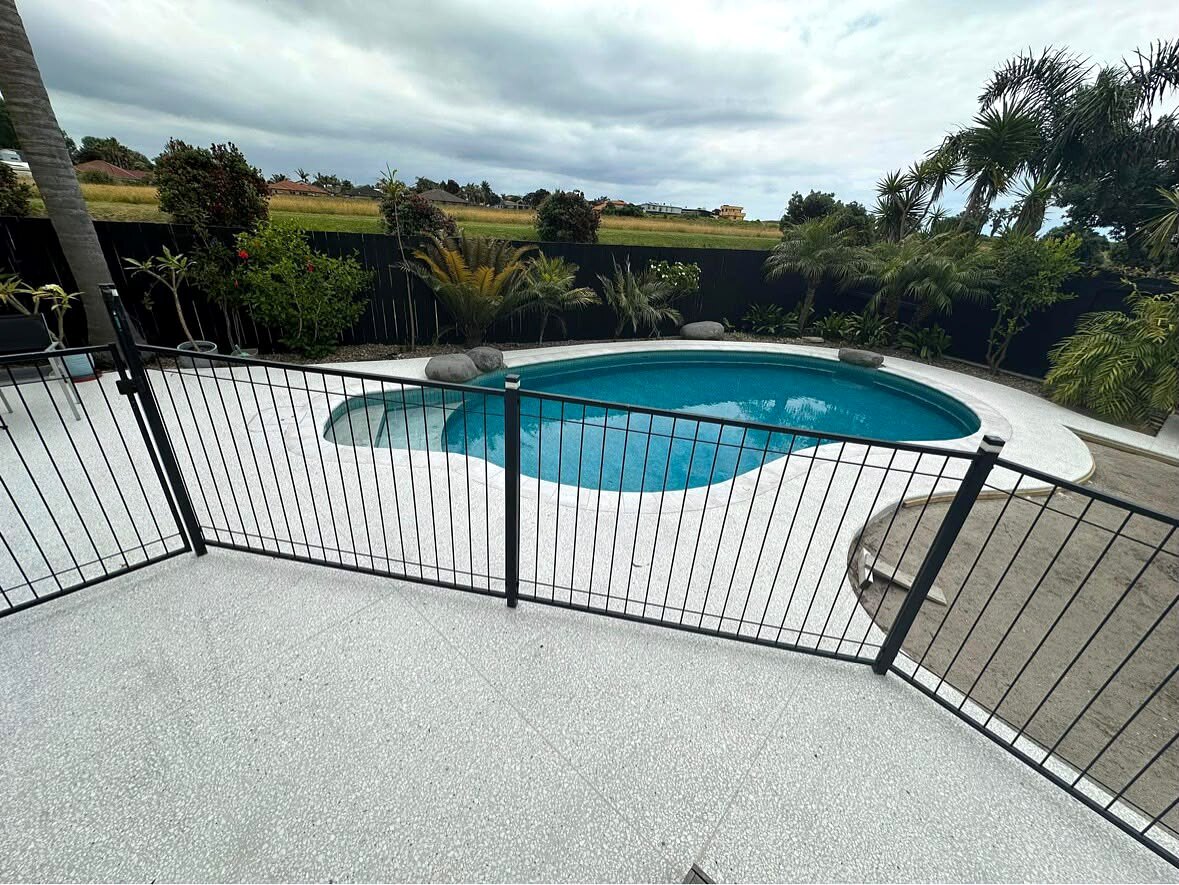
A pool surround is the hardest surface on a residential property, and it is not close. Think about what it deals with. It is wet for most of the summer. The water carries chlorine or salt. People walk on it barefoot, which rules out anything harsh. They walk on it with sunscreen on their feet, which is effectively a lubricant. Children run on it, and no amount of signage has ever stopped that. Then it sits under full New Zealand UV for five months of the year and gets washed with rain for the other seven.
Almost every non slip product on the market is designed for one or two of those conditions. Very few handle all of them at once, and the ones that do it best are not products at all. They are texture cut into the concrete.
Grip that is cut into the concrete cannot peel off it.
There are two ways to make concrete less slippery. You can add something to the top of it, or you can change the surface of the concrete itself.
Adding something means a coating with grit broadcast into it, an anti slip additive mixed into a sealer, or a textured overlay. All of it is a sacrificial layer. It sits on top of the concrete and it is thinner than a business card. Bare feet, sand and pool furniture abrade it, UV degrades the binder, and the grit that is doing the actual work sits proud of the film and wears first. It works well, for a while, and then it needs redoing. Around a pool that cycle is short, and coatings tend to fail worst in the traffic paths where you most need them to hold.
Cutting the surface means removing material to leave a profile in the concrete itself. There is nothing to peel because nothing was added. There is nothing to delaminate because there is no bond line. Wear does not remove the grip, it just slowly rounds the profile over a very long time, and the sand and stone in the concrete is harder than the paste around it so the profile tends to stay proud. On a residential pool surround, texture cut into the slab is measured in decades rather than seasons.
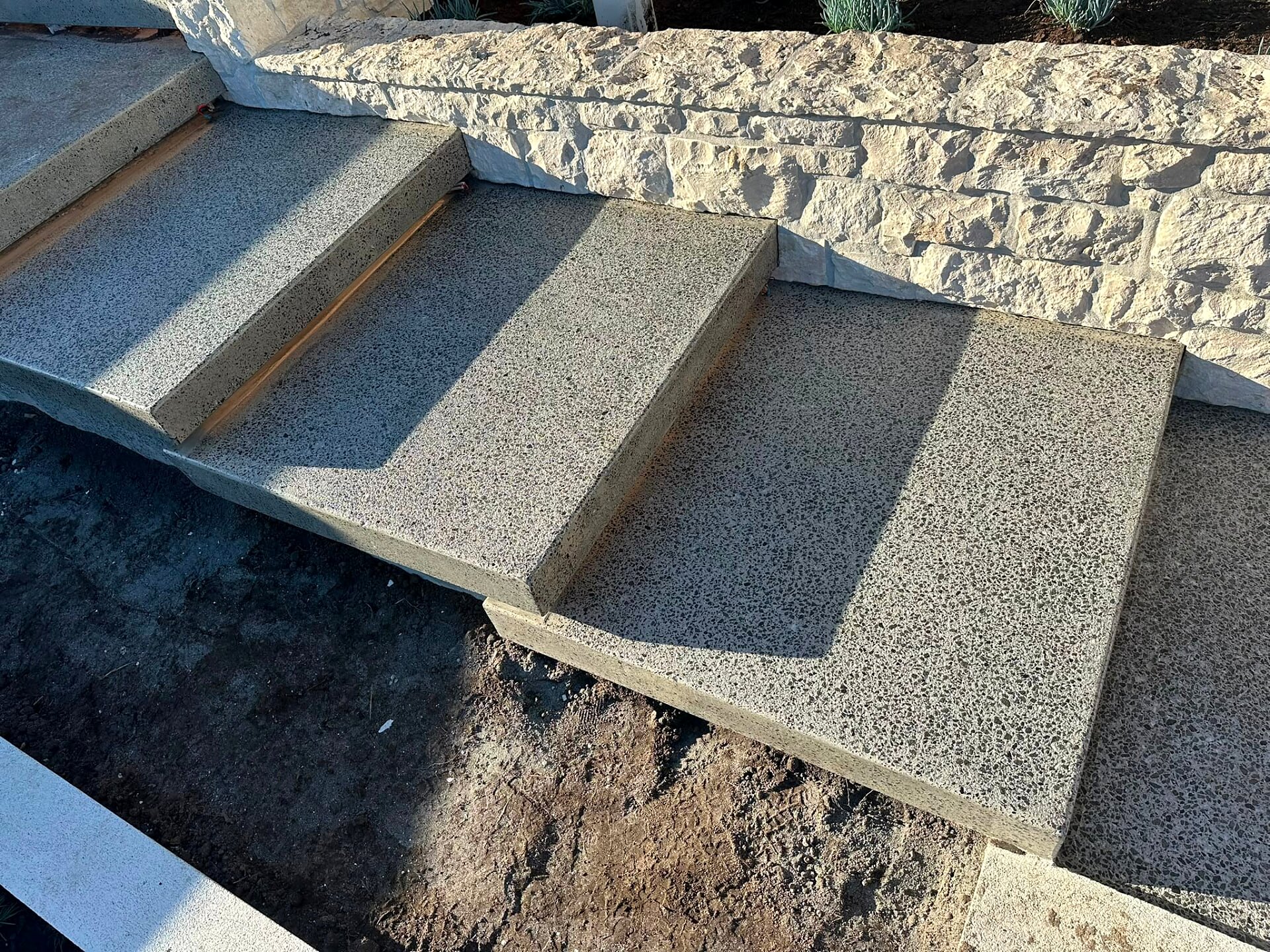
Steps are the highest risk element on any pool surround. Texture is cut across the tread and returned into the nosing.
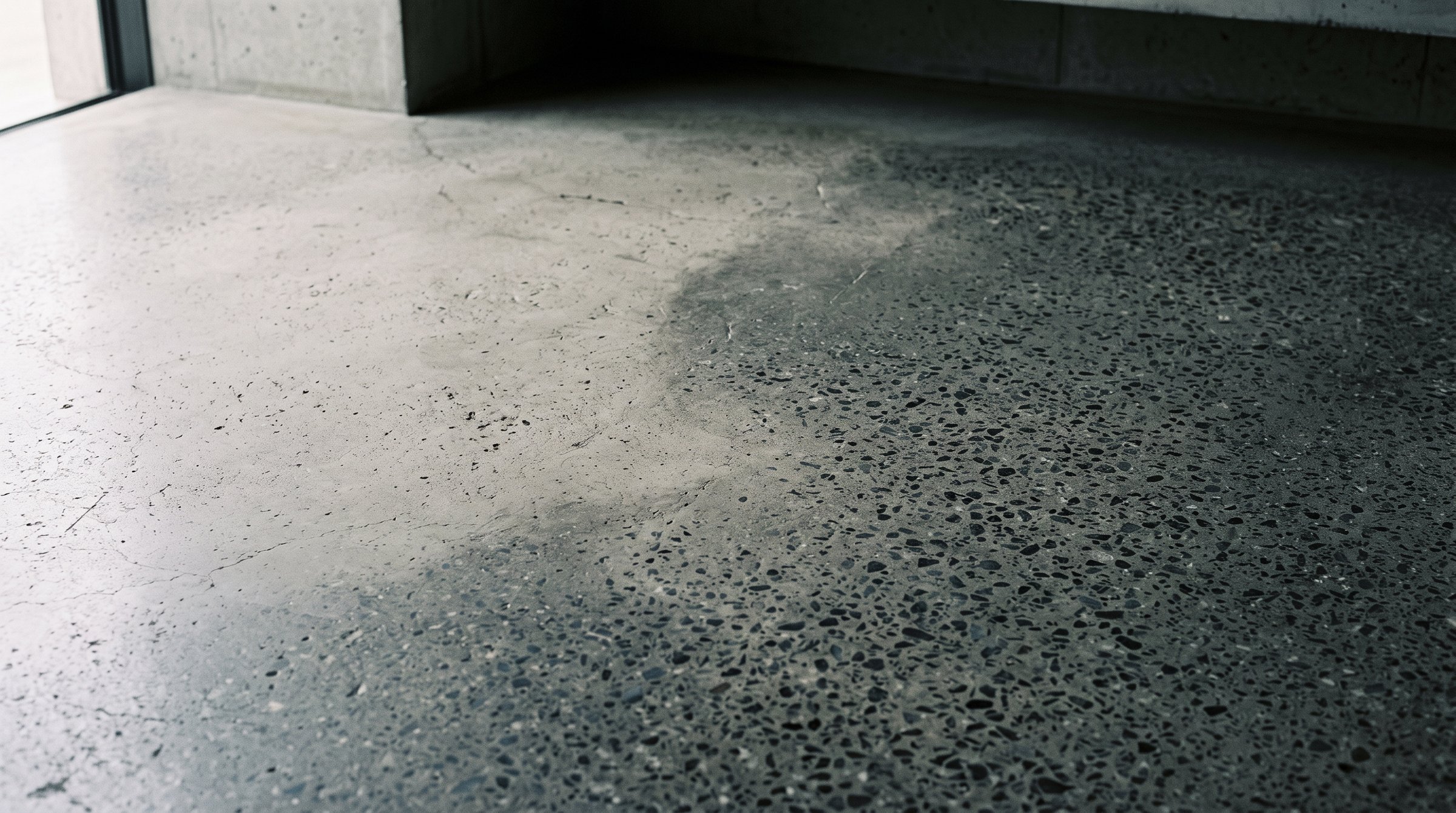
Bush hammering is mechanical impact. A rotating head fitted with hardened points strikes the surface repeatedly and fractures away the top layer of cement paste, leaving a consistent pitted profile with the sand and stone in the slab exposed. The name comes from the hand tool masons used to use. The principle has not changed, only the machine.
It is not grinding. A grinder abrades and flattens. A bush hammer fractures and roughens. The result is a matte, stone like surface with a uniform texture across the whole area rather than the random variation you get from an exposed aggregate wash or a broom finish.
Depth of profile is controlled by the head, the number of passes and the pressure. That is where the judgement sits, and it is the difference between a surface that grips and a surface nobody wants to stand on.
It is easy to make concrete grip. Make it rough enough and it will hold a shoe on a wet slope. It will also take skin off a knee, catch on a towel and be unpleasant to stand on for more than a few seconds. Around a pool that is a failure, because the surface will simply not get used the way it was meant to be.
The skill in this work is landing on a profile that is aggressive enough to hold a wet bare foot with sunscreen on it, and gentle enough that a child can lie on it. That means a fine to medium profile in the main lounging and walkway areas, and a coarser profile reserved for the places where the risk is genuinely higher, which is steps, ramps, the coping edge and anywhere with a fall on it.
We treat those areas differently on purpose. A single texture over an entire pool area is a shortcut, and it is usually either too coarse to relax on or too fine where it counts.
We are an approved applicator of the PeterFell TextureSafe System, which is the specified route where a textured concrete surface has to hold grip when wet. Approved applicator status means the preparation, the profile and the sealing are done to the system requirements rather than to whatever the operator felt like on the day, and that the work is backed by a manufacturer who documents it.
Where a project needs a stated slip resistance figure, for a commercial pool, a public space or a building consent condition, we work to the TextureSafe documentation for the specific profile and sealer being used and provide it with the specification. We do not quote numbers off the top of our heads, and we would rather answer that question with a document than with a claim.
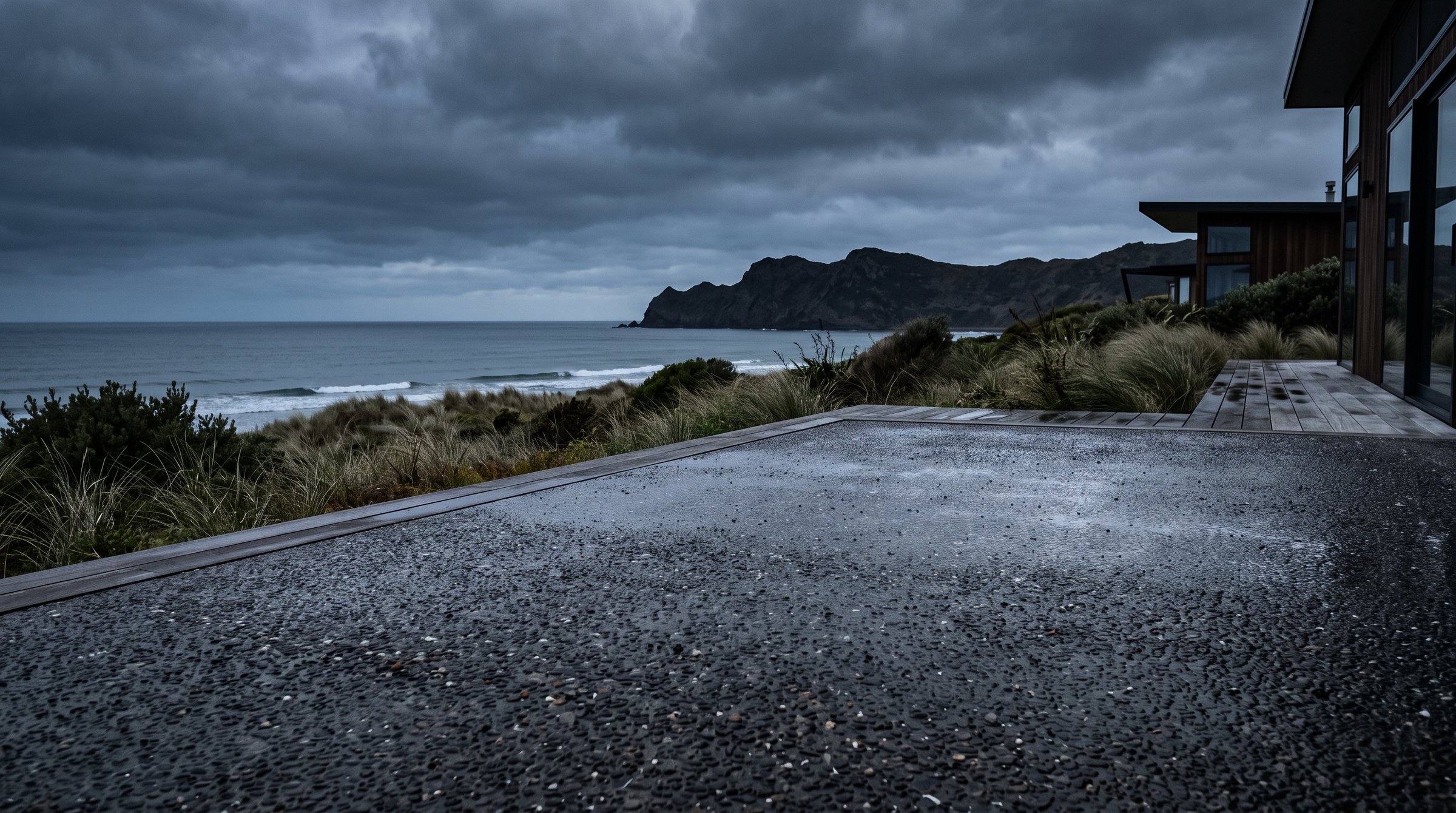
A pool at Mount Maunganui, Papamoa or Omokoroa is dealing with more than the pool water.
A penetrating sealer works inside the concrete rather than over it, which is what suits a coastal, high UV, constantly wet surface.
That combination is why we default to penetrating sealers on coastal exterior work rather than film formers. A penetrating sealer reduces water and salt ingress and helps with staining without adding a layer that UV and sand can take apart. It also does not change the grip, which matters when the grip is the whole reason for the job.
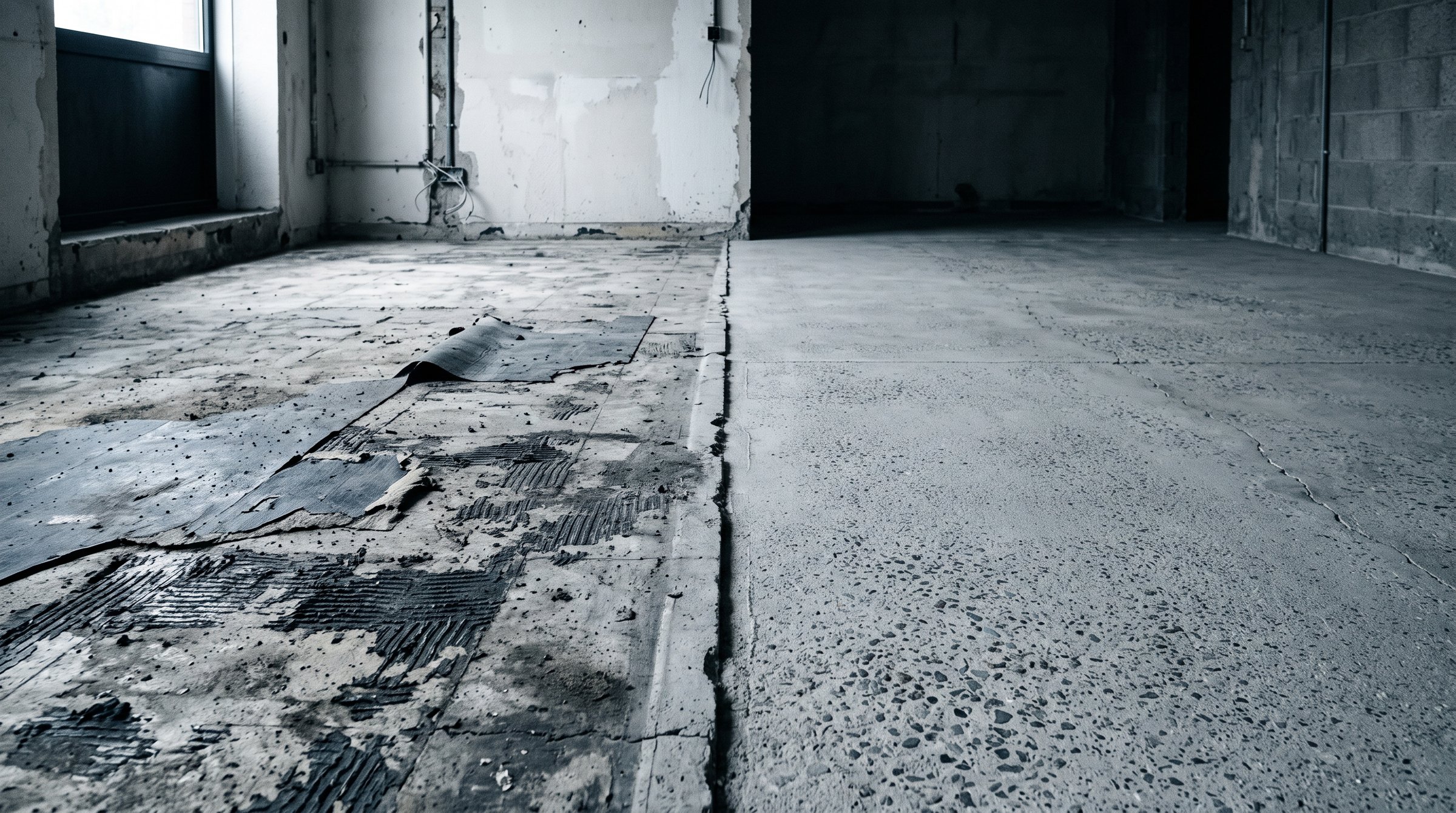
Most of this work is done on pool surrounds that already exist and have become slippery, usually because an old coating has worn out or a smooth trowelled finish was the wrong call to begin with. It is done in place, with the pool still in the ground and the landscaping still around it.
A typical residential pool surround runs two to four days on site depending on area, the state of any existing coating, and the weather. Sealing needs dry conditions and a dry substrate, so the schedule flexes around rain rather than pushing through it. The deck is generally usable the day after sealing, with full cure taking longer.
| Surface | Why it needs texture | Typical approach |
|---|---|---|
| Pool coping and edge | Constantly wet, highest fall risk, and where bare feet pivot as people get in and out | Coarser profile, worked right to the edge and returned over the arris |
| Main deck and lounging area | Wet underfoot with sunscreen residue, but people lie and sit on it | Fine to medium profile, chosen for barefoot comfort as much as grip |
| Steps and stairs | Highest consequence element on the whole property when wet | Coarser profile across the full tread, carried into the nosing |
| Ramps and sloped paths | Gradient plus water, the two conditions that compound each other | Coarser profile, sometimes with a directional working pattern across the fall |
| Outdoor showers and rinse areas | Permanently wet and often soapy, which lowers grip further | Coarser profile with drainage fall checked before work starts |
| Covered patio next to the pool | Wet feet carried in from the deck onto a surface people expect to be dry | Fine profile, matched visually to the deck so the transition is not obvious |
Profiles are selected on site against the actual traffic and risk on your property. Where a documented slip resistance figure is required, it comes from the TextureSafe documentation for the exact profile and sealer used.
Texture is not a substitute for drainage. If water ponds on a deck it will still be a hazard, and standing water is a maintenance problem regardless of profile. Falls get checked before we quote, and where a deck holds water we say so.
Texture also does not stop dirt. A profiled surface holds a bit more than a smooth one, so it wants a wash with a stiff broom and clean water a few times a season, and a rinse after heavy pollen or sand. That is the whole maintenance regime.
Yes, and most of the work we do is exactly that. The deck is profiled in place with the pool covered and the surrounding planting and joinery protected. There is no need to break out or replace concrete that is structurally sound.
Not if the profile is chosen properly. Barefoot comfort is one of the two things we balance, the other being grip when wet. The main deck gets a finer profile than the steps and the coping for that exact reason, and we texture a sample area so you can test it before the rest is done.
A coating is a sacrificial layer on top of the concrete, so it wears, it can peel, and it needs recoating on a cycle. Texture is cut into the concrete itself, so there is no film to fail and no bond line to break. The upfront cost is higher and the ongoing cost is close to nothing.
Salt water does not remove a cut profile. What it does is accelerate the failure of anything applied over the surface, which is another reason we use penetrating sealers on coastal work rather than film forming products.
Two to four days on site for a typical residential deck, depending on the area, whether an old coating has to come off first, and the weather. Sealing needs a dry surface, so wet weather moves the schedule rather than being worked through.
Yes. Steps and the coping edge are where most of the risk sits, and treating those alone is a legitimate and much smaller job. The finished appearance differs from the untextured deck, so we show you the transition on a sample first.
Bush hammered and textured surfaces cut into the slab for permanent grip.
Sealing that suits a coastal, chlorinated and constantly wet surface.
Price a floor
A few pertinent questions about your slab and space.
Step 1 of 6
Your own slab answers more than another thousand words.
Site assessment and written quote, no obligation.

Tell us about the slab and we will tell you what it can do.
Site assessment and written quote, no obligation.