
Polished concrete versus sealed concrete: key differences, costs, and how to choose
Polished concrete versus sealed concrete: compare appearance, durability, costs, and care to choose the right floor.
Published 12 October 2026
Key Takeaways
The difference between polished and sealed concrete comes down to how the surface is finished and what carries the wear. The slab, its intended use, and the finish you want all matter.
- Polished concrete is mechanically ground and refined, with the concrete itself remaining the finished surface.
- Sealed concrete has a sealer applied to its surface; the result depends on the specific sealer and the slab beneath it.
- Grind-and-seal is a distinct option that combines grinding with a surface-applied sealer.
- Natural variation in the slab affects colour, aggregate exposure, and the finished appearance.
- Compare preparation, maintenance, traffic, moisture, and project costs before choosing a finish.
How polished and sealed concrete are made
Both finishes start with the concrete slab, but they treat its surface differently. Polishing refines the concrete through mechanical grinding, while sealing applies a protective product to a prepared surface. Knowing what each process changes helps you weigh polished concrete versus sealed concrete for your project.
The grinding and densifying process behind polished concrete
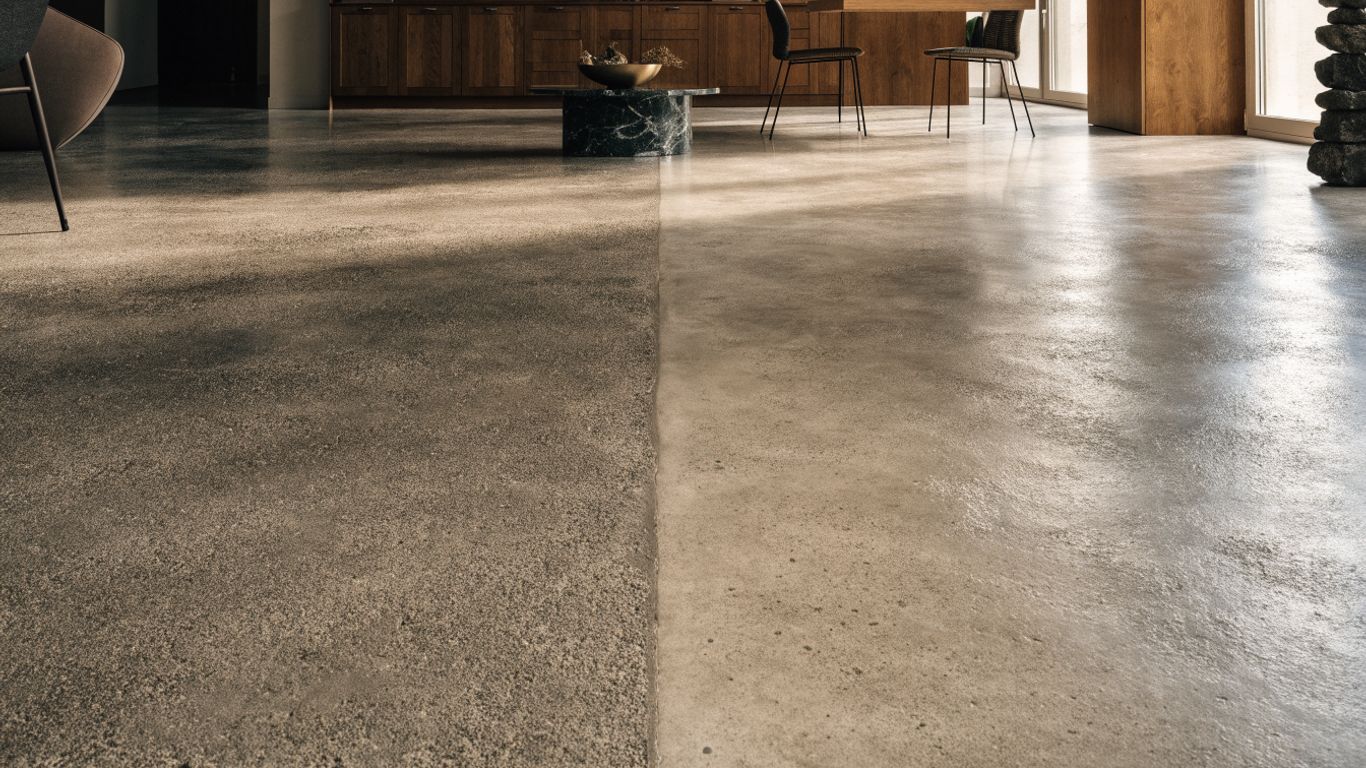
Polishing uses progressively finer grinding steps to refine the slab and reach the chosen level of sheen and aggregate exposure. A densifier is used during the process to harden the surface, and the concrete remains the visible, working surface rather than receiving a film-forming coating. The outcome depends in part on the slab’s condition and how it was placed and finished. Grinding Dynamics is an approved PeterFell C2 applicator, and a sample grind on the actual concrete can help establish what its colour and aggregate will look like.
How sealers protect concrete without polishing it
A sealer is applied to prepared concrete to help protect it, with the specific product and application suited to the surface’s use and exposure. Unlike mechanical polishing, sealing does not itself progressively refine the concrete to create a polished finish. Some sealers form a film at the surface, while penetrating products work differently, so the label “sealed” alone does not tell you exactly how a floor will perform. For local projects, concrete sealing options are selected with the surface and exposure in mind.
Why grind-and-seal floors are a separate finishing option
Grind-and-seal involves mechanically grinding the slab, then applying a sealer; the sealer, rather than the refined concrete alone, is the wearing surface. That distinction can shape future upkeep and repairs, so it helps to compare the options by how they are built, not simply by sheen. A polished and sealed finish comparison can provide a useful starting point, but the specified product and site conditions still matter. The table summarizes the basic difference in what the process leaves at the surface.
| Finish | Main process | What carries wear |
|---|---|---|
| Mechanically polished | Grinding, densifying, and refining | Refined concrete surface |
| Sealed concrete | Preparing the surface and applying sealer | Sealer, depending on product type |
| Grind-and-seal | Grinding, then applying sealer | Applied sealer |
Use this distinction when discussing maintenance and specifications: the name of the finish is less informative than the actual system proposed for the slab.
Appearance and design options
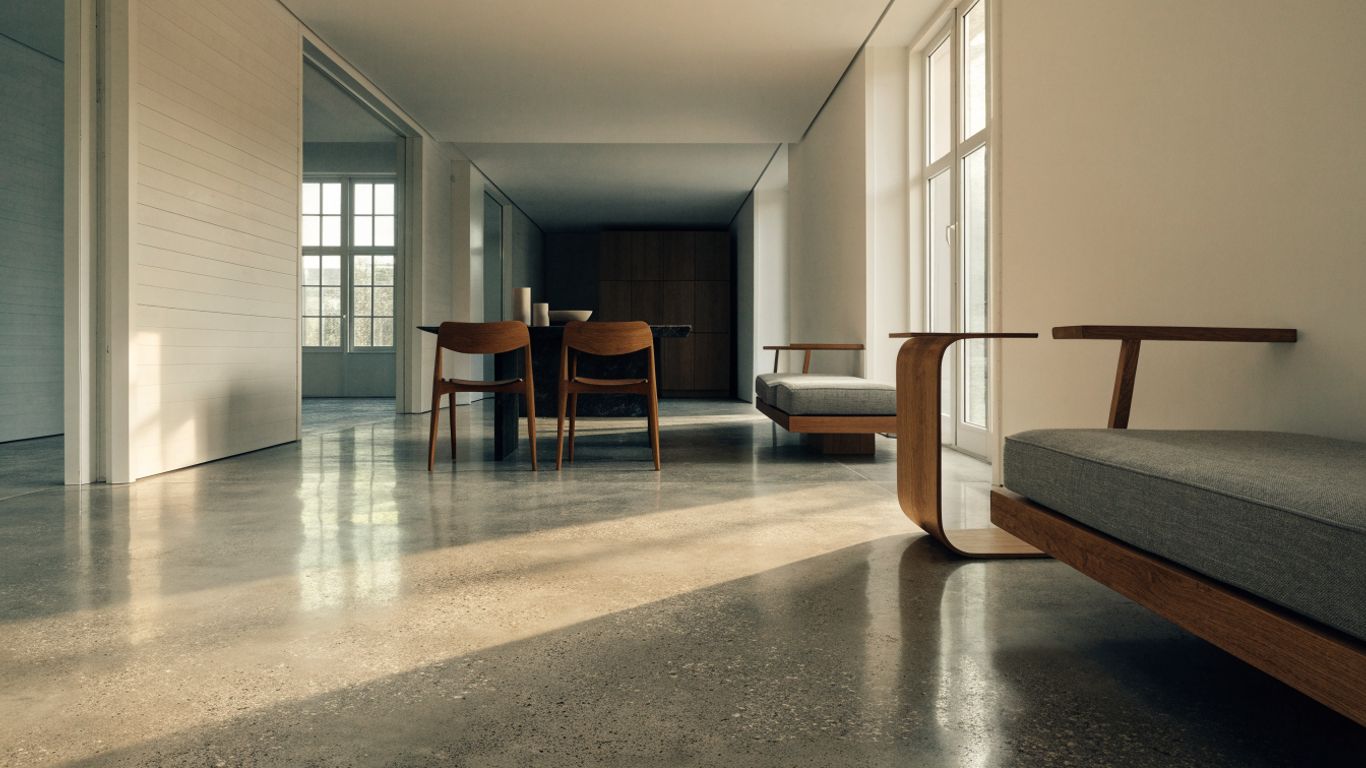
Polished and sealed concrete can both suit understated or carefully designed interiors, but they achieve their appearance in different ways. Grinding exposes the concrete to a selected depth, while a sealer may change the surface’s sheen or colour. A sample on your own slab is more dependable than a generic photograph when deciding what will work in the space.
Sheen levels, color, and aggregate exposure
A polished floor can range from a lower sheen to a more reflective finish, and the grinding depth influences how much aggregate is visible. Colour may come from the concrete mix or be affected by surface treatments and sealers; it is not separate from the character of the slab. For polished concrete, Grinding Dynamics is an approved PeterFell C2 applicator, and its guidance includes choosing finishes in relation to the concrete itself. Discuss sheen and exposure together, since a deeper cut can reveal a different pattern of stone and variation.
How coatings affect the floor’s look
A surface-applied sealer may add sheen or deepen the apparent colour, depending on the product. A film-forming coating can also give the floor a different visual character from a polished surface where the concrete itself has been refined. Ask what product is specified and request an example that is relevant to your intended use; a product description alone cannot predict the exact look on a different slab. That distinction is especially useful when coordinating a finish with adjacent materials and lighting.
What to expect from natural variation in concrete
Concrete is made and finished in real conditions, so colour, aggregate distribution, trowel marks, and previous repairs can all affect the final appearance. Grinding may reveal features that were not obvious before the surface was cut, and a sealer can make differences more visible rather than conceal them. The slab is not a printed pattern, and the actual concrete sets the limit on how consistent the result can be. For a new pour, settle colour and aggregate choices early; for an existing floor, inspect the slab and use a test patch to set expectations.
Durability and everyday performance
Neither finish has a single performance level that applies to every floor. Traffic, spills, cleaning methods, moisture, and the particular materials used all make a difference. Consider the conditions of the room as well as the finish’s appearance, and check product-specific documentation where a sealer is part of the system.
Resistance to wear, scratches, and stains
With mechanically polished concrete, ordinary wear occurs on the refined concrete surface. With a sealed or grind-and-seal floor, the sealer may take the wear, particularly where it forms a film. Both finishes can be affected by abrasive dirt, dragging heavy items, spills, and unsuitable cleaning products; resistance to a specific chemical or stain should not be assumed without checking the system. This means it is worth matching the finish and the maintenance plan to what actually happens in the space.
Slip resistance when floors are wet or polished
A polished appearance does not, by itself, establish how a floor will perform when wet. Water, contamination, footwear, texture, and cleaning all influence traction, so wet-use areas need specific consideration. For exterior or wet-grip applications, Grinding Dynamics holds PeterFell TextureSafe applicator status; the product is described as creating built-in grip through concrete texturing. That is a separate surface treatment from a polished interior finish, and the intended use should guide the specification.
How traffic and use affect long-term results
A quiet home, a busy entry, and a working commercial space do not place the same demands on a floor. For polished concrete, traffic gradually affects the surface and may call for cleaning, repairs, or renewed refinement depending on conditions. For sealed concrete, wear to the sealer can mean maintenance or reapplication under the product maker’s guidance. When comparing systems, ask how the chosen finish will be assessed and maintained as traffic patterns develop.
Installation and cost considerations
The right estimate begins with the slab and the work needed to prepare it, not just the finish name. New concrete and existing floors can require different preparation, and access, edges, repairs, and contamination all affect the scope. A site assessment helps turn a broad price comparison into a realistic project plan.
Comparing preparation, labor, and equipment needs
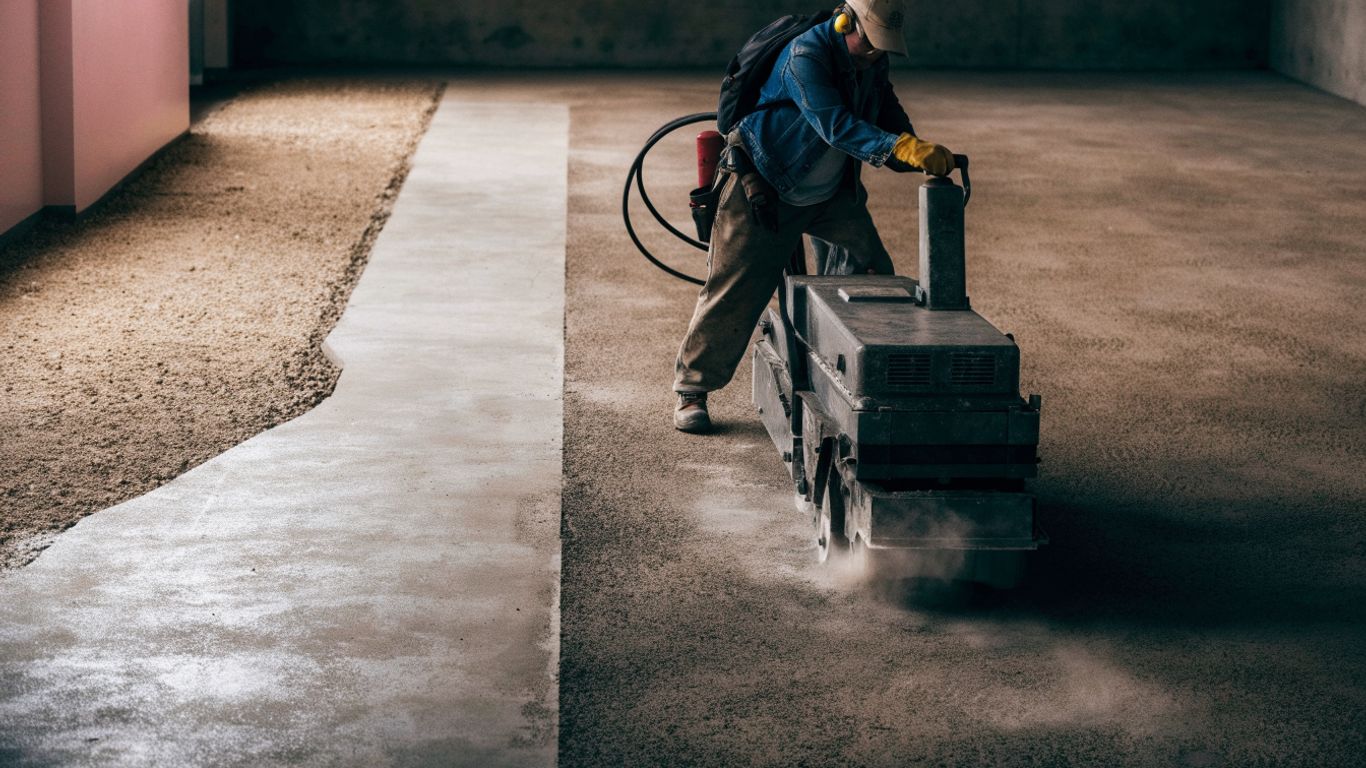
Polished concrete takes a sequence of grinding and refining steps, with the work shaped by the slab and desired finish. Sealed concrete also needs suitable preparation before the specified product is applied; a grind-and-seal floor adds grinding before that application. Existing coatings, adhesives, uneven areas, or damage may require extra preparation before either route can proceed. These differences affect time on site as well as the equipment and labor required.
Factors that influence the price per square foot
A per-square-foot figure is only useful when it reflects the same preparation and finish scope across estimates. Important variables often include the slab’s condition, access, edge work, repairs, chosen sheen or exposure, and the sealer system if one is specified. When reviewing quotes, check whether they account for:
- Surface preparation and removal of existing materials
- Repairs, levelling, and work around edges or obstacles
- The requested grinding depth, finish, and aggregate exposure
- Sealer type, application, and any stated maintenance requirements
Those details make it easier to compare like with like. For Tauranga projects, polished concrete cost factors offer further guidance on what to check in an estimate, while the final scope still depends on the actual site.
Disruption, curing, and when the floor can be used
Installation timing depends on the concrete’s age and condition, the selected process, and the products involved. Grinding Dynamics advises allowing a minimum concrete age of 28 days before polishing. Sealer products have their own application and curing instructions, so access should be planned against the specified system rather than a general assumption. Discuss work sequencing early if other trades, furniture delivery, or a planned opening date depend on the floor being ready.
Cleaning, maintenance, and repairs
Both finishes need sensible day-to-day care, but maintenance is not identical because their wearing surfaces differ. Dust and grit can abrade the surface or sealer, while spills left in place may cause marks depending on the material and product. Ask for care instructions that match the installed finish and the way the space is used.
Routine care for polished concrete
Regular dust removal and cleaning with a suitable neutral cleaner help keep grit from being tracked across a polished surface. Avoid assuming that a glossy floor needs aggressive products or that every stain can be removed without affecting the finish. The appropriate response to a mark depends on its cause and the existing polish. A simple, consistent routine is usually more useful than frequent intensive treatment.
Resealing schedules and upkeep for sealed floors
There is no universal resealing interval for all sealed concrete. Product type, exposure, traffic, cleaning, and signs of wear all influence when a surface may need attention; follow the sealer manufacturer’s instructions and inspect the floor over time. A film-forming product and a penetrating sealer do not necessarily have the same maintenance requirements. Keep the product details from installation so future care can be matched to what was actually applied.
Repairing scratches, worn areas, and coating damage
The repair approach depends on whether the wear is in the concrete itself or in an applied sealer. A polished floor may need local repair and re-refinement, while damage to a film-forming sealer may require preparation and reapplication to avoid an obvious patch. Colour and sheen can differ between a repair and surrounding areas, especially on a naturally varied slab. Have the affected area assessed before choosing a repair method or applying a new product.
Choosing the right finish for your space
Start with how the space will be used, then look at what the slab can realistically support. A finish that suits a dry interior may not suit an exposed or wet area, and an existing slab may have limits that a new pour does not. If you are weighing options locally, existing slab polishing considerations can help frame the questions to ask before committing.
When polished concrete suits homes and commercial spaces
Polished concrete can suit spaces where the concrete itself is intended to be the finished floor and the slab is appropriate for grinding and refinement. It can work in residential and commercial settings, but suitability still depends on slab quality, traffic, cleaning, and the required appearance. Consider the level of sheen and aggregate exposure alongside everyday use, rather than choosing from a photograph alone. A sample grind gives a more grounded view of the actual slab.
When a sealed finish makes more sense
A sealed finish may be appropriate when the specification calls for a particular sealer or when the slab, exposure, or intended use points toward an applied protective product. It is also useful to distinguish a directly sealed surface from a ground-and-sealed one, since their preparation and appearance differ. Confirm whether the chosen sealer is suitable for the expected traffic and moisture, and understand its maintenance requirements. That detail matters more than treating “sealed” as one uniform finish category.
How moisture, existing concrete, and budget shape the decision
Moisture conditions, surface contamination, cracks, old coatings, and slab flatness can all affect feasibility, preparation, and cost. Budget comparisons should include the whole scope—repairs, edge work, access, finish selection, and future care—not only the initial application. If the slab is already in place, an assessment and test patch can clarify what the concrete may reveal. Choose the finish once those practical conditions are understood, rather than asking the finish to overcome limitations in the slab.
Conclusion
Polished concrete refines the concrete itself, while sealed concrete relies on a sealer applied to a prepared surface; grind-and-seal combines elements of both. The best choice depends on the slab, the intended use, the appearance you want, and the care the floor will need. Compare the process and the full project scope, then use the actual concrete to guide the final decision.
Frequently Asked Questions
Is polished concrete the same as sealed concrete?
No. Polished concrete is mechanically ground and refined, while sealed concrete has a sealer applied to its prepared surface. A floor can be ground and then sealed, which is a distinct finish option.
Is polished concrete always shiny?
No. Polished concrete can have different sheen levels, from a lower sheen to a more reflective finish. The selected refinement and the slab’s characteristics influence the result.
Does sealing concrete make it waterproof?
A sealer can help protect concrete, but “sealed” does not automatically mean waterproof. Suitability depends on the specific product, the surface, and the exposure; check the product documentation for the intended conditions.
Which finish costs less?
There is no reliable universal answer. Slab condition, preparation, repairs, access, finish specifications, and sealer choice can all change the total cost, so compare estimates with matching scopes.
Is polished concrete slippery when wet?
A polished appearance alone does not determine wet traction. Water, contaminants, surface texture, footwear, and cleaning conditions all matter, so wet areas need a specific assessment.
How long does concrete need to cure before polishing?
Timing depends on the project and the concrete, but a minimum age of 28 days before polishing is a common planning requirement for this work. Confirm the schedule with the installer and account for the full process.
Can an old concrete floor be polished?
Sometimes. The slab’s condition, existing coatings, repairs, and other surface issues affect what is achievable. An assessment and test patch can help establish whether polishing is suitable and what result to expect.