
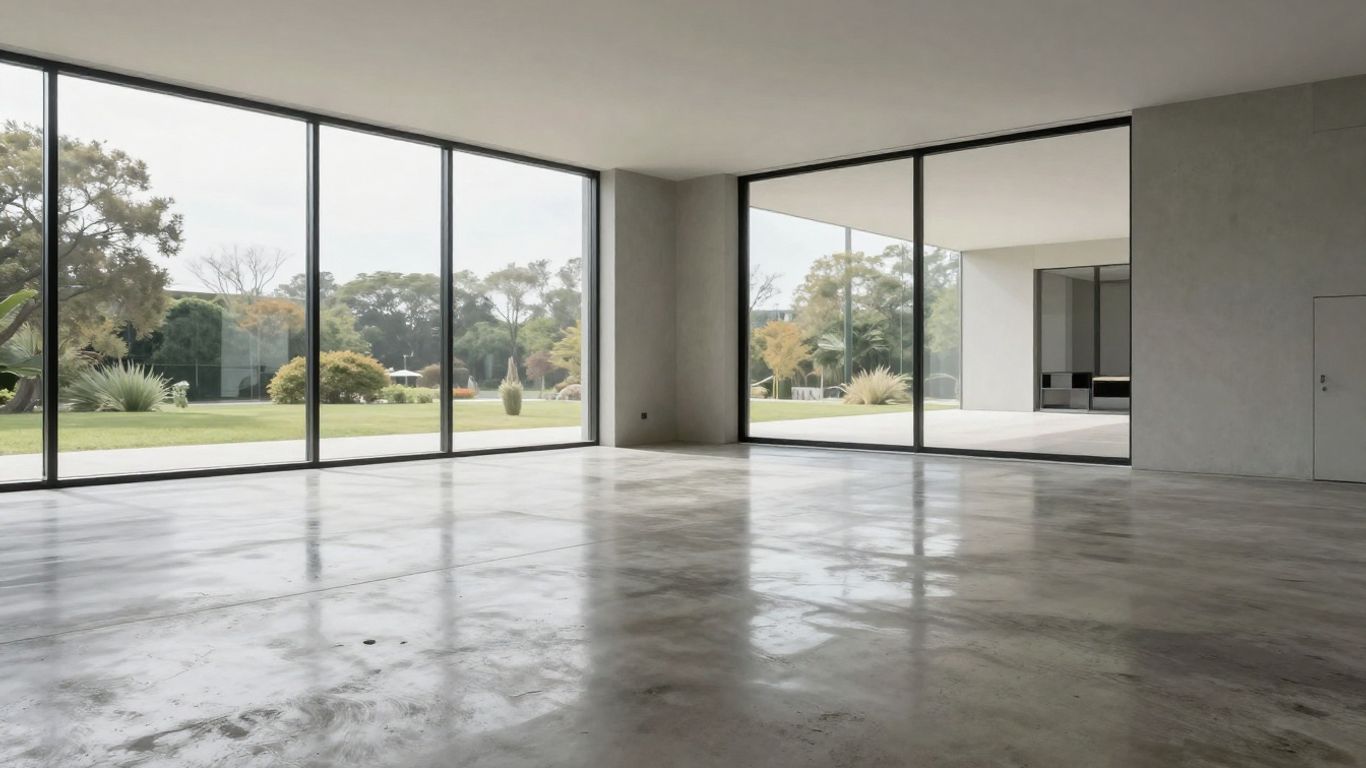
Polished concrete versus sealed concrete: Which flooring option is right for your space?
Compare polished concrete versus sealed concrete for appearance, durability, cost, care, and best applications.
Published 25 August 2026
Key Takeaways
Polished concrete versus sealed concrete is not simply a choice between two levels of shine. The systems differ in how they are made, how they wear, and how much the existing slab influences the finished result.
- Mechanically polished concrete refines the slab itself, while sealed concrete uses a sealer as the wear surface.
- Aggregate exposure, colour, depth of cut, and sheen all affect the final appearance.
- The slab’s condition, flatness, repairs, and contamination can matter more than the chosen finish.
- Sealed floors may need periodic resealing, while polished floors still need sensible routine care.
- A test area and a clear specification are more useful than relying on generic photographs.
What polished concrete and sealed concrete mean
The names describe different finishing systems, not just different appearances. Both may begin with grinding, but the point at which the floor becomes finished is different. Understanding that distinction makes later decisions about cost, maintenance, and suitability much easier.
How polished concrete is finished
Mechanically polished concrete is progressively refined with bonded diamond abrasives, densification, and increasingly fine finishing stages. The concrete slab remains the wear surface; no film-forming coating is added as the traffic layer. A penetrating stain guard may be used within the system to help manage staining, but it does not turn the floor into sealed concrete. The final sheen depends on the finishing grit and the character revealed in the slab.
How sealed concrete is finished
Sealed concrete is concrete finished with a sealer product. In a typical grind-and-seal system, the slab is prepared and refined, then a film-forming sealer becomes the wear surface. Sealers vary in chemistry and performance, so the exact product, number of coats, environment, and specification all matter. The category is broad: a penetrating treatment and a film-forming finish should not be treated as interchangeable.
The difference between grind-and-seal and mechanically polished concrete
Grind-and-seal is not a grade of mechanically polished concrete. Both systems can involve mechanical grinding, but mechanically polished concrete refines the concrete itself, whereas grind-and-seal prepares the slab for a film. That difference affects scratching, wear patterns, repairs, and future servicing. A useful comparison of these systems can help clarify proposals that use similar-looking terms loosely.
Why the existing slab affects both options
The slab sets many of the conditions that no finishing process can completely erase. Cracks, high spots, trowel marks, uneven colour, contamination, previous adhesives, and inconsistent aggregate may all remain visible in some form. For an existing floor, slab suitability and repair planning should be assessed before a finish is promised. A sample grind on the actual concrete is usually more informative than a showroom photograph.
How appearance and design options compare
Concrete has a naturally varied appearance, and that variation is part of the design rather than necessarily a defect. Polishing can reveal stone and create a deeper visual field, while sealing can preserve a more lightly ground or naturally textured surface. Colour, aggregate, depth of cut, and polish level should be selected together.
Reflectivity, color, and aggregate exposure
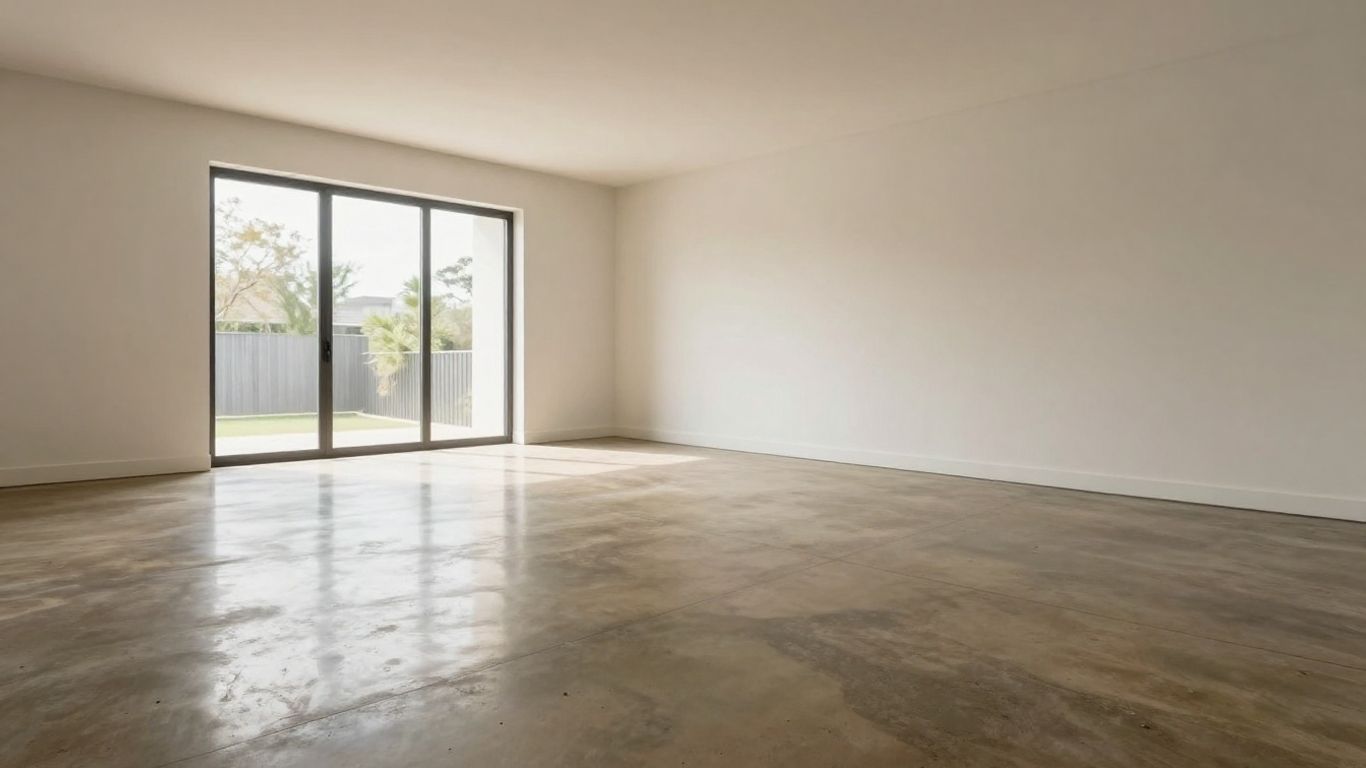
A shallow cut may produce a subtle salt-and-pepper appearance, while a deeper cut reveals more of the coarse aggregate and can move the look toward terrazzo. The selected polish level controls how strongly light moves across the floor. Integral colour must be considered before a new pour, because it is added to the concrete mix rather than simply painted on later. For that reason, physical samples are more dependable than colour viewed on a screen.
Decorative finishes, stains, and dyes
Stains and dyes can broaden the visual options for some concrete floors, but they do not make every slab behave like a new, uniformly coloured surface. Existing marks, repairs, and variations can remain part of the result. With a new slab, colour, aggregate, and placement decisions need to be coordinated early. With an older slab, the realistic question is often how to work with its character rather than how to hide it completely.
Sheen consistency and visual character
A high sheen reflects more light and can make a space feel brighter, but it also makes flatness, patchiness, and surface variation easier to notice. A satin or matte finish is often more forgiving in everyday settings. Even a carefully installed floor will show natural differences where concrete loads, trowelling, curing, or aggregate exposure varied. The best specification describes an acceptable range of character, not an impossible promise of identical tone everywhere.
How each surface changes over time
A sealed floor’s appearance is influenced by the sealer’s gloss, colour enhancement, and eventual wear. A mechanically polished floor generally develops its character through traffic and cleaning while the concrete remains the wear surface. Neither system is entirely frozen in time. A good decision allows for patina, local repair, and the possibility that heavily used paths will age differently from quiet edges.
Comparing durability and performance
Durability depends on the concrete, the finish, the environment, and the way the floor is used. A sealer can provide a useful barrier against particular contaminants, but it can also be the part that scratches or wears first. Polishing avoids a film wear layer, yet it does not make the slab immune to staining, impact, or poor maintenance.
Resistance to stains, scratches, and abrasion
A film-forming sealer may make spills easier to remove initially, while its resistance depends on the specified chemistry and exposure. Polished concrete has no film to peel or wear through, but the concrete still needs prompt spill response and suitable cleaning. Abrasive grit tracked in by footwear or vehicles can affect either finish. The right question is not which system is indestructible, but which wear pattern can be managed in the space.
Moisture, chemicals, and freeze-thaw conditions
Interior floors, covered outdoor areas, driveways, and exposed coastal surfaces face different stresses. Moisture movement, salts, cleaning chemicals, and ultraviolet exposure can all change the service demands. Sealer selection should be based on the actual exposure rather than the word “sealed” alone. On exterior work, the difference between penetrating and film-forming products is especially relevant, and the specification should account for weather and maintenance access.
Slip resistance in wet and high-traffic areas
A glossy appearance is not a substitute for wet-grip planning. Pool surrounds, ramps, stairs, and other exposed areas may need a deliberately textured finish rather than a smooth interior polish. Texture can be designed into the concrete surface, and its suitability should be considered alongside drainage, footwear, slope, and cleaning. Interior areas also benefit from a finish that is practical for the expected traffic instead of being chosen solely for maximum reflection.
Repairability when damage occurs
Repairs are easier to discuss when the floor system is identified accurately. A damaged sealer may be locally repaired, recoated, or eventually renewed, although matching sheen and colour can be difficult. Polished concrete can be reworked in some areas, but a patch may remain visible because the surrounding slab has its own aggregate and tonal history. Any proposal should explain what repair can realistically improve and what variation may remain.
Installation process and project requirements
The installation route begins well before the final pass of a grinder. New slabs need decisions about mix, flatness, colour, aggregate, curing, and protection; existing slabs need investigation and preparation. Planning also needs to account for equipment access, dust, noise, adjacent occupants, and the age of the concrete.
Preparation, grinding, and surface repairs
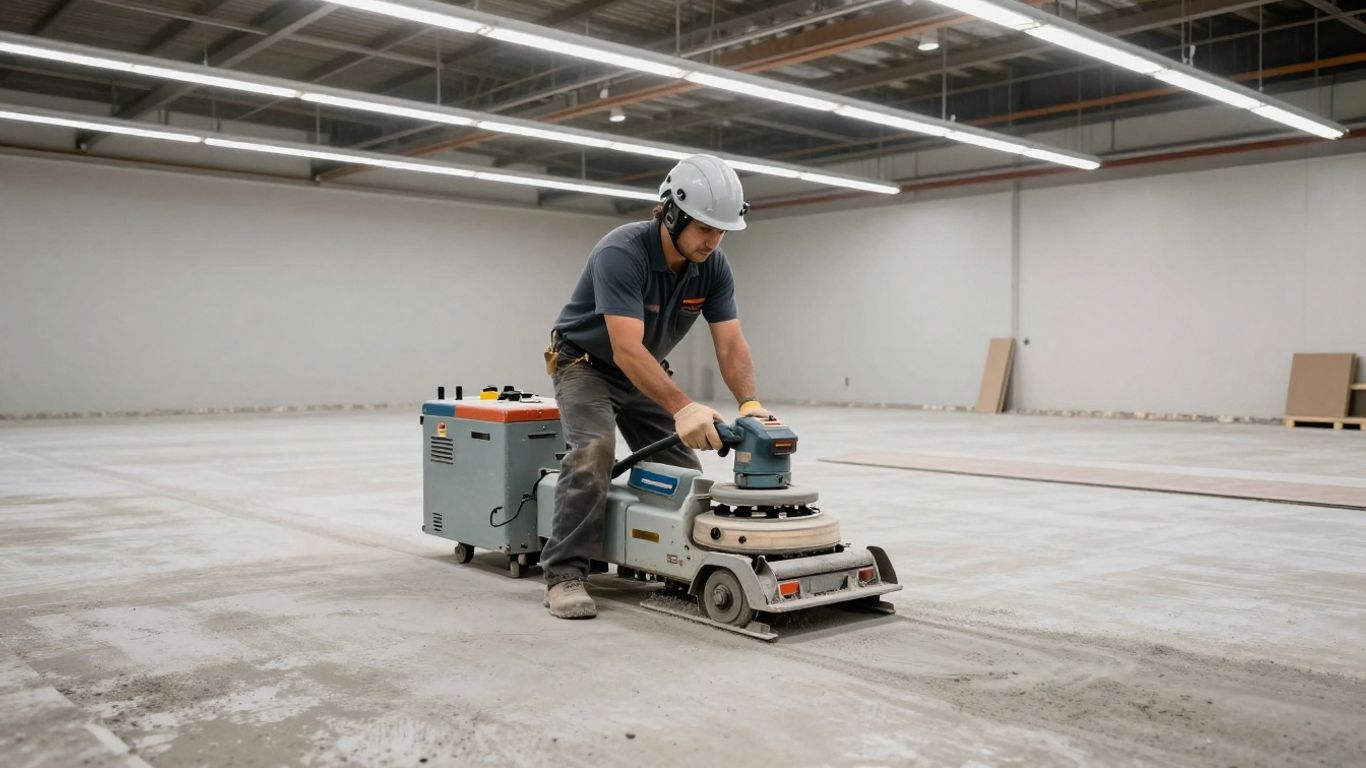
Preparation may include removing floor coverings, adhesive, paint, old coatings, or contaminated material. Grinding can level high spots and open the surface, but it cannot correct every structural or placement problem. Cracks and repairs should be assessed for movement and appearance before work begins. The depth of cut is a design and technical decision because it affects both the amount of material removed and the aggregate that becomes visible.
Equipment, labor, and installation timelines
These floors require professional equipment, trained operators, and a sequence that may include grinding, filling, densifying, polishing, guarding, and cleaning. Concrete generally needs to reach a suitable age before polishing; a minimum 28-day age is a practical planning point for the system described by Grinding Dynamics. Timelines vary with floor area, access, repairs, edge work, and the selected sheen, so a square-metre figure alone cannot describe the job.
Dust, noise, and disruption during the work
Grinding is noisy and can interrupt occupied spaces, especially around edges and transitions. Dust-controlled equipment can reduce airborne dust and make preparation more manageable in some occupied buildings, but containment, access, and working hours still need agreement. Clear planning should cover furniture removal, ventilation, power, adjacent rooms, and how the floor will be protected while other trades finish.
When new and existing concrete slabs are suitable
A new slab offers more control over colour, aggregate, placement, and flatness, provided those decisions are made before concrete is ordered and poured. An existing slab may still produce an excellent floor, but its limitations need to be accepted early. The existing-slab assessment process is useful when old coverings, glue, stains, or cracks are part of the brief. A topping may sometimes be considered, but it is not an automatic solution to every unsuitable slab.
Maintenance and long-term care
Neither finish should be sold as maintenance-free. Good care is mostly straightforward, but it must match the system and the traffic. Fine grit, harsh chemicals, standing moisture, and delayed spill cleanup can shorten the attractive service life of any concrete floor.
Routine cleaning for polished concrete
Dust mop or vacuum regularly so abrasive particles are not dragged across the floor. Use a neutral cleaner suitable for polished concrete and avoid leaving excess water sitting on the surface. Entrance matting can make a noticeable difference in busy buildings. Cleaning should remove soil rather than gradually build a residue that dulls the sheen.
Resealing schedules for sealed concrete
A film-forming sealed floor may need inspection and resealing as the wear layer becomes thin, scratched, cloudy, or uneven. There is no universal calendar because traffic, sun, moisture, chemicals, and the chosen product all change the interval. Exterior and coastal surfaces may require closer observation. The concrete sealing guidance explains how the sealer should be matched to the surface and its exposure.
Handling spills, tire marks, and wear
Promptly remove oil, food, chemicals, and other staining materials using the cleaner recommended for the floor. Tire marks and rubber transfer may need a more targeted method, particularly in garages and loading areas. Avoid aggressive pads or unapproved solvents until the finish has been identified. Small daily habits usually prevent a manageable mark from becoming a larger refinishing job.
Signs that the finish needs professional attention
Watch for persistent dull lanes, exposed or failing film, recurring stains, powdering, new cracks, or areas where cleaning no longer restores the intended appearance. A change in slip behaviour also deserves attention, especially outdoors. Before applying another product, identify what is already on the floor; incompatible layers can make the problem harder to correct. Professional inspection is worthwhile when the cause is uncertain.
Cost and total value
The cheapest initial quote is not always the lowest-cost floor over its useful life. Labour, preparation, access, repairs, finish level, edge work, colour, and ongoing servicing can all change the total. Comparing systems fairly means comparing what is included and how the floor will be maintained afterward.
Upfront pricing factors
Polished concrete pricing may reflect the depth of cut, aggregate exposure, polish level, floor size, edges, obstacles, and the amount of preparation required. Sealed concrete pricing also depends on grinding, repairs, the sealer system, coats, and site conditions. A finish with a modest sheen may be a better fit than a mirror finish where glare, maintenance, or budget is a concern.
How slab condition affects the budget
An uneven, contaminated, heavily patched, or adhesive-covered slab can require substantially more preparation than a clean new pour. Existing coatings may need removal, and difficult access can slow production. The cost factors behind concrete flooring quotes are therefore more useful than a single headline rate. A test area can reveal both the likely appearance and the work needed to achieve it.
Ongoing maintenance and refinishing costs
Sealed concrete may carry periodic recoating costs, particularly where a film takes concentrated traffic. Polished concrete avoids replacing a film wear layer, but it still needs cleaning and occasional professional attention if the sheen or surface condition changes. Repairs, spill damage, and changes in use can affect either budget. Include these likely tasks when comparing the initial proposals.
Expected service life and return on investment
Service life is shaped by slab quality, traffic, maintenance, and exposure rather than by the finish name alone. A floor that suits the building’s conditions can remain useful and attractive for many years, while a mismatched system may require earlier intervention. Consider downtime, cleaning labour, appearance expectations, and repair access alongside the installation price. That broader view gives a more honest sense of value.
| Decision factor | Mechanically polished concrete | Sealed concrete |
|---|---|---|
| Wear surface | The concrete slab | The specified sealer or coating |
| Appearance | Refined sheen with slab variation | Sheen and colour influenced by the sealer |
| Main servicing question | Cleaning and possible re-polishing | Inspection and possible resealing |
| Best specification detail | Depth of cut and polish level | Sealer chemistry, coats, and exposure |
This comparison is a starting point, not a substitute for a site review. The same building may sensibly use different finishes in different areas, especially where wet grip, vehicle traffic, or appearance requirements change.
Choosing the right finish for your space
The right choice follows the use of the room as much as its visual style. Think about moisture, traffic, contamination, cleaning methods, glare, acoustics, and whether the slab is new or already carrying a history. A clear brief helps a contractor recommend a finish that can be maintained rather than merely photographed well.
Best applications for polished concrete
Mechanically polished concrete suits interiors where the concrete itself can become the finished architectural surface. It can work across residential, commercial, and civic settings when the slab is suitable and the expected natural variation is acceptable. The four practical decisions are colour, aggregate, depth of cut, and polish level. Grinding Dynamics describes transforming an existing concrete slab into a low-maintenance polished surface and offers grinding, texturing, and sealing services across its operating regions.
Best applications for sealed concrete
Sealed concrete can suit floors and exterior surfaces where a specified sealer is useful for the expected exposure, appearance, or cleaning routine. Grind-and-seal may be appropriate where a protective film is wanted over a prepared slab, but the product must be chosen for the environment. Driveways, patios, interior floors, and exposed aggregate each present different demands. The finish should be described by its actual sealer system rather than by a vague promise of protection.
Which option suits residential interiors
Polished concrete can suit open-plan living areas, kitchens, entries, and other interiors where a continuous floor and mineral variation fit the design. Sealed concrete may suit a renovation where the homeowner wants a particular film appearance or a quicker visual change after preparation. Warmth, underfoot comfort, rugs, furniture noise, and glare deserve attention too. Samples made from the home’s own slab will give a more trustworthy decision point than stock imagery.
Which option suits commercial and industrial floors
Commercial and industrial spaces need the finish matched to forklifts, pallet traffic, oil, chemicals, wet cleaning, loading, and repair expectations. Polished concrete can be practical where the slab is sound and the concrete wear surface is desirable. Sealed systems may be useful where a specified film is better suited to the exposure or where a particular protection strategy is required. High-traffic wet areas may need texturing or another dedicated grip solution rather than a smooth high-sheen finish.
Questions to ask a concrete flooring contractor
Ask what system is being proposed, what becomes the wear surface, and what preparation is included. Also ask how cracks, stains, old adhesive, edges, and colour variation will be handled. A useful contractor should be able to explain the sample process, expected disruption, maintenance schedule, and conditions that could change the price. For new construction, ask when the finisher needs information about mix, flatness, colour, aggregate, curing, and site protection.
Conclusion
Polished concrete versus sealed concrete is a decision about construction method, wear, maintenance, and the slab’s existing character as much as it is about appearance. Mechanically polished concrete keeps the concrete as the finished surface, while sealed concrete relies on a specified sealer system. Review the slab, test a representative area, define the expected use, and compare the whole life of each option before choosing.
Frequently Asked Questions
Is polished concrete the same as grind-and-seal?
No. Both may involve grinding, but mechanically polished concrete refines the slab itself, while grind-and-seal places a film-forming sealer over the prepared concrete as the wear surface.
Which finish is more stain resistant?
Performance depends on the concrete, product specification, exposure, and maintenance. A sealer may provide a useful protective film, while polished concrete can include a penetrating stain guard, but neither makes spills harmless or eliminates routine care.
Can an old concrete slab be polished?
Often it can, but suitability depends on its condition, contamination, flatness, cracking, previous coverings, and the appearance those conditions may produce after grinding. A test grind is the most reliable way to set expectations.
Does polished concrete need a sealer?
Mechanically polished concrete is not finished with a film-forming sealer. A penetrating stain guard may be used within the system, but the concrete remains the wear surface and still requires sensible cleaning and spill response.
How often does sealed concrete need resealing?
There is no universal interval. Traffic, sunlight, moisture, chemicals, product chemistry, and the quality of the original application all affect when inspection or resealing becomes appropriate.
Is polished concrete slippery when wet?
A smooth, highly reflective surface can require careful wet-grip planning. Outdoor areas, ramps, stairs, and pool surrounds may need a deliberately textured finish, suitable drainage, and a specification based on the actual conditions.
Which finish costs less?
The answer depends on preparation, slab condition, area, access, repairs, finish level, sealer choice, and future servicing. A lower initial price may not represent better value if the system needs frequent renewal or is poorly matched to the space.