For builders


For builders
Approved PeterFell C2 Applicator
Approved TextureSafe Applicator
Twenty-Five Years Combined Experience
Grinding Dynamics
Published 18 August 2026 · 9 minute read
Almost every colour conversation we have with a homeowner happens too late. The slab is down, the frame is up, and someone has just realised the floor is going to be visible. At that point the colour decision has already been made, because it was made the day the concrete was ordered.
Coloured concrete is pigment batched into the mix at the plant. The colour is through the whole depth of the pour, not applied to the top of it. That single fact drives everything else in this article, and it is the reason colour is the earliest decision on a polished concrete floor rather than one of the last.
Colour goes in at the plant. It cannot be added later.
On a new build the colour conversation has to happen before the pour date, and realistically well before it. The colour has to be chosen, the range has to be confirmed as available through the supplying plant, and the order has to be placed with the pigment specified. None of that is a same week process.
It also has to happen before the slab is designed in any detail, because a coloured polished floor changes how the slab should be placed and finished. Flatness matters more, protection matters more, and the crew needs to know the floor is the finished surface rather than a substrate. If you are ringing us after the pour to ask about colour, the honest answer is that there is no colour decision left to make.
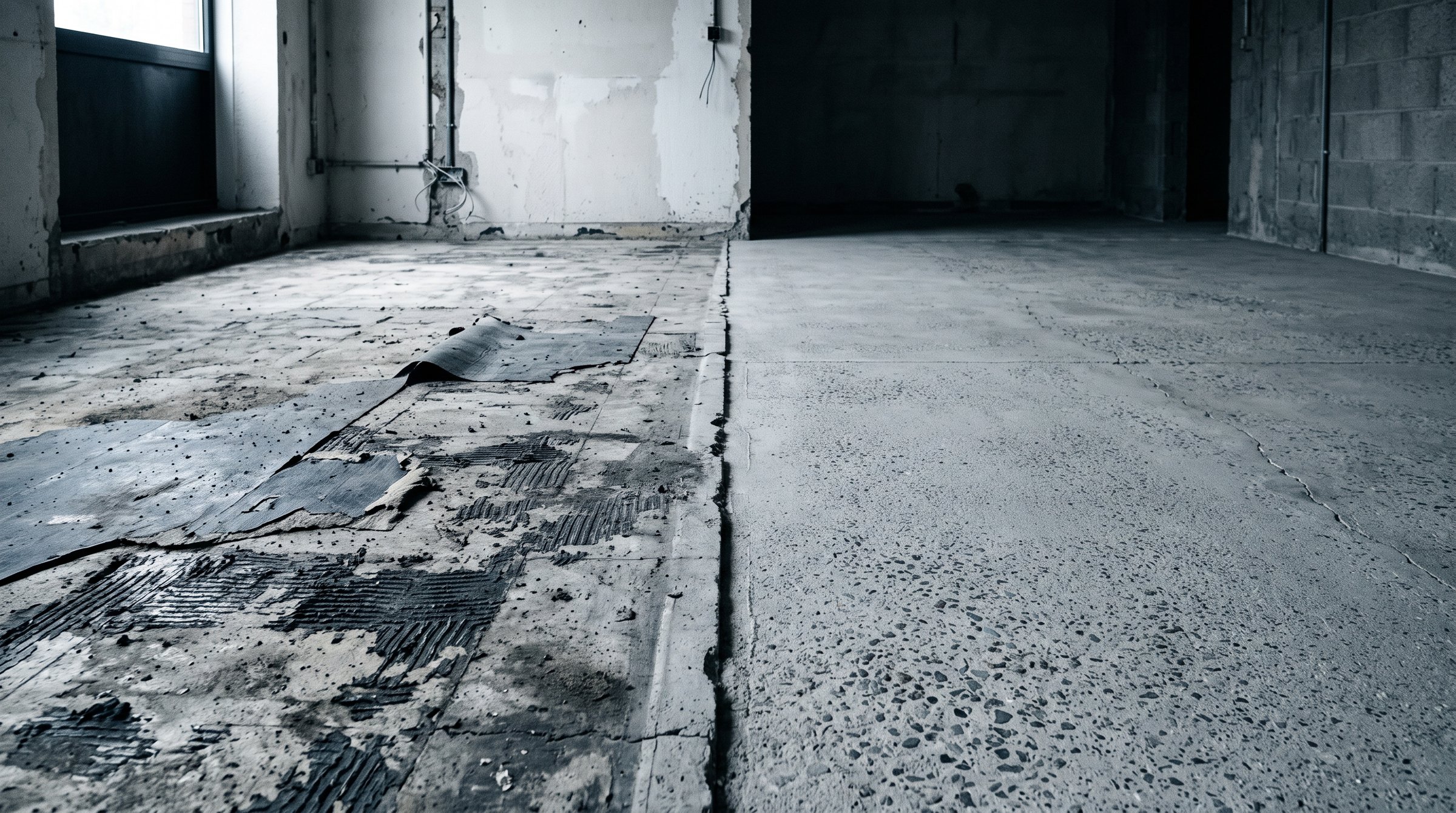
On an existing slab the colour is whatever went in years ago, which for almost every slab in the country is standard grey cement with no pigment. What remains available to you is depth of cut and polish level. Those two variables still give you a wide range of results, from a plain cement finish through to a full terrazzo look, but the base tone is fixed.
Topical stains and dyes exist. We do not offer them as a way to fake batched colour, because they sit in the surface, they wear differently to the concrete underneath, and on a floor that has been ground open they behave unpredictably across areas of different density. If you want colour, it comes from the pour.
PeterFell is the colour system we work with and the one most New Zealand plants are set up to batch. There are more than eighty colours across the ranges, plus bespoke mixes, and the ranges differ in the cement they are built on rather than just in the shade.
| Range | Character | Cement required | Note |
|---|---|---|---|
| Neutral | The standard range, greys through warm earthen tones | Standard grey cement | Widest availability and the most straightforward to batch |
| Gelato | Brighter, more saturated tones | Aalborg white cement | White cement is a premium and is not stocked by every plant |
| Pastel | Softer, lighter tones | Aalborg white cement | Light tones need the white base, grey cement dulls them |
| SuperWhite | The whitest concrete available | Aalborg white cement | Requires careful placement and protection, marks show readily |
| SuperBlack, PFL 699 | The darkest shade concrete will go | Standard grey cement | Reads very differently by depth of cut as the aggregate opens up |
| Bespoke | Matched or custom mixes outside the standard chart | Depends on the target colour | Longer lead time and needs the supplier engaged early |
Range availability is set by the supplying plant, not by us. Confirm the specific colour and cement with your concrete supplier before it is specified in a drawing or a contract.

The finished floor is a blend of pigment and stone. The pigment colours the matrix between the aggregate, not the aggregate itself.
This is the part almost everyone gets wrong, and it is the reason a colour chosen off a chart can disappoint on the floor. Pigment colours the cement matrix. It does not colour the aggregate. The stone in the mix is whatever the quarry supplied and it stays that colour no matter what pigment goes in.
So the finished floor is a blend, and the ratio of that blend is set by depth of cut. At a natural polish the cement cream is retained and you are looking at close to pure pigment colour. At salt and pepper you are looking at mostly pigment with fine stone tips through it. At a medium or heavy exposure the stone dominates, the pigment is reduced to the lines between the aggregate, and a strong colour that looked bold on the chart can read as a subtle background.
The effect is most dramatic at the extremes. SuperBlack at natural polish is genuinely dark. SuperBlack at heavy exposure with pale local aggregate is a high contrast speckled floor, which is a striking result but not the same floor at all. Choose colour and depth together, as one decision, and look at samples that show your chosen colour at your chosen depth rather than at some other depth.
A penetrating sealer deepens the tone. The simplest way to picture it is how concrete looks when it is damp, because the mechanism is similar, light is refracting through material in the pores rather than off dry cement. Colours get richer and darker, contrast between pigment and aggregate increases, and pale colours warm up.
This is not a defect and it is not optional to plan for. It means any dry sample you are shown is not the final colour. Ask to see the sample wetted, or better, sealed with the sealer that is actually going on your floor. A colour chosen dry and sealed later is a colour chosen twice.
Every screen renders colour differently, every photograph carries the white balance of the room it was shot in, and every image on the internet has been through somebody's editing. A warm grey on one monitor is a cool grey on another. There is no version of this that works.
The decision has to be made on a physical sample and against the PeterFell chart in person, in the light the floor will actually live in. Daylight in a north facing living room is a different light to a south facing hallway, and a colour can shift noticeably between them. Take the sample to the site, put it on the ground, and look at it at different times of day before committing.
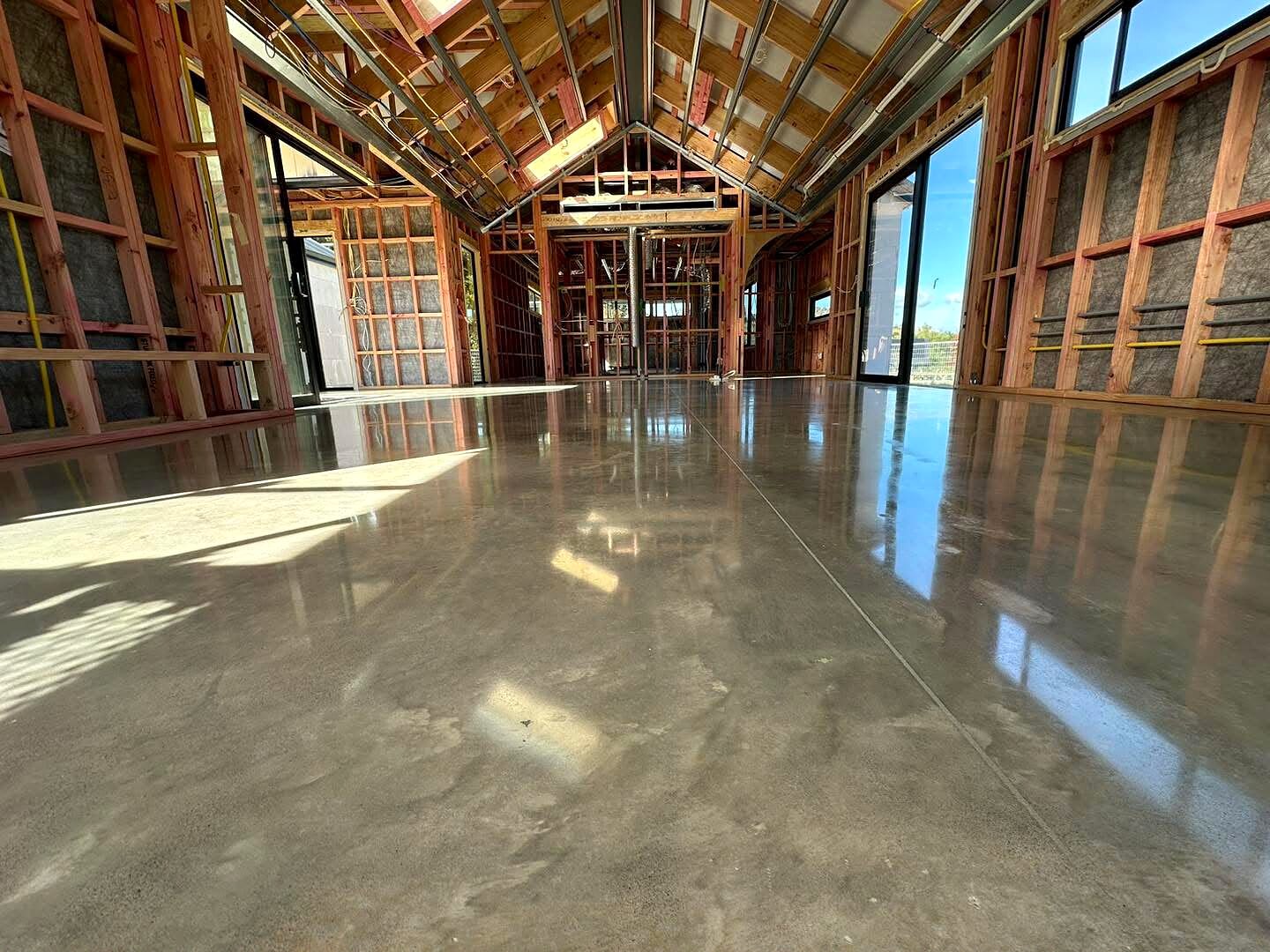
By the time a slab looks like this, the colour decision has already been made. It was made when the concrete was ordered.
When the colour is settled, the order needs to carry enough information that nobody has to interpret it. Vague instructions are how you end up with the wrong shade on half the pour.
That last point is worth stressing. Consistency across trucks is the practical risk on a coloured pour. Pigment is batched per load, so a large pour is several separate batches that have to match. Ordering the whole slab through one plant on one day, with the volume known in advance, is the simplest protection against a visible difference between the first truck and the last.
As early as you can. Practically, the colour should be settled by the time the slab is being scheduled, so there is room to confirm availability, order pigment and if necessary change plan without moving the pour date. On a build where the floor is a feature, treat the colour as a structural decision rather than an interior finish, because in terms of when it has to be locked in, that is what it is.
Not in the way people mean. Colour is pigment batched into the wet mix, so an existing slab is the colour it was poured. What you can still change on an existing floor is depth of cut and polish level, which alters the look considerably even though the base tone is fixed.
The pigment is through the full depth of the pour rather than sitting on the surface, so wear does not remove colour the way it removes a coating. Exterior surfaces in constant sun will weather over time, and an interior floor kept sealed holds its tone well.
Aalborg white cement is a specialist product, imported rather than locally produced, and it is not stocked at every batching plant. That premium is why the Gelato, Pastel and SuperWhite ranges sit above the Neutral range on price, and why availability has to be confirmed before the colour is specified.
Bring us a photograph as a starting point only, then match on physical samples. The floor you saw is a combination of colour, local aggregate, depth of cut and sealer, so matching the pigment alone will not reproduce it if the stone or the exposure is different.
Yes. A penetrating sealer deepens the tone in much the same way concrete darkens when it is damp, and it lifts the contrast between the pigment and the exposed stone. Always judge a sample sealed or wetted rather than dry.
Before the concrete is ordered, and ideally before the pour is scheduled. You need time to confirm the colour and the cement type are available through the supplying plant, and time to change course if they are not. Left late, this becomes a programme risk.
Neutral, Gelato, Pastel, SuperWhite and SuperBlack, and how each reads once polished.
Depth of cut and polish level on new pours and existing slabs.
Programme, slab protection and what we need from you before the pour.
Price a floor
A few pertinent questions about your slab and space.
Step 1 of 6
Your own slab answers more than another thousand words.
Site assessment and written quote, no obligation.

Tell us about the slab and we will tell you what it can do.
Site assessment and written quote, no obligation.