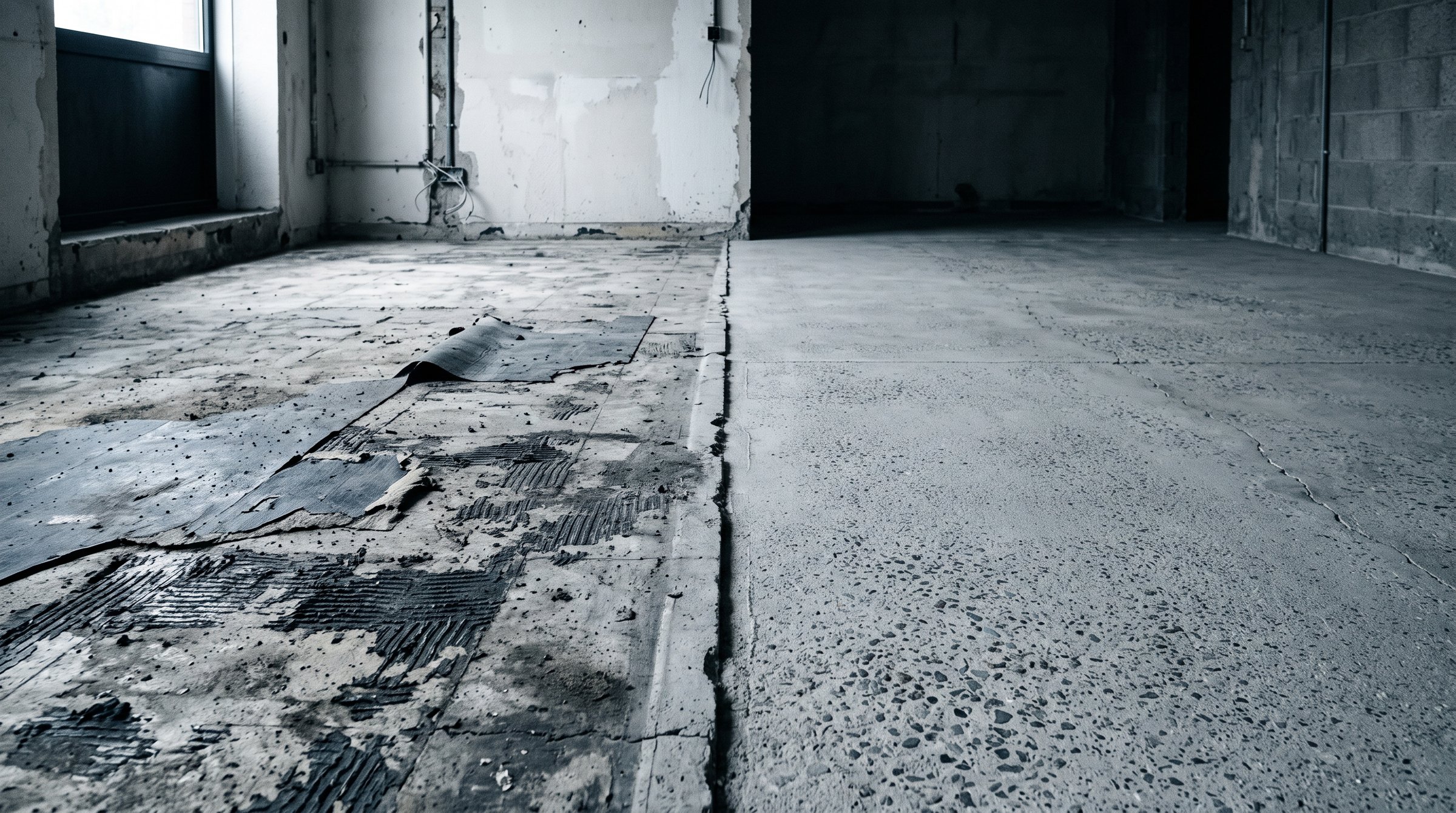
Problems

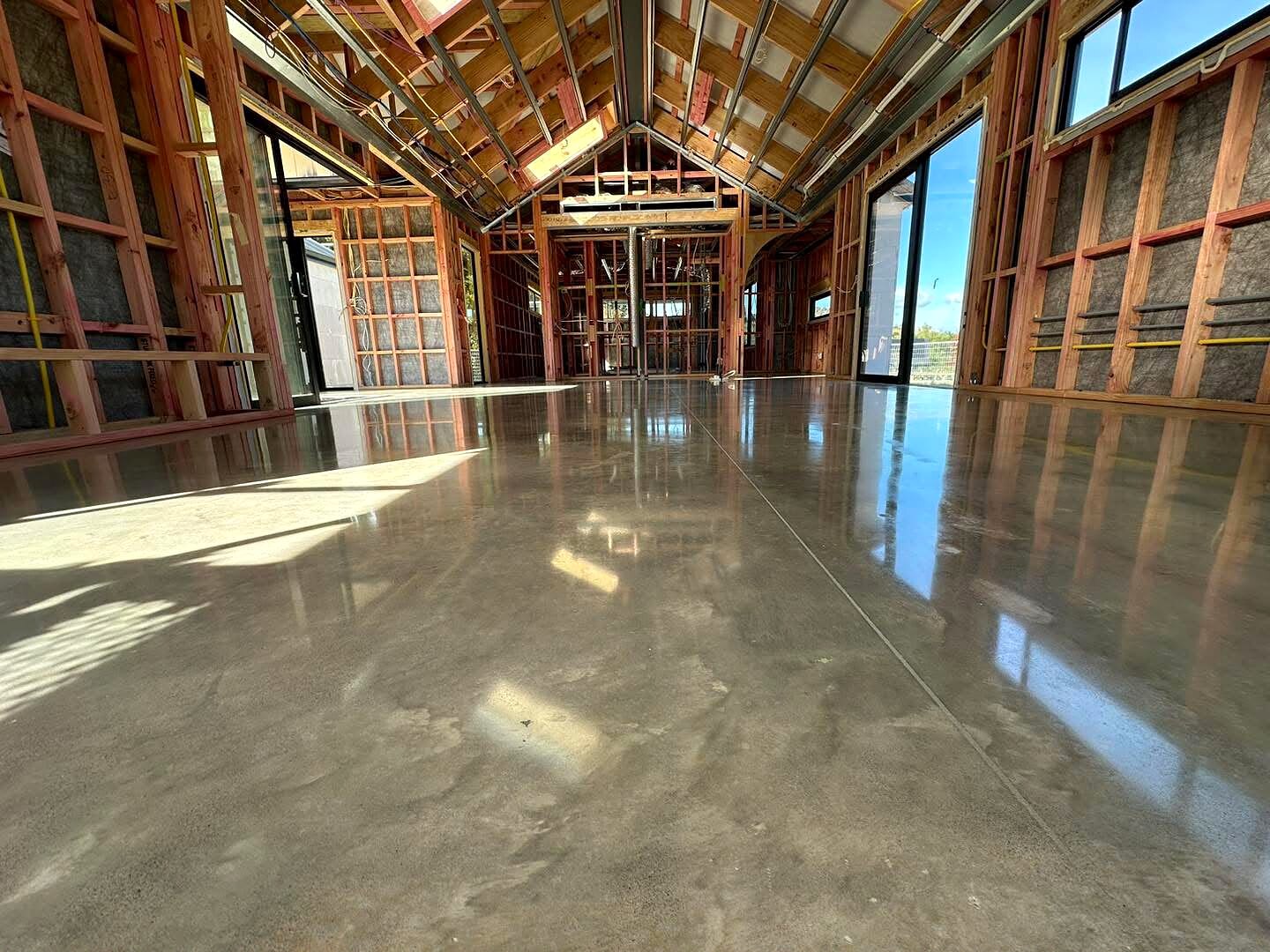
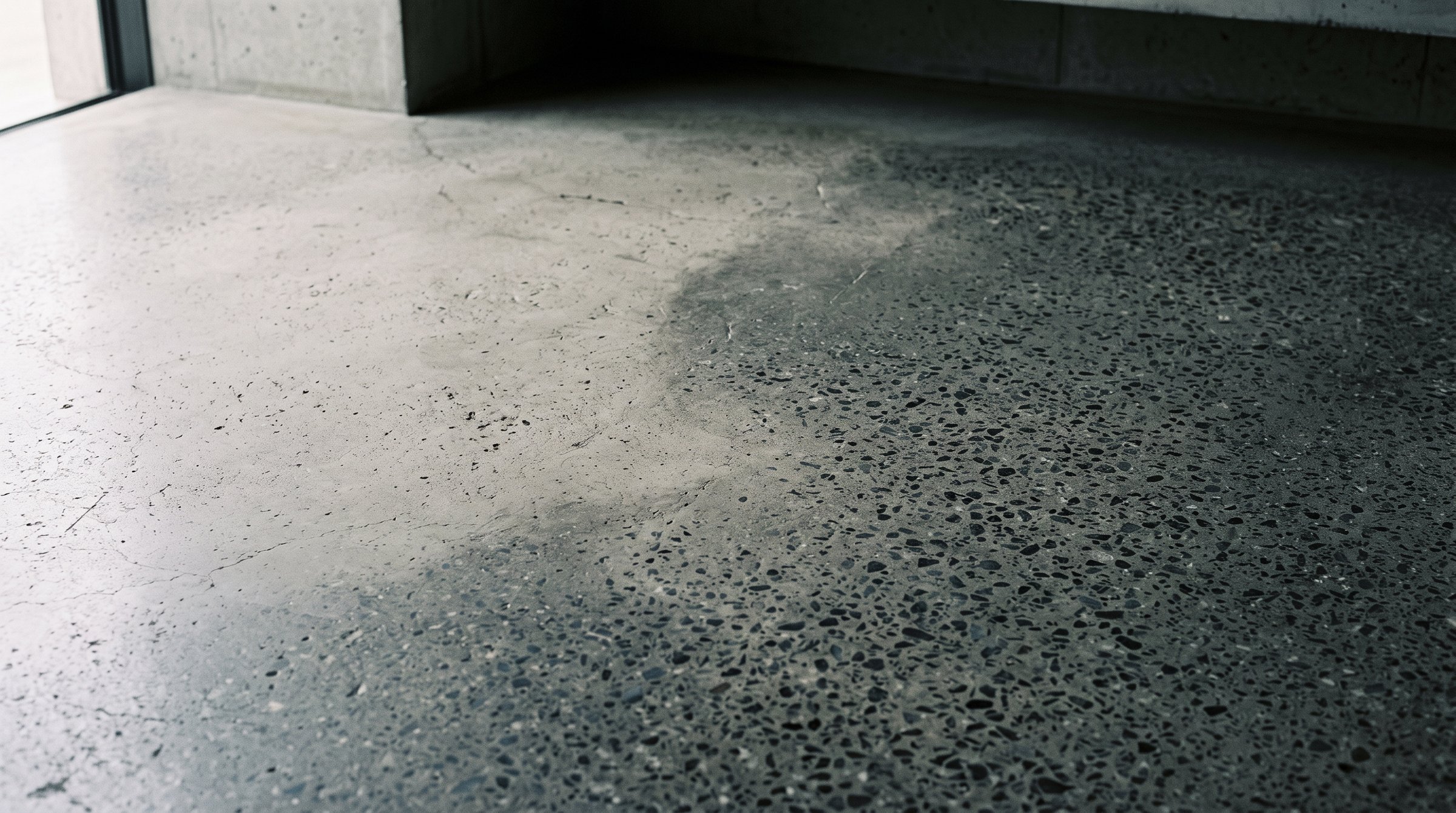
For builders
Approved PeterFell C2 Applicator
Approved TextureSafe Applicator
Twenty-Five Years Combined Experience
Grinding Dynamics
Published 16 August 2026 · 9 minute read
Twenty eight days from the date of pour. That is the answer, and on almost every job the real answer is longer, because the right point in the programme to grind a floor usually arrives well after the concrete is ready for it.
The 28 days is not a rule of thumb we invented. It is the age at which concrete is tested for its specified compressive strength, and it is the point at which the slab behaves the way the grinding and densifying process assumes it will behave. Before that you are cutting a material that has not finished becoming itself.
Twenty eight days is a minimum, not a target.
Concrete does not dry. It hydrates. Cement reacts chemically with water and the reaction products grow and interlock through the mix, which is what gives concrete its strength. Water is a reactant, not something to be got rid of, and the reaction continues for months. It just does most of its work in the first four weeks.
That is why keeping a slab wet or covered in the first week matters so much, and why a slab that dried out fast in wind and sun is weaker at the surface than one that was cured properly. It also means concrete gets harder over time. A slab at 28 days is significantly harder than the same slab at 10 days, and a five year old slab is harder again.
Green concrete cuts fast. That sounds like an advantage and it is not. The paste is soft, so the diamonds pull material out rather than cutting through it cleanly, and there are several consequences.
None of that is repairable by going back and doing another pass. Aggregate pull out is permanent. A hazy polish on soft paste does not sharpen up later. Grinding early costs a floor, and the floor is generally the most visible finished element in the building.
A slab protected properly from the day of the pour is worth more at grinding time than any amount of remedial work.
The single most useful thing a builder can do for a polished floor is tell us the pour date as soon as it is set, not when the plasterers are finishing up.
With the pour date we can work backwards and forwards. We know the earliest legitimate grinding window. We can book the crew against the rest of your programme rather than into the first gap available. We can flag the trades that need to be finished before we start and the ones that must not start until we are off. And you get a fixed slot in the schedule rather than a phone call three weeks out asking when we can fit you in.
Where the pour date moves, and it usually moves, tell us the same day. Moving a booking is administration. Turning up to a slab that is nineteen days old is a wasted mobilisation for both of us.
Concrete age sets the earliest date. The build programme sets the right date, and the two are rarely the same.
The window we want is after the building is watertight and the exterior joinery is in, and before skirtings, kitchens, wardrobes and painting. That order exists for real reasons.
Watertight matters because rain on a slab being prepared and sealed ruins the work, and because sealing needs a controlled, dry environment. Exterior joinery matters because the openings need to be closed for the same reason, and because installing joinery after a floor is finished means people working over your new surface.
Before skirtings matters because grinding right into a wall junction is far cleaner when the skirting goes on afterwards and covers the edge. Before kitchens and wardrobes matters because we can run the floor through as one continuous surface rather than cutting around cabinetry, and because a joiner working on a finished floor is a risk you do not need. Before painting matters because paint drips and splatter on a finished polished floor are a genuine problem and a repaint over a protected floor is not.
Sometimes it just does not line up. A slab gets poured, the job stalls, and the floor sits under a roof for eight months. Sometimes the client decides on a polished floor late, after the building is nearly finished.
Neither is a problem in itself. An older slab is harder, and harder concrete needs a different approach. We adjust the grit sequence and tooling, starting with a more aggressive metal bond than we would use on a 28 day slab and allowing more time in the early cutting stages. It is slower work, and we would rather price it correctly than pretend it grinds the same.
What does cause a problem is a slab that spent those months unprotected. Late grinding on a clean slab is a scheduling matter. Late grinding on a slab that has been rained on, driven on and covered in mortar droppings is a different quote.
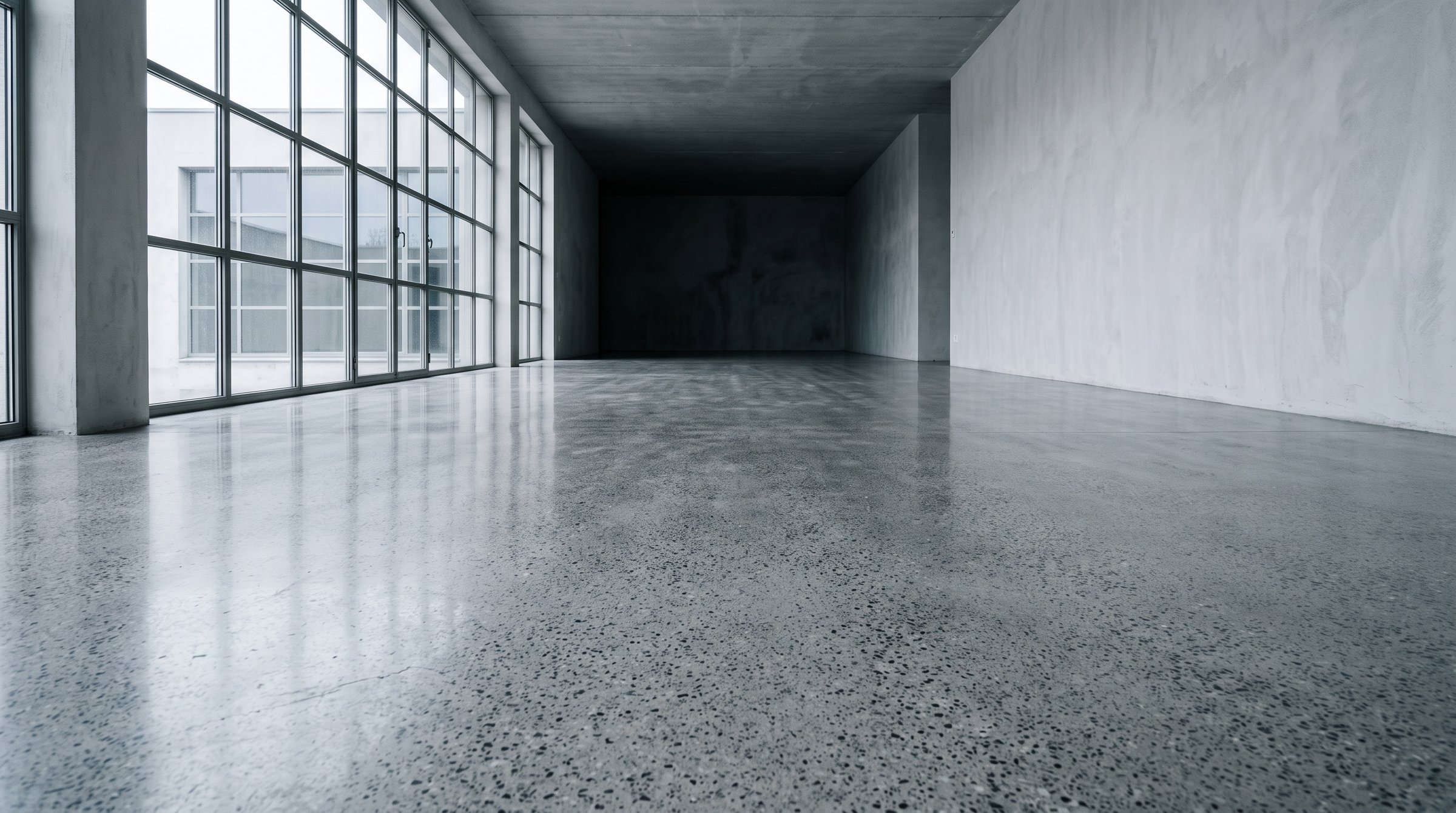
The finished result on a slab that was poured flat, protected through the build and ground at the right stage.
Between the pour and the grind, the slab is the site floor. What happens to it in that period shows up in the finished surface, and almost all of it is avoidable.
Do cover the slab with a breathable protection product once initial curing is complete, tape the joins so nothing tracks underneath, and keep the cover down until we arrive. Do keep plant and vehicles off it. Do put drip trays under anything with a motor or a hydraulic line. Do clean up spills the day they happen rather than the week they happen. Do stack materials on packers and timber rather than directly on the concrete.
Do not use plastic sheet taped down tight, because it traps moisture and leaves staining patterns that can be permanent. Do not park a scissor lift or a digger on the slab. Do not cut steel over it, since hot fragments embed and rust. Do not mix mortar, render or plaster on it. Do not let acid wash, brick cleaner or unknown chemicals run across it. Do not use duct tape or high tack adhesive directly on the surface.
| Stage of build | What should be happening | Why it matters |
|---|---|---|
| Before the pour | Polished floor confirmed with us, flatness tolerance agreed, mix and colour discussed with the placer | Flatness and mix consistency decide how even the finished floor looks, and neither can be changed later |
| Day of pour | Pour date recorded and sent to us, consistent finishing across the whole slab | The date starts the 28 day clock and locks the earliest grinding window |
| Days 1 to 7 | Curing regime maintained, no traffic, no loading | Most of the strength gain happens here and a slab that dries out early stays weak at the surface |
| Days 7 to 28 | Breathable protection down and taped, plant kept off, drip trays under machinery | This is when contamination happens, and contamination is the hardest patchiness to grind out |
| Watertight and joinery in | Exterior closed up, slab still covered, grinding booked | Sealing needs a dry, controlled environment and rain on a prepared floor undoes the work |
| Grinding window | Slab clear and empty, power and water available, area sealed off from other trades | One clean run through the space, with no cutting around cabinetry or working between other trades |
| After grinding | Floor protected again, skirtings, kitchens and painting proceed over the cover | The floor is finished and now becomes the most damageable surface on the site |
Timings assume a normal residential or light commercial programme. Cold weather slows early strength gain, so a winter pour can want longer than the minimum.
No. Twenty eight days from the date of pour is a minimum we do not move on, because grinding green concrete causes aggregate pull out, a cloudy polish and sealer problems, none of which can be corrected afterwards.
No. It applies only to a new pour. An existing slab has long passed that point and can be ground at any time, subject to condition and what is on the surface.
It can. Hydration slows as temperature drops, so a slab poured in the middle of winter gains strength more slowly than the same mix poured in February. Where a pour has gone in cold we allow longer than the minimum rather than working to the calendar alone.
After the building is watertight and the exterior joinery is installed, and before skirtings, kitchens, wardrobes and painting. That gives us a dry, closed space and a clear slab, and it lets the skirting cover the wall junction afterwards.
We assess it and tell you honestly. Surface contamination in the top millimetre generally grinds out. Oil, diesel and chemical staining that has penetrated may not, and the options then are a deeper cut, which changes the look, or accepting the marking.
It depends on the area, the specified finish and the access, and we give you a firm number of days with the quote. What we ask for is that the days are uninterrupted, with the floor sealed off and no other trades working through the space.
Programme timing, slab protection and what we need from site before we arrive.
Specification level information on systems, preparation and sealing.
The full polished floor process on a new pour, from test grind to final seal.
Price a floor
A few pertinent questions about your slab and space.
Step 1 of 6
Your own slab answers more than another thousand words.
Site assessment and written quote, no obligation.

Tell us about the slab and we will tell you what it can do.
Site assessment and written quote, no obligation.