
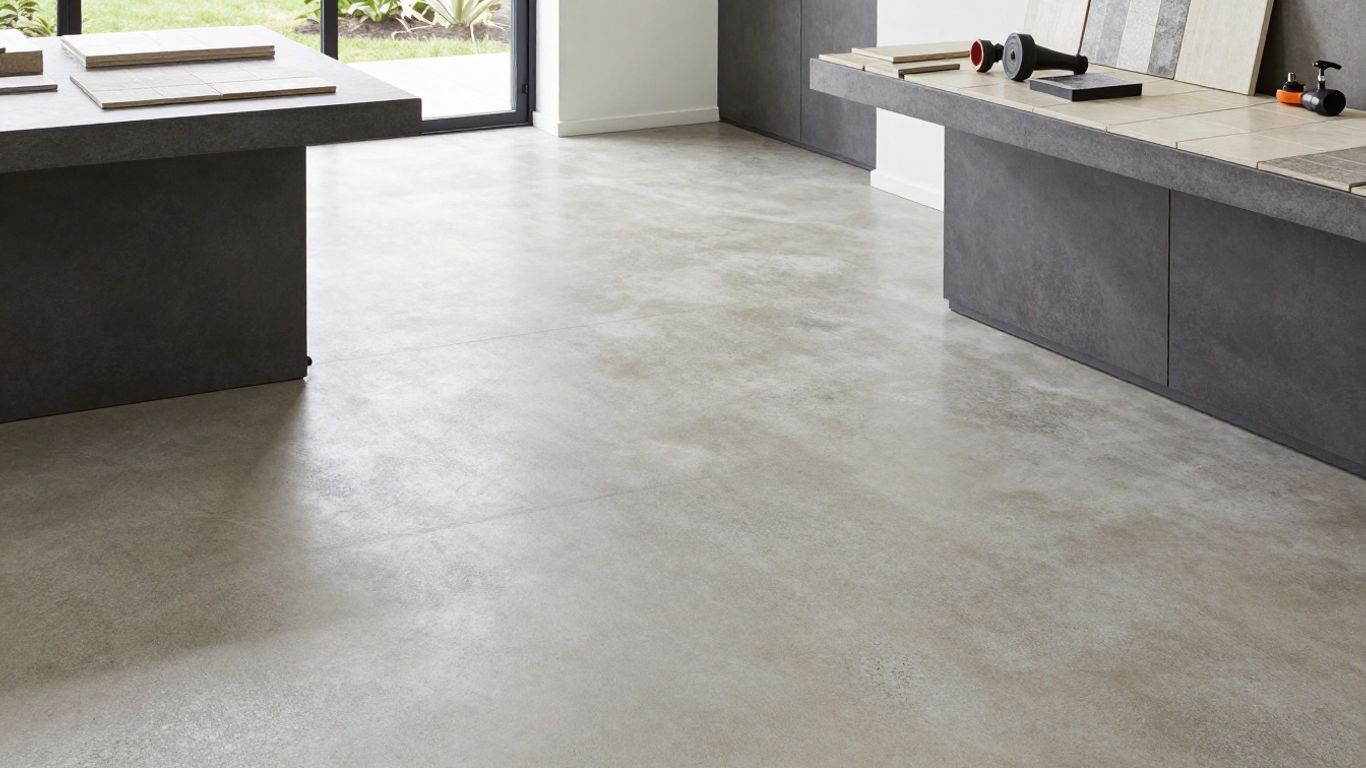
Concrete floor polishing cost New Zealand: 2026 pricing guide, factors, and estimates
Concrete floor polishing cost New Zealand: 2026 rates, quote inclusions, regional factors, and budgeting tips.
Published 25 August 2026
Key Takeaways
Polished concrete pricing in New Zealand depends on the slab, the finish, the access, and the amount of preparation required. Use the figures below as a planning guide, then request a written quote based on your own floor.
- A typical residential project may sit around $80–$130 per m² plus GST, depending on the scope.
- Small areas can attract a minimum project charge because machinery, setup, and dust control still take time.
- Repairs, adhesive removal, difficult access, high sheen, and deeper aggregate exposure can all raise the price.
- A polished floor is the concrete slab itself, so the original pour strongly affects its final character.
- Compare quotes by checking preparation, exposure, polish level, sealer, repairs, exclusions, and GST.
How much does concrete floor polishing cost in New Zealand?
The concrete floor polishing cost New Zealand homeowners see will vary considerably between projects. As a broad 2026 budgeting guide, many residential floors fall somewhere around $80–$130 per square metre plus GST, while unusually small, damaged, or complicated areas may cost more. The rate is only a starting point because polishing is a sequence of preparation and finishing operations rather than a single treatment. A contractor should confirm the actual scope after reviewing the slab and the site.
Typical cost per square metre in NZD
For a reasonably accessible residential floor in fair condition, planning around $100 per m² plus GST is a useful midpoint. A simpler grind-and-seal finish may sit below a mechanically polished finish, while extensive grinding, repair work, deeper exposure, or a very high sheen can move the estimate upward. These figures should not be treated as a promise: the slab sets the starting point for both the work and the appearance.
A useful overview of the pricing distinction between grind-and-seal and mechanical polishing is available in this New Zealand polished concrete cost guide. It explains why the technique and finish specification matter as much as the area measured.
Residential versus commercial pricing
Residential work often includes more edges, doorways, cupboards, hallways, and changes of direction per square metre. Commercial and civic floors can involve larger open areas, which may improve production efficiency, but they can also require stricter scheduling, protection, dust management, and handover requirements. Traffic levels may influence the specified sealer and maintenance plan as well.
The quoted rate should therefore reflect the whole site, not simply whether the building is a home or a business. An open warehouse may be efficient to polish, while a smaller retail or hospitality fit-out can demand considerable detailing.
Minimum project charges and call-out fees
Small rooms are not always inexpensive in proportion to their area. Heavy machinery still has to be transported, positioned, connected to dust extraction, and moved through several stages, even when the floor is only a hallway or compact room. Contractors may apply a minimum charge, and a remote site may also involve travel or accommodation costs.
Ask whether the quote includes the site inspection, equipment setup, edge work, dust control, rubbish removal, and GST. A low square-metre rate can be misleading if those items appear later as separate charges.
How floor size affects the total estimate
The total cost generally rises as the floor grows, but the rate per square metre may fall on larger, open areas because setup time is spread across more floor. Small or fragmented spaces can work in the opposite direction. Several connected rooms may require more edging and repositioning than one uninterrupted area of the same size.
For early budgeting, measure the actual floor to be polished rather than the building’s total footprint. Note stairs, narrow passages, fixed joinery, columns, and areas that cannot be cleared, since these details can affect production time.
What is included in a polished concrete quote?
A sound quote describes the work needed to turn the existing slab into the finished floor. It should distinguish preparation from polishing and identify what happens at the edges, joints, cracks, and transitions. It should also state the intended aggregate exposure, sheen, protection system, and practical assumptions about site access. If those details are missing, two apparently similar quotes may be pricing very different floors.
Surface preparation and concrete grinding
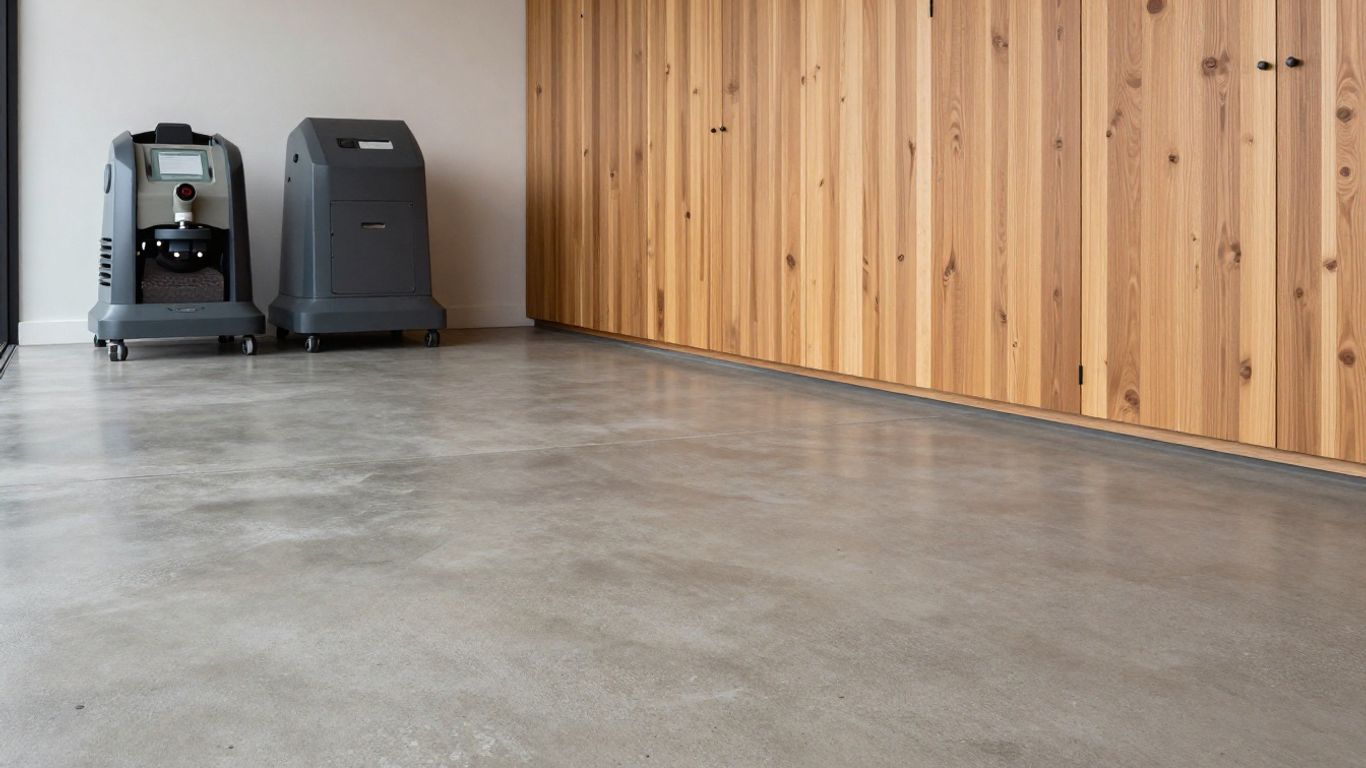
Preparation can include removing old coverings, tile adhesive, paint, residue, weak surface material, or high spots. Diamond grinding then opens and levels the surface progressively, with dust extraction used to control debris. The amount of material to remove depends on what is on the slab and how flat or damaged it is.
For floors being prepared for polishing or another finish, concrete grinding services may involve adhesive removal, levelling, and surface preparation. Confirm whether the quoted preparation is light cleaning, coating removal, or a deeper grind intended to expose aggregate.
Polishing stages and finish levels
Mechanical polishing uses progressively finer diamond abrasives to refine the surface. A low-sheen or satin result normally requires fewer finishing stages than a highly reflective floor. The specified depth of cut also matters: a subtle salt-and-pepper exposure is a different operation from a heavy cut that reveals more stone.
Ask for a sample made from the actual slab where possible. General photographs can help explain the vocabulary, but they cannot reliably predict the colour, aggregate distribution, trowel marks, or patchiness in another floor.
Repairs, patching, and crack treatment
Cracks, holes, chipped edges, old penetrations, and uneven patches need to be assessed before the final appearance is agreed. Some repairs can be filled and blended; others will remain visible because the polished floor reveals the history of the slab rather than hiding it. Structural movement and control joints also need appropriate treatment rather than a cosmetic promise of invisibility.
A quote should identify whether ordinary patching is included or charged as an allowance. It should also explain what happens if grinding reveals further damage, contamination, or a weak layer beneath the existing surface.
Sealing, densifying, and final protection
Densifier is commonly used during the polishing process to harden and refine the concrete surface. A sealer may then provide resistance to staining and everyday wear, with the product and number of coats affecting both price and future maintenance. The quote should name the protection system, sheen, application method, and expected curing or return-to-service period.
Grinding Dynamics describes eco-based and solvent-based sealing options for interior floors and other concrete surfaces. Its concrete sealing guidance is useful when comparing what protection is included rather than treating “sealed” as a complete specification.
Which factors change the final polishing cost?
The per-square-metre figure is only meaningful when the floor and the requested finish are described properly. Concrete varies from pour to pour, and an existing floor may contain coverings, glue, paint, stains, or repairs that cannot be priced accurately from a short phone description. The desired result also changes the number of grinding and polishing stages. A careful quote makes these variables visible instead of burying them in a single allowance.
Existing slab condition and hardness
A hard, sound slab can still require substantial work if it has ridges, trowel marks, coatings, or contamination. Soft or inconsistent concrete may consume abrasives more quickly and produce a less uniform result. Cracks, curling, delamination, and previous repairs add inspection and detailing time.
The quality of the original placement, screeding, curing, and finishing remains visible in many polished floors. A test grind is often more informative than a generic sample because it reveals what this particular slab can provide.
Desired sheen, aggregate exposure, and colour
Finish decisions include colour, aggregate, depth of cut, and polish level. A shallow grind may retain a restrained salt-and-pepper appearance, while a deeper cut can expose larger stones and create a more terrazzo-like character. More refinement is needed for a stronger gloss or mirror-like reflection.
For a new slab, colour should be decided before the pour because pigment is batched into the wet concrete rather than applied as a simple top layer. Grinding Dynamics’ aggregate and polished concrete guide explains why local stone and exposure depth influence the final look. Samples should be judged under the project’s lighting, ideally after sealing or wetting.
Room access, obstacles, and floor layout
Access affects labour, transport, dust control, and the size of equipment that can be used. Fixed cabinetry, toilets, columns, stairs, drains, thresholds, and tight corners increase hand detailing. Occupied buildings may require staged work, additional protection, and more careful cleaning between areas.
A floor plan with measurements and photographs of access routes will help contractors identify these issues early. It is better to price an awkward transition before work begins than to discover it as an undocumented variation.
New concrete versus an existing concrete floor
A new build allows decisions about mix, colour, aggregate, flatness, curing, construction sequence, and protection to be made before the slab is placed. An existing floor offers less control, but it may still be suitable after coverings and residues are removed. Age alone does not decide suitability; soundness, contamination, cracking, and the available depth do.
Grinding Dynamics’ guide to polishing an existing slab covers the practical questions around old coverings, age, cracks, aggregate, and sample patches. New concrete should generally be allowed to reach the required age and condition before polishing; a 28-day minimum is a useful planning point, subject to the project specification and site assessment.
How regional location affects New Zealand pricing
New Zealand pricing is shaped by local labour availability, project demand, access, and travel rather than by a single national tariff. Major urban areas may have more contractors and equipment nearby, while regional work can involve longer mobilisation. The same finish specification may therefore produce different totals even when the measured floor area is identical. Regional comparisons are most useful when the scopes are genuinely like for like.
Auckland and other major urban areas
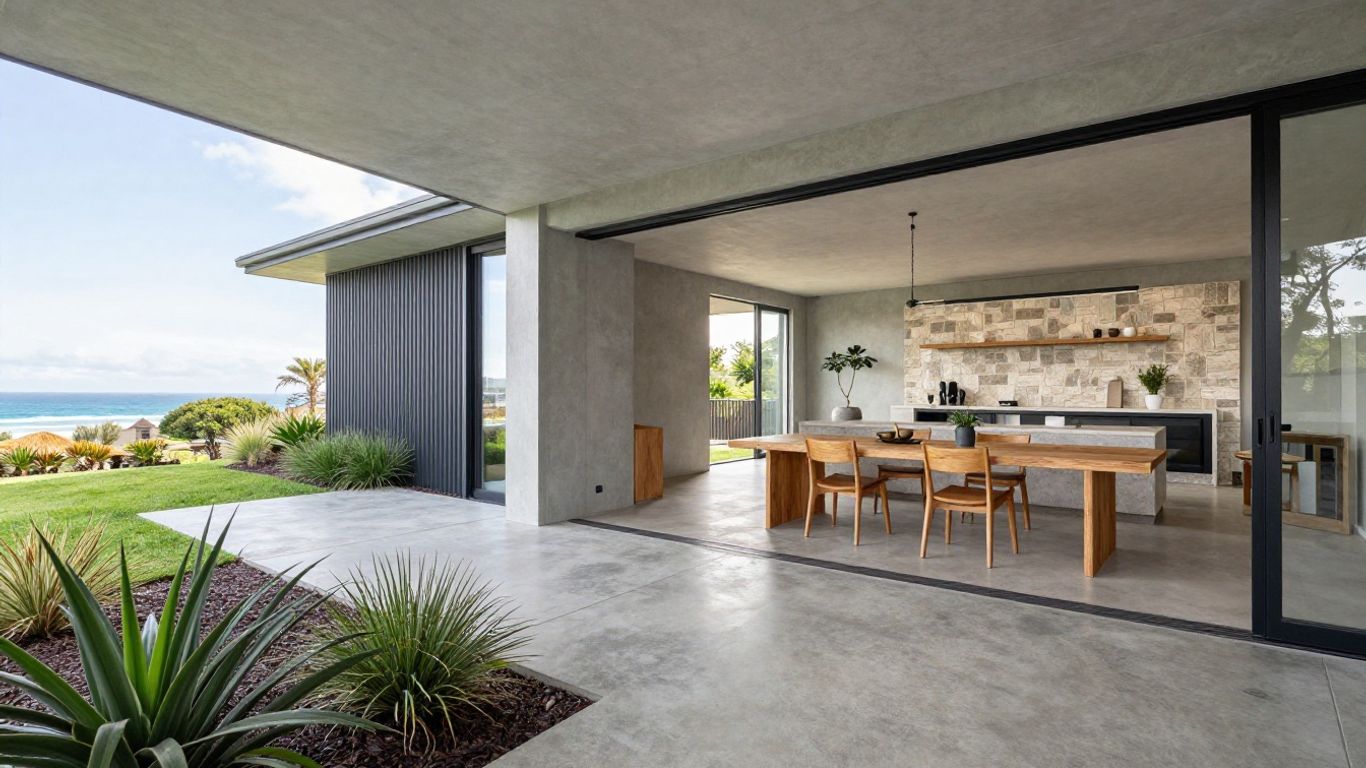
Auckland has a broad construction market and can offer access to multiple specialist contractors, but labour, logistics, and building constraints may also be significant. Larger open floors can benefit from efficient machine movement, whereas renovation work in occupied homes may involve detailed access planning.
For a current numerical reference, this 2026 Auckland pricing breakdown places many typical residential projects around $80–$130 per m² plus GST, with a midpoint near $100. Treat that as market context, not a substitute for a site-specific scope.
Wellington, Christchurch, and regional centres
Wellington projects may involve difficult access, stairs, compact rooms, and constrained urban sites. Christchurch and other regional centres can have different labour and equipment patterns, while smaller towns may have fewer specialists available at a given time. Local conditions and the actual floor still matter more than the city label.
For Christchurch work, an onsite grinding quote explanation shows why floor condition, coatings, access, and the intended finish need to be assessed together. The same principle applies when comparing quotes anywhere in New Zealand.
Travel, transport, and accommodation charges
A contractor travelling beyond its normal service area may include machinery transport, fuel, accommodation, meals, or extra mobilisation days. These costs can be modest on a large project but noticeable on a small one. Ask for them to be itemised rather than assuming they are hidden inside the square-metre rate.
Give contractors the site address, parking details, access restrictions, and likely working hours at the quoting stage. That information can prevent a revised price when equipment arrives and the real logistics become clear.
Availability of local polishing contractors
The number of suitable contractors affects scheduling more than it guarantees a lower price. A busy specialist may quote later, while a general flooring provider may offer a cheaper figure with a narrower scope. Check whether the proposed contractor has experience with the type of slab, exposure, sheen, and protection system you want.
Grinding Dynamics is based in Tauranga and works primarily across the Bay of Plenty, with larger projects in the Waikato and Auckland. Its polished concrete services describe work for residential, commercial, and civic spaces, including decisions about colour, aggregate, depth of cut, and polish level.
How the concrete polishing process affects the budget
Polishing is a staged process, and each stage has a cost in labour, abrasives, machinery, and site management. The sequence normally begins with inspection and preparation, then moves through grinding, densifying, progressively finer polishing, sealing, and handover. Skipping a stage may change the appearance or durability rather than simply saving money. A quote should make the sequence understandable to the person approving it.
Inspection, testing, and project measurement
An inspection helps establish the floor area, slab condition, access, existing coatings, edge requirements, and likely exposure. A test grind can show aggregate size, colour variation, surface flatness, and how much depth may be needed. It also creates a more honest conversation about marks or repairs that may remain visible.
Measurements should separate open machine areas from edges and detailed zones. If an onsite visit is not practical initially, clear photographs and dimensions can support a preliminary estimate, followed by confirmation before the final scope is accepted.
Grinding and preparation requirements
The first grinding stages do the heavy work: removing unwanted material, opening the slab, and correcting appropriate surface irregularities. Adhesive, paint, coatings, and old flooring residues can slow the process and may require different tooling. Excessive removal can also change the exposure and reveal more aggregate than expected.
Do not compare a quote for light surface preparation with one that includes full residue removal. Ask what the contractor expects to remove, how deep the grind may go, and what happens if the slab is weaker or more uneven than visible at first inspection.
Progressive polishing and finishing
Finer abrasives gradually refine the ground surface, and the final grit influences the sheen. A satin finish is generally less demanding than a high gloss, but the best choice depends on lighting, traffic, cleaning expectations, and the desired visibility of aggregate. Edges and inaccessible areas may not receive exactly the same machine treatment as the open floor.
Grinding Dynamics describes a process of site assessment, sample approval, multi-step diamond grinding, densifying, refining, and sealing. Its polishing process overview can help a client recognise whether a proposed quote covers a complete sequence or only the initial grind.
Drying time, curing, and site protection
Concrete and repair materials need suitable drying or curing time before later stages proceed. New slabs also require adequate age before polishing, and the building must be sufficiently dry and protected from other trades. Poor sequencing can damage a finished floor or force the polishing crew to return.
Builders should include protection after polishing, especially where painting, cabinetry, glazing, or heavy deliveries are still scheduled. A little coordination at the start can prevent cleaning, repair, and return-visit costs later.
How polished concrete compares with other flooring options
The cheapest installation is not automatically the cheapest floor over its useful life. Polished concrete uses the existing slab as the finished surface, while other systems add tiles, sheets, planks, or a separate finish layer. Each option has different needs around preparation, comfort, moisture, cleaning, repair, and replacement. Compare the complete installed scope and likely maintenance rather than only the first quoted rate.
Polished concrete versus epoxy flooring
Polished concrete refines the concrete itself through grinding and polishing. Epoxy is a separate resin flooring system installed over prepared concrete, so its cost and performance depend on coating thickness, substrate preparation, colour, and system specification. They are not interchangeable finishes, even where both can provide a smooth, cleanable surface.
The right comparison depends on whether the priority is revealing the slab’s aggregate and character or creating a specified resin finish. Confirm how each option handles moisture, repairs, traffic, slip resistance, and future restoration.
Polished concrete versus tiles
Tiles provide a manufactured pattern and a replaceable surface, but installation includes adhesive, cuts, transitions, and grout. Polished concrete avoids grout lines and can form a continuous floor, although natural variations in colour, aggregate, sheen, and repairs remain part of its character.
A helpful flooring comparison guide looks at polished concrete, tiles, vinyl, laminate, and timber through maintenance and long-term value as well as initial cost. That wider view is more useful than choosing solely by the lowest installation figure.
Polished concrete versus vinyl and laminate
Vinyl and laminate can be quicker and less expensive to install, particularly where a decorative pattern is wanted without substantial slab grinding. They may, however, need replacement sooner depending on traffic, moisture, impact, and product quality. Concrete preparation can still be required beneath them, especially where the substrate is uneven.
Polished concrete is harder underfoot and does not provide the acoustic or warm tactile qualities of some resilient floors. Rugs, underfloor heating design, furnishings, and room use should be considered alongside price.
Long-term maintenance and replacement costs
A polished floor normally needs routine dust removal, damp cleaning with a suitable neutral product, and periodic attention to its protective sealer. High-traffic areas may eventually need maintenance or re-polishing, but the slab remains available for renewal rather than requiring complete removal as a floating finish might.
Ask what maintenance schedule is supplied, which cleaners are suitable, and whether resealing is expected. A realistic allowance for care is part of responsible budgeting, particularly in commercial or civic spaces.
How to get and compare accurate quotes
Start with a clear brief rather than asking several contractors for an unexplained price per square metre. State whether the slab is new or existing, what currently covers it, the intended exposure and sheen, and whether the building will be occupied during the work. Include photographs, dimensions, and access information. The more concrete the brief, the less room there is for incompatible assumptions.
Measurements and photos contractors need
Provide room-by-room dimensions, a simple plan if available, and photographs of the floor surface, edges, thresholds, stairs, cabinetry, and access route. Include close-ups of cracks, stains, glue, coatings, holes, and previous repairs. Mention floor areas that will remain covered or inaccessible.
For a new build, add the proposed slab specification, pour timing, aggregate or colour decisions, and construction programme. For an existing floor, explain what has been removed and whether moisture or structural issues are known.
Questions to ask about the proposed finish
Ask the contractor to describe the expected exposure depth, polish level, sheen, colour approach, and sealer. Clarify which variations are inherent to the slab and whether a test grind or sample patch will be completed before the whole area is processed.
Also ask how the finish will behave in the intended lighting and traffic conditions. A glossy sample may look different beside large windows, and a smooth interior polish is not the same specification as a textured surface intended to provide wet grip.
Items to check in the written scope
A useful scope should identify the following items clearly:
- Measured floor area and the areas excluded from the work.
- Preparation, adhesive or coating removal, repairs, and edge treatment.
- Aggregate exposure, colour, polish level, sealer, and number of coats.
- Access assumptions, dust control, protection, cleanup, GST, and payment stages.
After reviewing these points, ask the contractor to state the likely start conditions and any provisional sums. This makes it easier to compare the actual work being purchased rather than a headline rate.
Warning signs of incomplete or unusually low quotes
Be cautious when a quote gives only a low square-metre price without describing preparation or finish. Other warning signs include no allowance for edges, no mention of repairs or existing glue, unclear GST treatment, and a promise of a perfectly uniform result without inspecting the slab. The proposal should also explain exclusions and variations.
A credible quote can still change if concealed damage is uncovered, but the process for approving that change should be written down. A sample, a defined scope, and a candid discussion of limitations are usually more valuable than an artificially precise number.
Conclusion
The concrete floor polishing cost New Zealand buyers should budget for depends on much more than floor area. Slab condition, access, preparation, aggregate exposure, polish level, sealing, location, and project timing all shape the final figure. Gather accurate measurements, request a sample or site assessment, and compare itemised scopes so the chosen floor matches both the design brief and the practical demands of the space.
Frequently Asked Questions
What is the average cost of polished concrete in New Zealand?
A broad planning range for many residential projects is about $80–$130 per m² plus GST, although small, damaged, remote, or highly detailed floors can fall outside that range.
Is polished concrete cheaper than tiles?
It can be competitive with mid-range installed tiles, but the result depends on slab preparation, repairs, finish level, tile specification, and installation complexity. Compare complete written scopes rather than material rates alone.
Why do small concrete polishing jobs cost more per square metre?
Small jobs still require machinery transport, setup, dust control, edging, and several process stages. A minimum project charge can therefore make the per-square-metre rate appear high.
Does repairing cracks add to the polishing cost?
Usually, yes. The price depends on the number, width, depth, and movement of the cracks, as well as whether patching can be blended into the intended finish.
Can an existing concrete slab be polished?
Often it can, but suitability depends on soundness, contamination, coverings, cracks, flatness, and available depth. A test grind and inspection provide a more reliable answer than the slab’s age alone.
Is a high-gloss finish more expensive than a satin finish?
Usually, a higher sheen requires more progressive polishing and may involve additional finishing stages. The final price also depends on the slab condition and the requested aggregate exposure.
How long should new concrete cure before polishing?
A 28-day minimum is a common planning point, but the contractor and project specification should confirm the suitable timing. The building also needs appropriate dryness, access, and protection from other trades.