Renovation

Deciding
Approved PeterFell C2 Applicator
Approved TextureSafe Applicator
Twenty-Five Years Combined Experience
Grinding Dynamics
Published 17 August 2026 · 10 minute read
Here is the honest framing before anything else. Polished concrete usually costs more up front than vinyl, laminate or carpet, and usually less than good porcelain tile or engineered timber once you count the underlay, the adhesive and the labour. On a slab that is already sound and already there, it is often the cheapest hard floor you can end up with, because the structural part of it is paid for the day the house is poured.
None of that settles the question, because installation cost is the least interesting number in the comparison. A floor is a fifteen to twenty year decision. What matters is what it does over that time, what it costs to keep, what happens when it gets hurt, and what it feels like to live on. That is the comparison worth making, and it is the one most quotes never put in front of you.
Compare it over twenty years, not at installation.
A polished slab is not a covering. It is the structure of the building, refinished. There is no wear layer to run out, no adhesive bond to fail, no seams to lift. When a polished floor looks tired, it gets re-honed and resealed, and the floor that comes back is the same floor. Nothing goes in a skip.
Sheet vinyl and laminate are consumables with a good finish on them. They look sharp for the first years and then the wear layer thins in the traffic lines, the joins pick up dirt and the surface loses its lustre in a way no amount of cleaning brings back. Ten to fifteen years is a fair expectation in a family home, and at the end of it the whole floor comes up and goes to landfill.
Tile is genuinely long lived. A well laid porcelain floor can outlast the people who chose it. Timber is repairable, which is its great advantage over vinyl, and a solid or thick engineered board can be sanded back two or three times across its life. Carpet is the shortest lived of all of them in a busy house, and everybody already knows that.
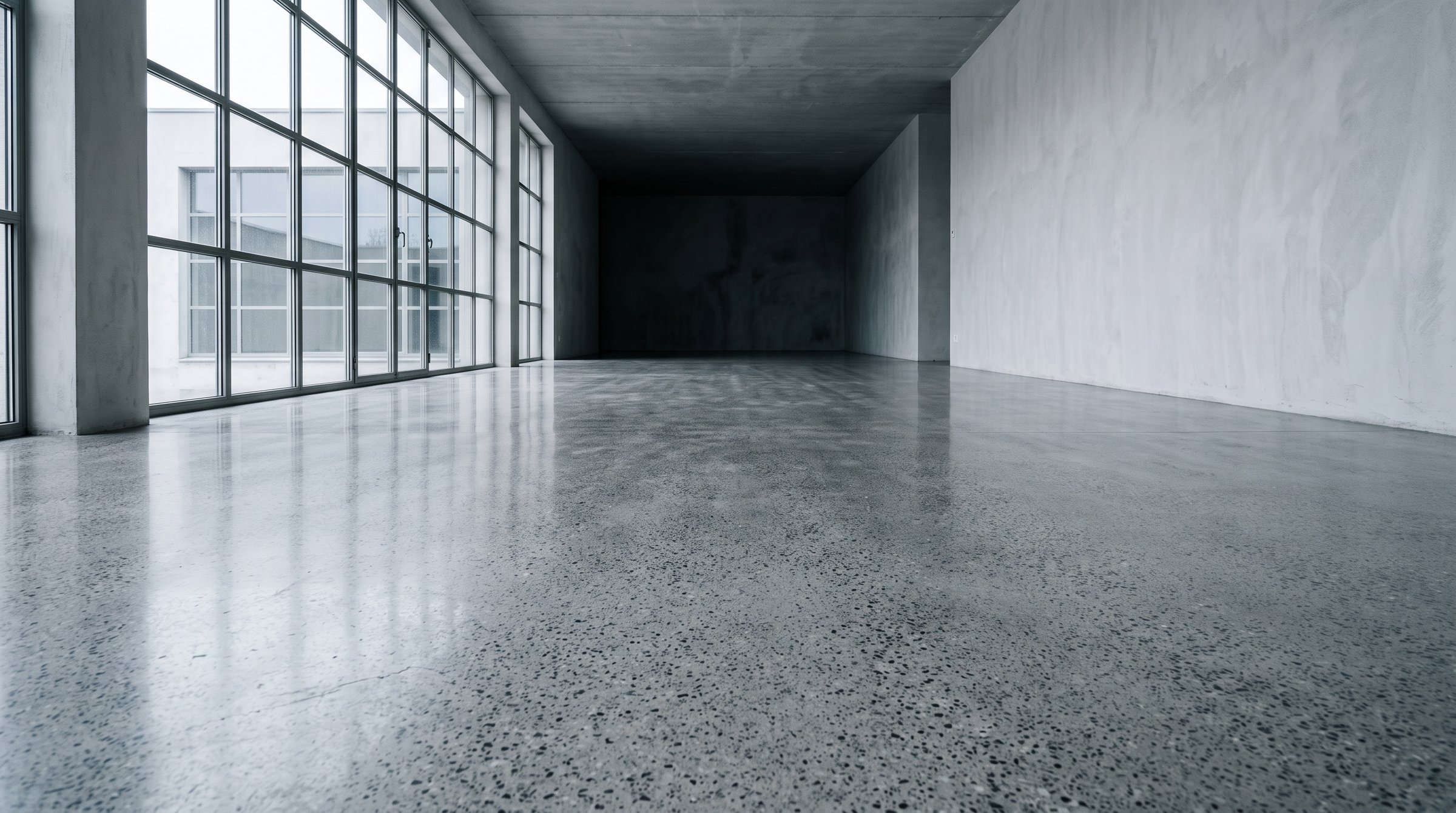
The slab is already in the building. Polishing it finishes something you have paid for rather than buying a second floor to sit on top.
Polished concrete wants a dust mop and a damp mop with a pH neutral cleaner. That is the whole routine. What it does not want is anything acidic, anything caustic, and supermarket floor cleaner that leaves a film. Depending on the sealer system and the traffic, expect a maintenance coat or a burnish somewhere in the five to ten year range in a house, sooner in a shop or a workshop.
Tile is easy to clean and grout is not. Grout is the weakness of an otherwise excellent floor. It is porous, it stains, it picks up mop water and holds it, and in a kitchen or an entry it goes grey within a few years no matter how carefully it was sealed. Regrouting a large floor is not a small job.
Vinyl is very easy to clean and very easy to damage. Grit under a chair leg, a dragged appliance, a dropped knife. The damage does not clean out because it is in the wear layer. Timber cleans easily and is intolerant of water sitting on it, so a dishwasher leak or a slow pipe under a vanity becomes a floor problem quickly. Carpet is the honest one in this category, because everything that lands on it stays in it until someone extracts it.
This is where the comparison usually turns, because every floor gets hurt eventually and the difference is what the repair looks like.
Drop something heavy on polished concrete and you can chip it, most often near an edge or a saw cut. A chip is filled with a matched repair compound and the area is re-honed and resealed. Done well it goes quiet and reads as part of the floor, in the same way a patched section of any natural material does. It never comes out perfect and it never needs replacing.
A cracked tile is replaced, which means finding a spare from the original batch, chiselling the broken one out without disturbing its neighbours, and matching the grout colour to grout that has aged for years. Anyone who has done this knows the replacement is visible. Vinyl is patched or, more realistically, lived with. A gouge in an engineered timber board that goes through the veneer is not sandable, so the board is lifted and replaced.
| Material | Lifespan | Maintenance | Weakness | Best suited to |
|---|---|---|---|---|
| Polished concrete | Life of the slab, refinished as needed | Dust mop, neutral cleaner, periodic maintenance coat | Hard underfoot, chips at edges, natural variation | Living areas, kitchens, entries, indoor to outdoor flow |
| Porcelain tile | Decades if laid well | Easy to clean, grout needs regular attention | Grout staining, cracked tiles hard to match | Bathrooms, laundries, wet areas, small rooms |
| Sheet or plank vinyl | Ten to fifteen years in a busy home | Very easy, but wear cannot be restored | Wear layer thins, gouges are permanent | Rentals, budget fitouts, short hold periods |
| Engineered timber | Twenty years plus, sandable two or three times | Sweep, damp mop sparingly, recoat periodically | Water, dog claws, sunlight fading | Bedrooms, lounges, upstairs floors |
| Carpet | Eight to twelve years | Vacuum constantly, extract yearly | Holds dust, moisture, odour and stains | Bedrooms, stairs, spaces wanting warmth and quiet |
Lifespans assume a normal family home. Commercial traffic shortens every row except the first.
Concrete is hard. There is no way around that and no reason to pretend otherwise. Standing at a bench for an hour is harder work on concrete than on timber, and a dropped glass does not survive. People who love these floors tend to put a mat at the sink and a rug in the lounge, and that is a reasonable answer rather than an admission.
Warmth is more interesting than the cliche suggests. A slab does not create cold, it holds whatever temperature it has been given. In a house with north facing glazing, sun landing on a dark polished floor through the day charges the slab and it gives that heat back through the evening. That is thermal mass working the way it is supposed to, and it is the reason concrete floors appear so often in well designed New Zealand houses. In a poorly insulated house with no sun on the floor, the same mass works against you and the floor feels cold, because it is faithfully holding the temperature of an unheated room.
The two things that decide which of those you get are slab edge insulation and where the sun falls. Neither is something a grinder controls. Both are decided at design stage, which is one more reason to raise a polished floor with the designer rather than with the builder.
Polished concrete and in slab hydronic or electric heating suit each other well. The mass that makes an unheated slab feel cold is exactly what makes a heated slab comfortable, because it warms slowly and holds temperature for a long time after the system cycles off. There is no insulating covering between the heat and the room, so nothing is lost to an underlay.
Two practical notes. In slab heating has to be off and the slab at normal temperature while we grind and while the sealer cures. And any warm up cycle after installation should be gradual, following the heating system supplier's schedule, rather than driven hard from cold.
Hard floors are louder. Concrete is a hard floor. In a large open plan room with plasterboard walls, a stud ceiling and big glazing, a polished floor will make the space livelier and conversation will carry further. Chairs scrape, dogs click, dropped items announce themselves.
The answer is soft furnishings, and it is genuinely effective. A large rug under a dining table or in a lounge zone, curtains rather than blinds, upholstered seating and felt pads on every chair leg. A room treated that way is quieter than the same room with tile and no rugs. What will not work is expecting the floor itself to do it.
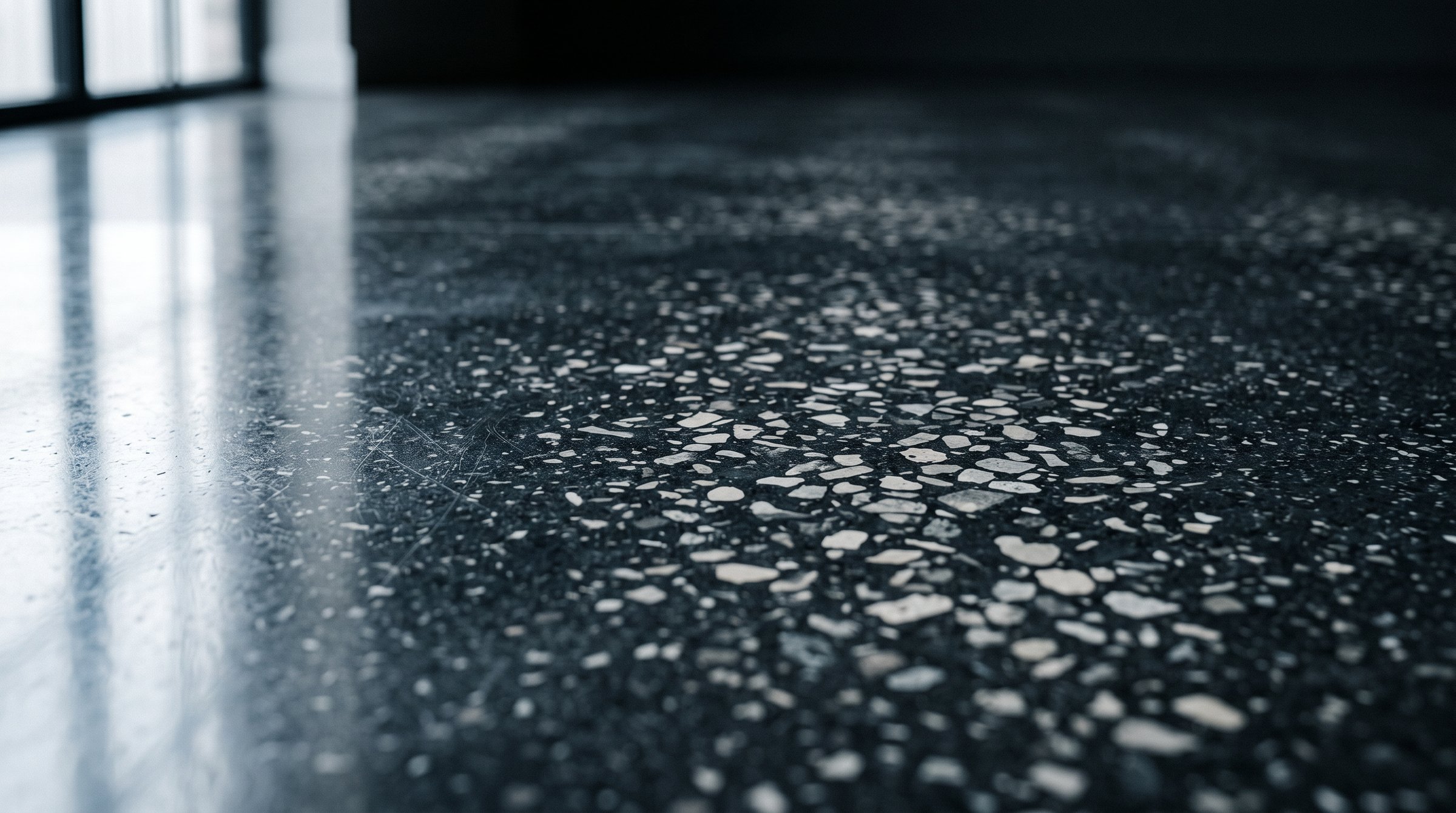
A dark floor absorbs more solar gain and shows dust more readily. Both are worth knowing before the colour is chosen.
This is the clearest win for concrete. A polished slab does not swell, cup, lift or delaminate. A leaking dishwasher is a mopping job rather than an insurance claim. There is no adhesive to let go and no substrate to rot, which is why concrete keeps appearing in entries, laundries and kitchens.
One caveat. If the slab has no damp proof membrane under it, or the membrane was compromised, moisture moving up through the concrete can affect some sealer systems. That is a slab problem rather than a polishing problem, and it is one of the things a test grind and a moisture check are for.
Polished concrete ages like stone. It picks up character, the sheen softens in the traffic lines, and it can be brought back. Tile does not age much at all except in its grout. Timber develops a patina that many people prefer to the day it was laid, provided it has been kept dry. Vinyl and laminate do not age, they degrade, and there is a visible difference between the two.
That single distinction is most of the argument. Materials that are what they appear to be tend to improve or hold. Materials that are a printed image with a clear coat over it are only ever as good as the coat.
We turn work down for these reasons and would rather say it here than after a deposit.
A well done polished floor reads as a considered house. It photographs well, it suits the architectural language most buyers in this region respond to, and it signals that the build was thought about rather than assembled. Worn vinyl does the opposite and dates a property immediately, because a buyer prices in replacing it.
None of that is a guarantee of return. It is simply that concrete belongs to the group of finishes a buyer does not plan to change, and every finish in that group is worth something at sale.
Work room by room rather than choosing one floor for the whole house. Concrete through the living, kitchen, dining and entry, carpet or timber in the bedrooms, tile in the wet areas is a combination that suits how these houses are actually used, and it plays to what each material is good at.
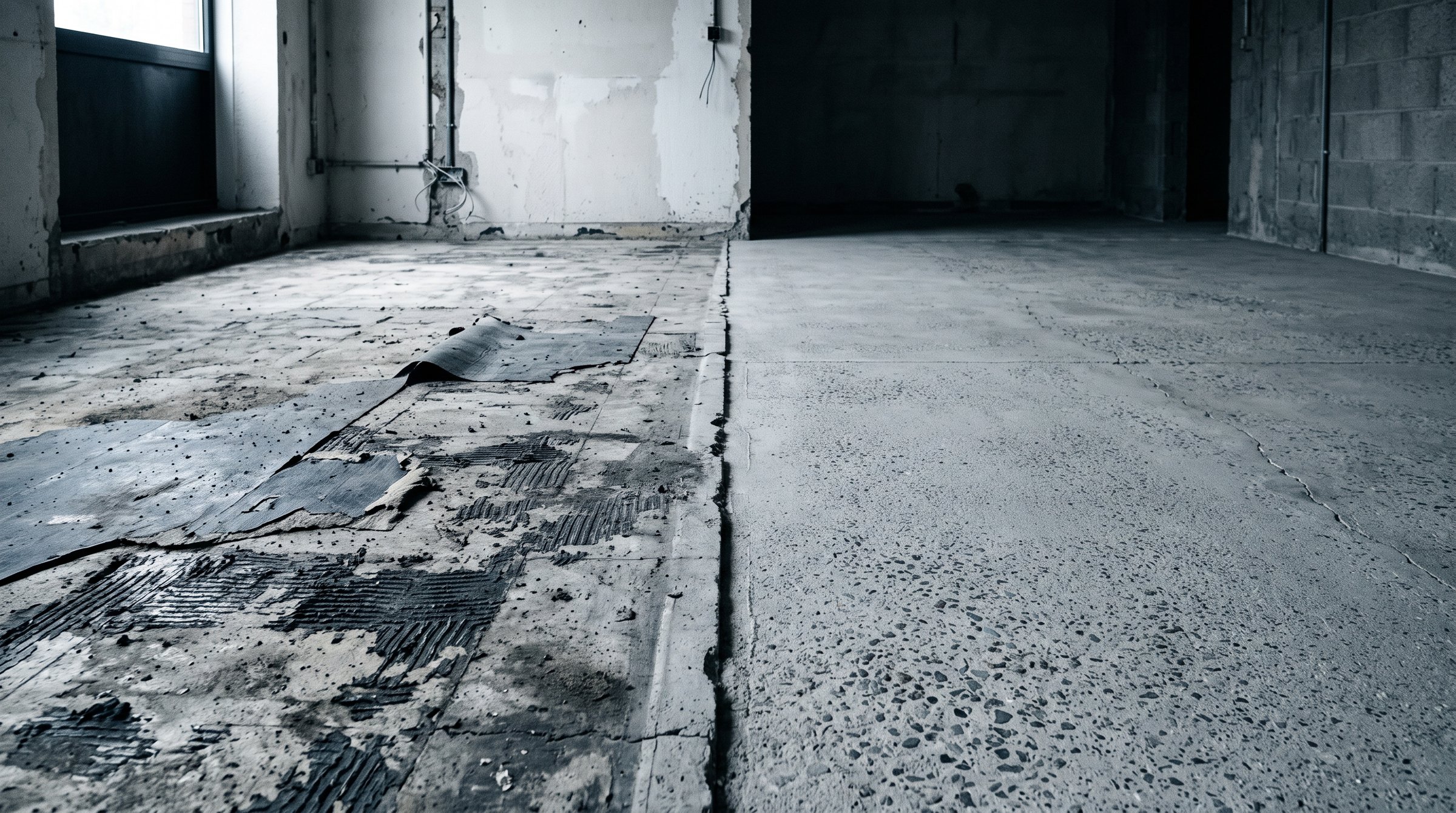
Then look at your own slab before committing. A test grind tells you the aggregate you have, the depth it needs and the condition underneath, and it turns an abstract comparison into a decision about a real floor.
It holds the temperature of the room and of any sun landing on it, rather than generating cold. In a well insulated house with sun on the floor it is comfortable and it releases stored warmth into the evening. In an uninsulated house with no sun on it, it will feel cold, and slab edge insulation and glazing decide which of those you get.
Yes, in the sense that any hard floor is louder than carpet. Sound carries further in a large open room with a concrete floor. Rugs, curtains and upholstered furniture make a substantial difference, and a room furnished that way is quieter than the same room tiled and bare.
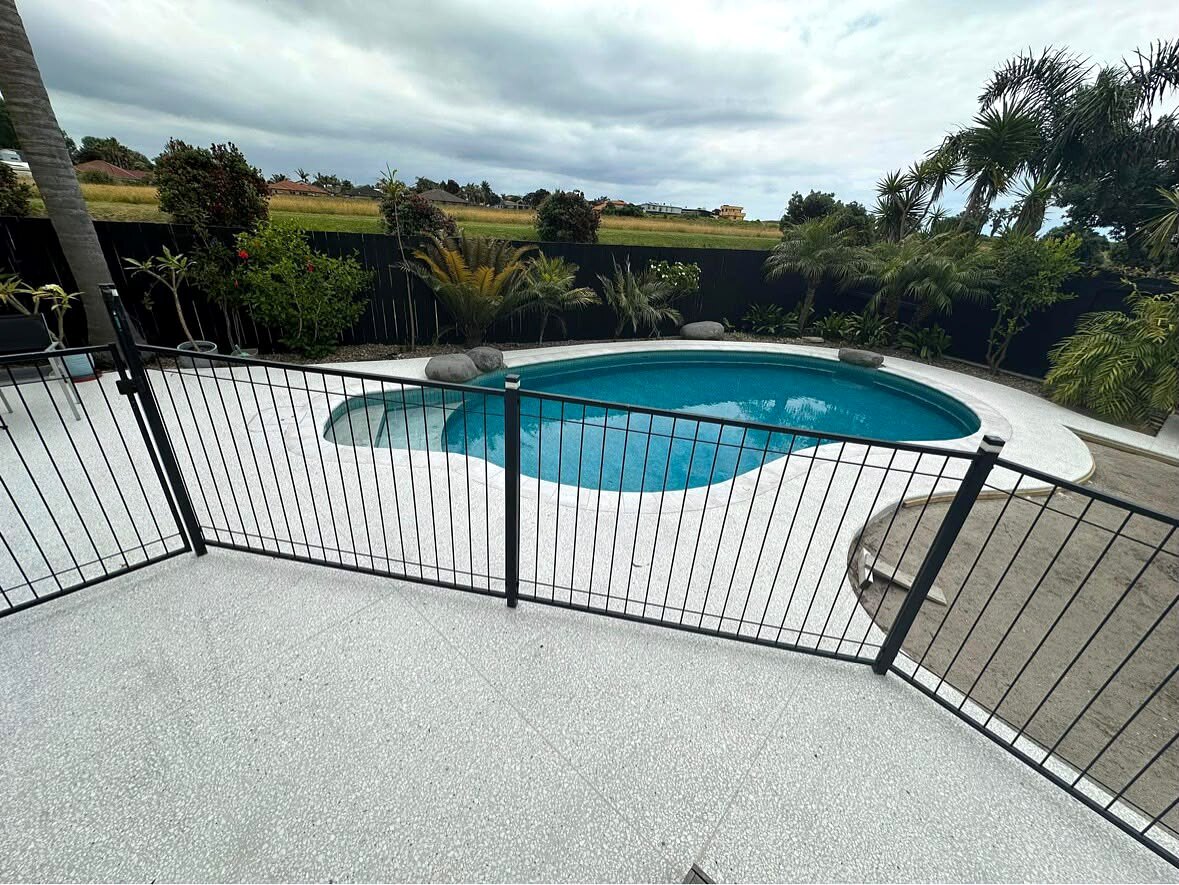
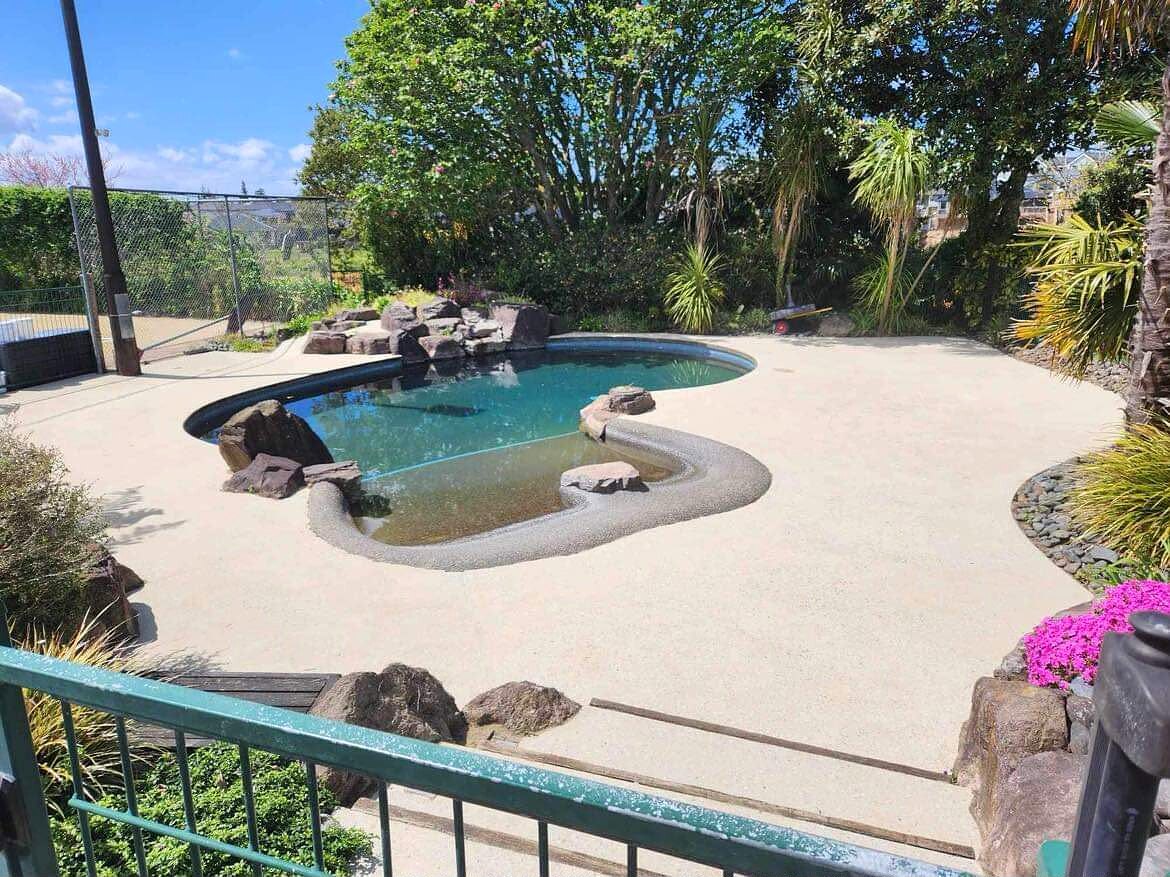
Dry, no. A polished floor has a comparable slip rating to most sealed hard floors when it is clean. Wet, like every hard surface, it demands more care. For entries, outdoor areas and pool surrounds we use a textured or ground finish and a slip resistant sealer rather than a high sheen polish.
A chip is filled with a colour matched repair, then honed and resealed locally so the sheen matches. It stays faintly visible on close inspection in the way a repair to any natural material does, and it does not spread or require the floor to be replaced.
Very well. Slab mass warms slowly and holds heat after the system cycles off, and there is no insulating covering between the heat and the room. The system needs to be off with the slab at normal temperature while we grind and while the sealer cures, and warmed up gradually afterwards.
It depends on how long the property is held. Over a long hold the durability and the absence of replacement cycles make it a strong choice, particularly in high turnover commercial or student housing. If the property is being sold within a few years, the long life is never used and vinyl usually makes more sense.
Ground, honed and sealed floors for houses, extensions and commercial fitouts.
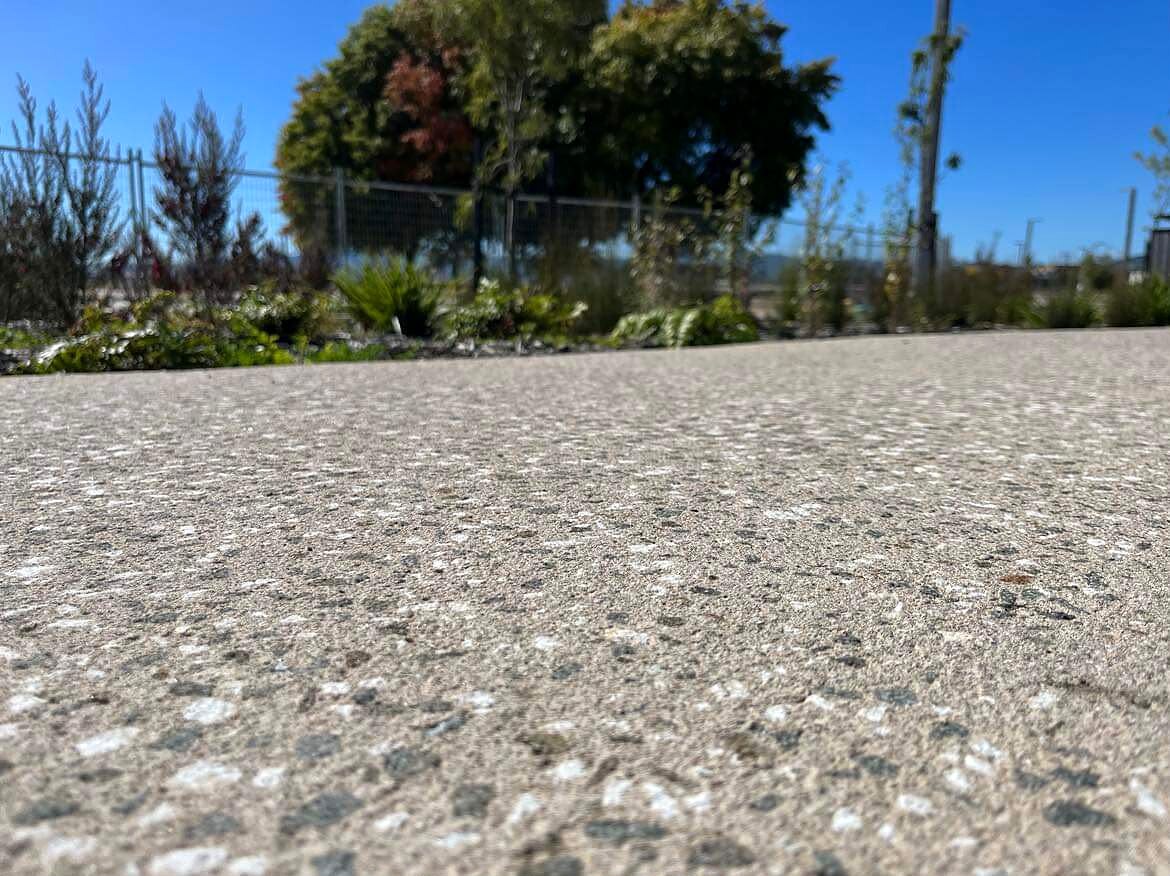
Exposure, colour and sheen shown side by side so you can see the difference.
Price a floor
A few pertinent questions about your slab and space.
Step 1 of 6
Your own slab answers more than another thousand words.
Site assessment and written quote, no obligation.

Tell us about the slab and we will tell you what it can do.
Site assessment and written quote, no obligation.