
Concrete grinding Bay of Plenty: A guide to floors, costs, and contractors
Plan concrete grinding Bay of Plenty: compare finishes, cost factors, preparation, and contractor questions.
Published 12 October 2026
Key Takeaways
Concrete grinding can prepare a slab for new flooring or refine the concrete itself as a finished surface. The existing slab, the intended finish, and site conditions all shape the work and its cost.
- Grinding removes or reduces surface irregularities and can prepare concrete for another finish.
- Polished, textured, and floor-covering-ready surfaces call for different approaches.
- The slab’s condition and the amount of grinding needed affect timing and price.
- A test grind can help set expectations for the appearance of an existing slab.
- Clear scope, dust management, cleanup, and after-service details are worth confirming before work begins.
What concrete grinding involves
Concrete grinding uses abrasive diamond tooling to work down the surface of a concrete slab. The amount removed depends on the problem to solve and the finish planned, from light preparation to a deeper cut that reveals aggregate. It can be part of a renovation, a step toward a polished floor, or preparation for another floor covering. The slab itself sets some limits, so inspection matters before deciding what finish is realistic.
How grinding removes surface imperfections
A grinder passes over the concrete with diamond tooling, gradually abrading high spots, residue, or a worn surface. The operator can adjust the tooling and number of passes to suit the job; grinding is not a way to make every slab perfectly level or erase every mark. It may improve surface flatness, but deep dips, cracks, or uneven placement can require separate repair. For an existing floor, a sample grind offers a practical preview of the concrete beneath old finishes and wear.
When grinding is used for renovation or repair
During renovation, grinding can remove adhesive, thin coatings, or other material left behind by an old floor covering. It may also reduce raised edges or surface wear so the slab is ready for the next stage. The right approach depends on what is bonded to the concrete and whether the underlying slab is sound. For a closer look at rejuvenating an existing floor, see these existing slab restoration options.
How grinding differs from polishing and coating
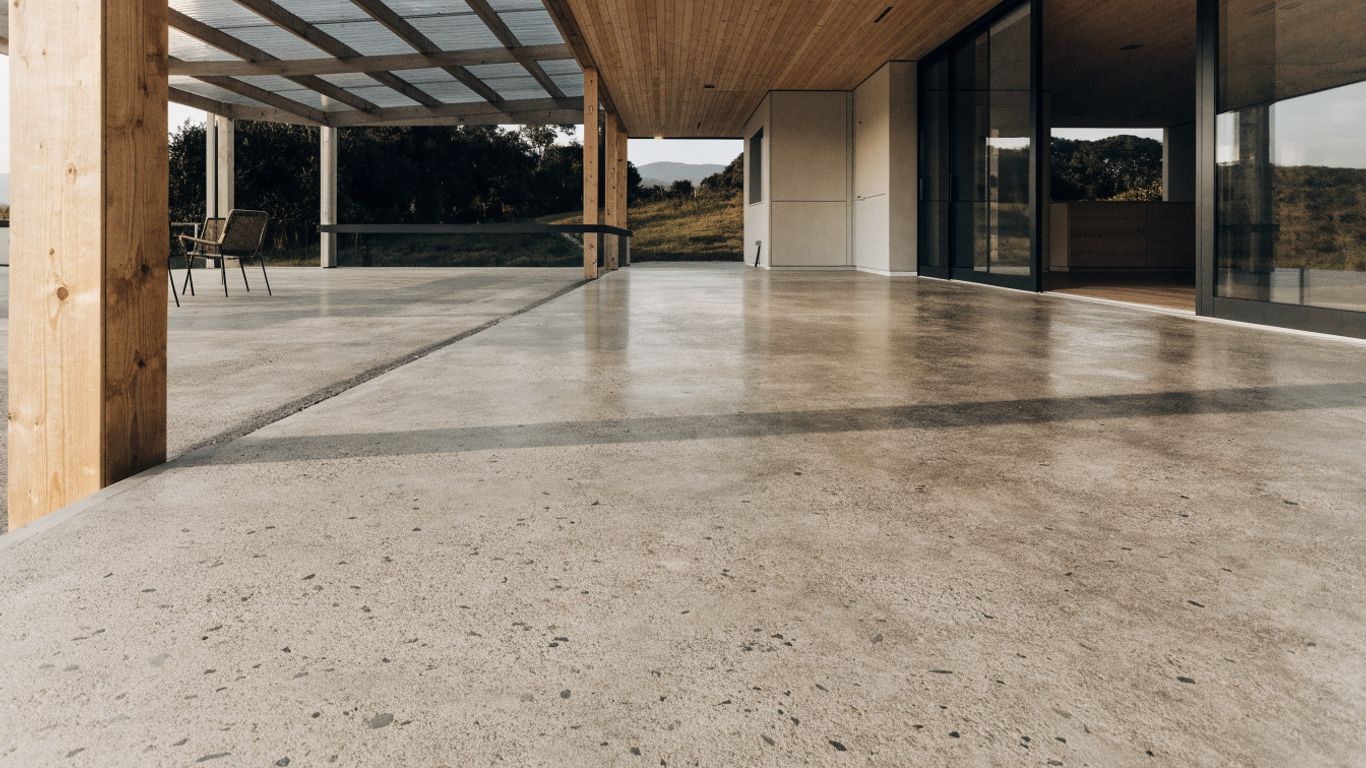
Grinding describes the mechanical removal or preparation of concrete; polishing takes the process through finer stages to create a chosen sheen. A coating, by contrast, is a separate material applied over a prepared surface. With polished concrete, the slab remains the visible floor, so its colour and aggregate influence the result. Depth of cut and polish level shape the finish, but they cannot make the slab’s original characteristics disappear.
Signs a concrete floor may need grinding
A floor may be a candidate for grinding if old adhesive remains, the surface has rough patches, or the slab needs preparation before a new covering. Unevenness, patch repairs, stains, and wear can also prompt an assessment, although grinding will not fix every underlying defect. When the goal is a polished finish, shifts in colour or aggregate exposure are possible rather than flaws that can always be removed. A guide to patchiness and slab variation explains some of the limits that are useful to understand early.
Concrete floor finishes and applications
Grinding can be a preparation step or part of making concrete the finished floor. The right route depends on whether the priority is a smooth base, a polished appearance, or traction in a wet area. Consider how the room will be used as well as how the slab looks now. A sample on the actual concrete is more informative than a generic image when choosing a finish.

Preparing a floor for a new covering
Before vinyl, tile, or another floor covering goes down, the concrete may need adhesive removal, local levelling, or a more suitable surface profile. Grinding can help with preparation, but the covering manufacturer’s requirements and the condition of the slab should guide the specification. A clean, sound substrate matters more than chasing a particular sheen. For a floor that needs preparation rather than a decorative finish, this overview of concrete preparation work can help clarify the scope.
Creating a smooth, polished surface
Polishing is a series of grinding stages that refines the surface to a selected look and sheen. The depth of cut influences how much aggregate is revealed, while the slab’s mix and placement affect colour and pattern. On new concrete, timing is part of the decision: Grinding Dynamics notes that polishing should wait until the concrete is at least 28 days old. Its approved PeterFell C2 applicator status relates to polished concrete workmanship, but the slab remains the main guide to the final appearance.
Improving traction with a textured finish
A textured finish can be useful where wet grip is a priority, such as around pools, on ramps, or on steps. Texturing is distinct from producing a smooth polished interior floor; the intended use and exposure to water should lead the choice. Grinding Dynamics is an approved PeterFell TextureSafe applicator, and its documented texturing method uses bush hammering to create built-in grip. For wet areas, discuss how the surface will feel underfoot and how it will be cleaned as well as its appearance.
Choosing a finish for homes, garages, and commercial spaces
A home, garage, and busy commercial space have different demands for cleaning, traffic, comfort, and grip. Polished concrete may suit an interior where the slab is intended to remain visible, while a garage or outdoor area may call for a different finish or protection. Sealing is a separate consideration, selected for the surface and its use rather than treated as a substitute for sound preparation. Comparing flooring choices by room and use can help make the trade-offs clearer.
How the grinding process works
A well-planned job begins by identifying what the slab needs to do when the work is finished. The assessment, chosen tooling, dust controls, and final checks all follow from that goal. With a polished floor, for example, aggregate exposure and sheen are decisions to make alongside practical requirements. A step-by-step view of slab inspection and handover gives a useful sense of how the stages connect.
Assessing the slab and setting expectations
The contractor checks the concrete’s condition, existing coverings, cracks, repairs, and access before recommending an approach. For polished work, a test grind on the actual slab can reveal how its colour and aggregate respond. It also helps identify variation that may remain visible after grinding. Grinding Dynamics describes on-site slab assessment and a written quote as part of its service, which helps put the proposed work in context before it begins.
Selecting equipment and diamond tooling
The equipment and diamond tooling are chosen to match the surface and the desired result. Coarse tooling can remove material more quickly, while progressively finer stages refine the surface for polishing. The sequence will differ if the job is adhesive removal or preparation for a covering rather than a polished finish. A contractor should be able to explain the intended cut and what it is expected to reveal.
Managing dust and protecting nearby areas
Grinding can create fine dust, so containment and extraction should be discussed before work starts. The approach will depend on the equipment, the room, ventilation, and adjacent spaces that need protection. Ask how doorways, fixtures, and nearby surfaces will be managed, and whether access to the work area must be restricted. Clear arrangements reduce disruption and help avoid confusion during the job.
Checking the finish before sealing or coating
Before any sealer or coating is applied, the prepared surface should be checked against the agreed scope. The slab needs to be suitable for the next step, and repairs or remaining marks should be discussed rather than assumed away. Sealing may protect a concrete surface, but it will not change the underlying aggregate pattern or correct an unsuitable grind. Confirm which treatment is included and what the finished surface should look and feel like.
What affects concrete grinding costs
There is no single price that fits every concrete floor. Area, access, surface condition, previous materials, and the chosen finish all change the work involved. Ask for the quote to describe the preparation and finish rather than comparing figures without their scope. These cost factors for Bay of Plenty floors are useful prompts when gathering estimates.
Floor area and accessibility
Larger areas can require more machine time, but access can matter just as much as square metres. Narrow entrances, stairs, confined rooms, or occupied premises may slow setup and movement. Travel and site conditions may also affect a project in the wider region. A quote should make clear whether it covers the whole area, edges, and any difficult-to-reach sections.
Concrete hardness, condition, and previous coatings
Hardness, unevenness, cracks, patches, and old coatings affect how quickly the surface can be worked. Some materials may take additional passes to remove, while repairs can add separate labour before the finish is achieved. A slab with uneven placement may need a different plan from a sound, clean surface. These differences explain why an assessment is more useful than a price based on area alone.
Finish requirements and additional treatments
A basic grind for a new floor covering is not the same scope as polishing through multiple stages. Deeper aggregate exposure, a particular sheen, repairs, or sealing can all change the work required. To compare the choices, consider how the intended cut, result, and additional treatment affect the quote:
| Scope item | What to clarify | Why it matters |
|---|---|---|
| Preparation grind | Which materials or high spots are included? | Removal needs vary by surface and residue. |
| Polished finish | What cut and sheen are specified? | These choices affect the process and appearance. |
| Repairs | Which cracks or patches are included? | Repairs may be separate from grinding. |
| Sealing | Is a sealer included, and what is its purpose? | Treatment and maintenance expectations can differ. |
Reading the scope this way helps separate the cost of grinding from optional or additional work. It also gives you a clearer basis for comparing quotes that may otherwise sound similar.
Questions to ask when comparing quotes
A useful quote explains both the proposed work and what falls outside it. Before choosing, ask questions that connect the price to the slab and the finish you want. For example:
- What preparation, edge work, and repairs are included?
- What finish and level of aggregate exposure are expected?
- How will dust, access, and cleanup be handled?
- Which additional treatments are optional or excluded?
The answers should make the scope and assumptions easy to understand. If the finished appearance is important, ask whether a sample grind is appropriate before agreeing to the full job.
Choosing a concrete grinding contractor in Bay of Plenty
Choose a contractor who can explain the concrete work in plain terms and set out what the slab can realistically support. Experience is relevant, but so are the assessment, scope, safety arrangements, and finish expectations. Ask for details that apply to your type of floor rather than relying on broad promises. If your project is in Tauranga or elsewhere in the region, confirm service coverage and site conditions early.
Checking relevant experience and completed projects
Ask to see projects with a similar slab, use, and finish to yours. A polished interior, a garage preparation job, and a textured outdoor surface require different decisions, so examples should be relevant to the work being quoted. Grinding Dynamics works on residential, commercial, and civic projects, with services including grinding, polishing, sealing, texturing, and rejuvenation. Its concrete flooring project examples offer a way to review different types of completed work.
Confirming dust-control and safety practices
Ask what dust-control equipment will be used and how the work area will be managed. Confirm whether other trades or occupants can remain nearby, and what protective measures are needed around doors, fixtures, and adjacent rooms. The right arrangements depend on the site and the work being done. Clear answers are a practical sign that the contractor has considered more than the grinding itself.
Clarifying the scope, timeline, and cleanup
Before work begins, make sure the quote describes the areas to be treated, the finish, any repairs, and any sealing or coating. Confirm the expected sequence, access needs, and how the contractor will leave the site. For new builds, timing matters because concrete needs to reach an appropriate age before polishing; Grinding Dynamics specifies a minimum of 28 days. A builder’s planning guide for polished concrete can help coordinate slab decisions and trade timing.
Understanding warranties and after-service support
Ask what the warranty covers, how long it applies, and what conditions may affect it. Clarify who to contact if an issue appears after handover and whether maintenance guidance is provided. A warranty does not remove natural variation in concrete, so it is helpful to keep the agreed scope and finish expectations in writing. Get any exclusions or care requirements explained before signing off.
Preparing for grinding and caring for the floor
Good preparation can make the work area easier to manage and help avoid delays. The steps depend on whether the project is inside an occupied home, an empty commercial space, or an outdoor slab. Plan access, noise, nearby work, and the floor’s future care before the crew arrives. A little coordination up front is usually simpler than making decisions around equipment on site.
Clearing the work area before the project
Remove furniture, stored items, rugs, and loose objects from the area if the contractor has asked for it to be cleared. Discuss heavy fixtures or equipment that cannot be moved, and identify nearby surfaces that need protection. Make sure the agreed work zone is accessible, including a clear route for machinery. These details help the team work to the quoted scope.
Planning around noise, dust, and access
Grinding equipment produces noise, and even controlled work can affect nearby occupants or businesses. Ask when the noisiest stages are expected and whether adjoining rooms need to be vacated or closed off. Plan around pets, customers, other trades, and access to the building. Dust extraction and site protection should be discussed as part of the work plan rather than left until the day.
Maintaining a ground or polished concrete floor
Routine care depends on the finish and any sealer used. Follow the contractor’s guidance on cleaning products, spills, and how soon the floor can be used after treatment. Regular removal of grit and dirt helps limit surface abrasion in busy areas. If the floor is polished, avoid assuming that it needs the same care as a coated floor; ask what is appropriate for its specific finish.
Knowing when resealing or repairs may be needed
Wear, stains, small cracks, or a change in water behaviour may be reasons to ask for an assessment, but not every mark signals a need for resealing. The right response depends on the sealer, the slab, and the cause of the change. For exterior areas, consider the surface’s exposure and wet-grip requirements before selecting a treatment. Keep the original scope and maintenance notes so a future contractor can understand how the floor was finished.
Conclusion
Concrete grinding can solve a practical preparation problem or help make a sound slab the finished floor, but the right result starts with an honest assessment. Compare the proposed cut, finish, protection, and cleanup—not just the price—and use the concrete itself to guide expectations. With those decisions clear, homeowners and project teams can plan the work and care for the finished surface with fewer surprises.
Frequently Asked Questions
What is concrete grinding used for?
It can remove old adhesive or coatings, reduce surface irregularities, prepare concrete for a new covering, or form part of a polished or textured finish. The purpose determines the tooling and the amount of material removed.
How long does concrete grinding take?
Timing depends on the area, access, slab condition, previous coatings, and the finish required. Ask the contractor for a project-specific schedule that includes preparation, treatment, and cleanup.
Can grinding make an uneven slab level?
Grinding can reduce some high spots, but it cannot correct every dip or major variation. The slab should be assessed first to determine whether grinding, repairs, or another approach is suitable.
Will grinding remove cracks and stains?
Some surface marks may reduce, but grinding does not guarantee that cracks or stains will disappear. Repairs and colour changes can remain visible, particularly when working with an existing slab.
Is polished concrete slippery when wet?
Grip depends on the finish, the presence of water or contaminants, and how the floor is used. A smooth polished interior and a textured wet-area surface serve different purposes, so discuss the setting before choosing a finish.
Does concrete need to cure before polishing?
Yes. Concrete needs time to cure before polishing; the appropriate timing should be confirmed for the slab and project. One local applicator specifies a minimum age of 28 days for polishing.
How should I compare concrete grinding quotes?
Check that each quote covers the same areas, preparation, finish, repairs, additional treatments, dust management, and cleanup. Ask how the slab was assessed and what assumptions or exclusions affect the price.