
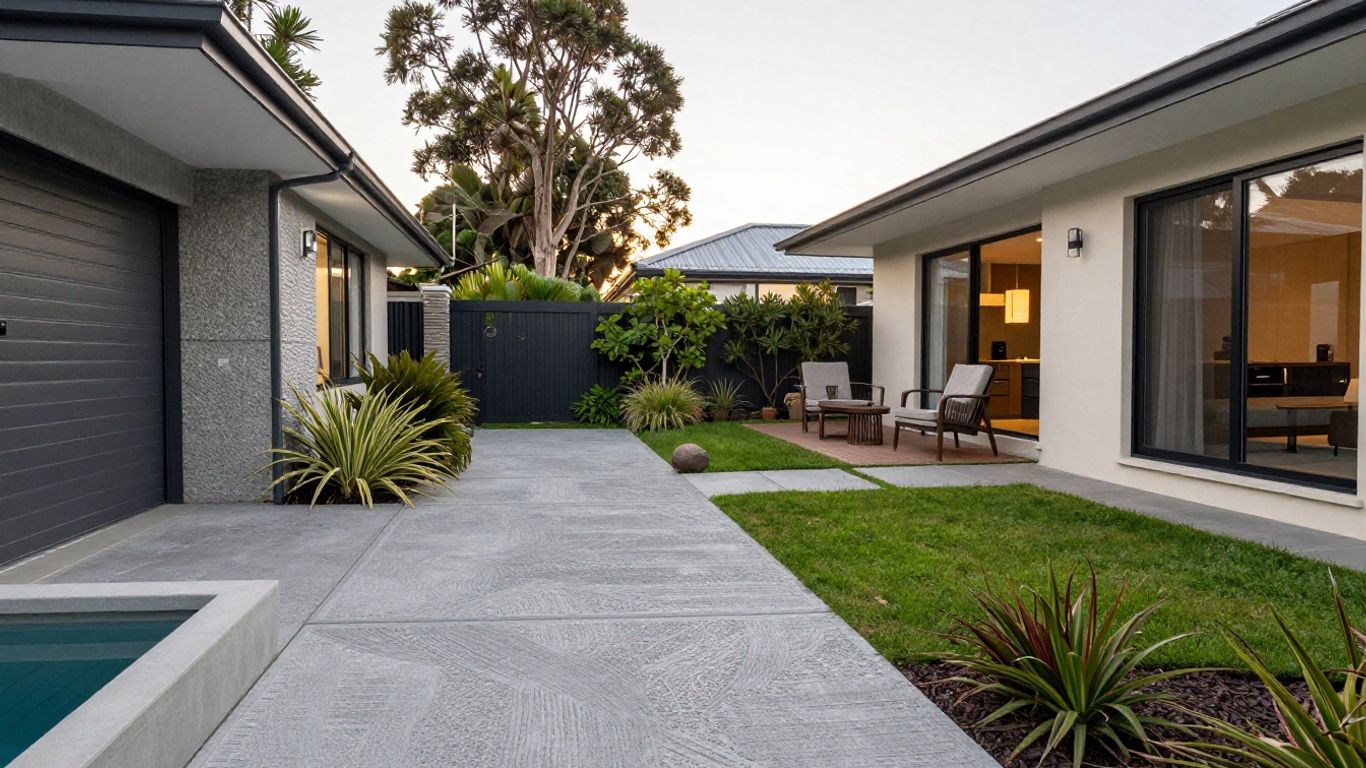
Textured concrete Tauranga: styles, costs, and what to know before installation
Plan textured concrete Tauranga with finish options, costs, drainage, installation, and maintenance advice.
Published 25 August 2026
Key Takeaways
Textured concrete can make outdoor areas safer, more practical, and better connected to the rest of a Tauranga property. The right result starts with the slab, drainage, finish selection, and installation plan.
- Choose texture according to use, traffic, wet conditions, and the surrounding architecture.
- Exposed aggregate, broom finishes, stenciling, stamping, and integral colour create different levels of decoration and grip.
- Ground preparation and drainage can matter as much as the visible finish.
- Coastal weather, shade, moss, and salt exposure should influence sealing and maintenance decisions.
- Compare quotes by scope, preparation, finish quality, curing, protection, and warranty—not price alone.
Understanding textured concrete in Tauranga
Textured concrete Tauranga projects can range from a simple broom finish on a path to a carefully specified surface around a pool or entry. Texture changes how concrete looks and feels, but it also affects traction, cleaning, water movement, and long-term wear. A good choice considers the whole property rather than treating the concrete as an isolated feature.
What textured concrete is and how it differs from standard concrete
Standard concrete is often finished relatively smooth, while textured concrete has a deliberately created surface profile. That profile may come from brushing, exposing aggregate, stamping, stenciling, or mechanically texturing an existing slab. The finish is part of the design and, in some systems, part of the concrete itself rather than a layer expected to wear away.
The distinction matters in wet areas. A decorative surface can still be uncomfortable or slippery if the texture is poorly matched to bare feet, slope, cleaning needs, or regular rainfall. For existing slabs, the condition and thickness of the concrete also limit what can be changed safely.
Common texture options for driveways, patios, and paths
Driveways commonly use broomed, exposed aggregate, or lightly patterned surfaces because they need to cope with vehicle loads, dirt, and repeated turning. Patios allow more room for colour and aggregate decisions, while paths often benefit from a consistent texture that provides dependable footing without becoming difficult to sweep.
Mechanically created texture is another option where wet grip is the main concern. Grinding Dynamics describes its approved PeterFell TextureSafe System application as bush hammering that creates a fine, pitted texture integrated into the concrete. That approach is intended for areas such as pool surrounds, ramps, and entryways, where the surface needs to remain practical in wet conditions.
Why Tauranga homeowners choose textured finishes
Tauranga homes often connect indoor living areas with patios, decks, pools, gardens, and driveways. A textured finish can provide visual interest without introducing a separate paving material, and a considered profile can make outdoor circulation feel more secure in rain. It can also hide minor day-to-day dust and marks better than a very smooth, uniform surface.
The choice should still be realistic. Natural variation in aggregate, colour, placement, and curing means the finished area may not look identical to a sample photograph. The slab sets the starting point, so samples and a discussion about use are more useful than selecting a finish from an image alone.
Where textured concrete works best around a property
Textured concrete suits driveways, garden paths, patios, pool surrounds, ramps, steps, and outdoor entertaining areas. The best profile depends on whether the surface is walked on barefoot, exposed to standing water, used by vehicles, or shaded for long periods. Sloping areas also need careful attention to falls and drainage so texture is not being asked to solve a water-management problem.
For pool surrounds and wet thresholds, a finer profile may feel more comfortable in lounging areas, while steps and edges may justify a stronger texture. Existing concrete can sometimes be textured, but a contractor should first assess cracks, contamination, thickness, and previous coatings.
Choosing the right textured concrete finish
Finish selection is a balance between appearance, grip, maintenance, and the character of the property. Some options are chosen during the pour, while others depend on how an existing slab is cut, brushed, or treated. Before committing, look at physical samples in comparable light and consider how the surface will feel after rain, cleaning, and ordinary wear.
Exposed aggregate for a natural, durable surface
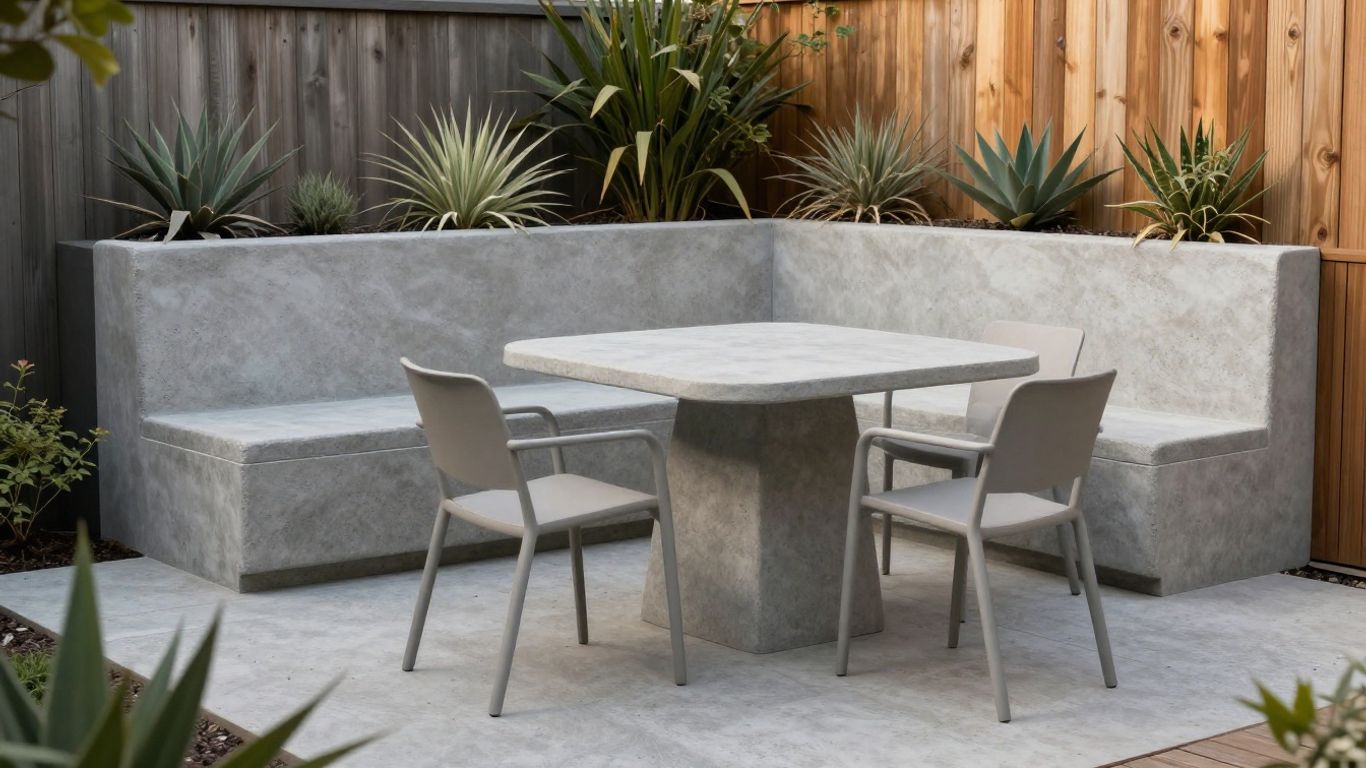
Exposed aggregate reveals selected stone at the surface by removing some of the cement paste after placement. The result can feel natural and work well with planting, masonry, timber, and coastal landscaping. Aggregate size, colour, distribution, and exposure depth all influence the finished appearance, so the same general description can produce noticeably different results.
It is worth asking whether the aggregate is comfortable underfoot and whether the exposure is suitable for the intended use. A driveway may tolerate a more pronounced surface than a barefoot patio. For an existing slab, aggregate can only be revealed if the underlying concrete contains material that will produce a worthwhile result.
Stenciled and patterned concrete for a decorative look
Stenciling uses a temporary pattern during finishing to create the appearance of pavers, bands, borders, or repeated motifs. It can give a large concrete area more visual structure without the joints and movement between individual paving units. The pattern should be aligned with the building, steps, doors, and sightlines rather than added as an afterthought.
Patterned finishes need clean layout and controlled edges. Small errors become more visible when lines run alongside a wall or meet another hard surface. Ask for a scaled layout and confirm where control joints, drainage grates, and changes in level will sit before the concrete is placed.
Broom-finished concrete for practical traction
A broom finish is made by drawing a broom across fresh concrete to create consistent linear texture. It is often a sensible choice for paths, service areas, driveways, and patios where straightforward grip matters more than elaborate decoration. The direction and depth of the broom marks can affect both appearance and how easily dirt collects.
The surface should be even, with no loose paste, ridges, or abrupt transitions. A broom finish is not a substitute for correct falls, especially beside buildings or in areas that receive roof runoff. Discuss the desired level of traction and cleaning routine rather than asking only for “non-slip concrete.”
Colored and stamped finishes for custom designs
Colour can be added to the concrete mix or introduced as part of a decorative finishing process, depending on the project specification. Stamping creates a patterned profile while the concrete is workable, and it can be combined with colour to imitate stone, brick, or other arranged surfaces. These finishes require careful timing because the pattern and colour depend on the concrete’s condition during placement.
For integral colour, Grinding Dynamics explains that pigment is added during the pour rather than applied later to the surface. The resulting appearance is influenced by the concrete, aggregate, depth of cut, and sealer, so physical samples viewed in the actual light are more dependable than screen images. Colour decisions also need to be made early enough to confirm material availability.
How texture, color, and aggregate work together
Texture, colour, and aggregate should be considered as one visual and practical system. A dark colour may make shallow texture less obvious but can show dust or water marks, while pale aggregate may brighten a shaded space. A strong pattern can compete with busy landscaping, whereas a restrained profile may help a small patio feel calmer.
When comparing options, use a sample large enough to show the relationship between the elements. Grinding Dynamics’ guidance on concrete colour decisions and aggregate selection is useful for understanding why the final result depends on more than pigment alone. The sample should be read for comfort, cleaning, glare, and wet appearance as well as colour.
Planning a textured concrete project
Good planning reduces expensive changes after the pour. Start with measurements, access, drainage, edges, levels, and the relationship between the new surface and existing doors or paths. A contractor should also understand whether the work is a new installation or a treatment to an existing slab, since the available options are different.
Measuring the area and estimating material requirements
Measure each section separately, including widening, steps, landings, borders, and irregular corners. Concrete volume is usually estimated from area multiplied by slab thickness, with allowances for waste and changes in level. Decorative details can add labour even when they do not add much concrete volume.
Record access for trucks, pumps, mixers, excavation equipment, and spoil removal. A narrow side access or a steep site may affect the method and labour more than the surface area suggests. Give contractors a sketch, photographs, approximate dimensions, and information about the intended use so initial estimates are based on the same brief.
Preparing the ground and managing drainage
Preparation may include removing unsuitable soil, compacting the base, setting formwork, allowing for reinforcement, and establishing the correct fall. Water should move away from buildings and should not collect at low points, steps, or beside retaining walls. Drainage channels and grates need to be coordinated with the finished levels before the concrete arrives.
A careful preparation plan typically considers:
- The existing soil, basecourse, and areas requiring excavation.
- Falls away from buildings and toward suitable collection points.
- Edge restraint, formwork, joints, and transitions to existing paving.
- Access for placing, screeding, texturing, and protecting the slab.
These details influence the finish because uneven settlement can lead to cracking or ponding regardless of how attractive the surface looked on installation day. Preparation is also where many practical cost differences become visible.
Matching the finish to existing landscaping and architecture
Use the property’s fixed elements as the starting palette. Roof colour, cladding, brick, stone, planting, fencing, and nearby paving can help determine whether a warm, cool, light, dark, fine, or heavily exposed finish will sit comfortably in the setting. The goal is usually coordination rather than making every surface identical.
Consider sightlines from the kitchen, living room, street, and garden. A driveway that looks bold in isolation may dominate a modest façade, while a quiet path may disappear beside dense planting. Physical samples placed next to the actual building are more informative than a catalogue image.
Accounting for Tauranga’s coastal climate and weather conditions
Tauranga’s coastal conditions can bring moisture, salt-laden air, strong sunlight, and periods of heavy rain. Shaded areas may stay damp for longer and become more vulnerable to moss or surface staining. These conditions should influence the texture depth, cleaning plan, joint layout, and choice of sealer.
Weather also affects installation timing. Fresh concrete needs protection from rain, rapid drying, contamination, and premature traffic. Ask how the contractor will manage the forecast and what access restrictions will apply while the surface gains strength.
Textured concrete costs in Tauranga
There is no useful single price for textured concrete without knowing the area, slab condition, access, finish, preparation, and drainage requirements. A small, accessible patio may have a very different cost structure from a long driveway requiring excavation and extensive edging. Quotes should make those differences visible rather than hiding them in a low headline rate.
Factors that influence the total project price
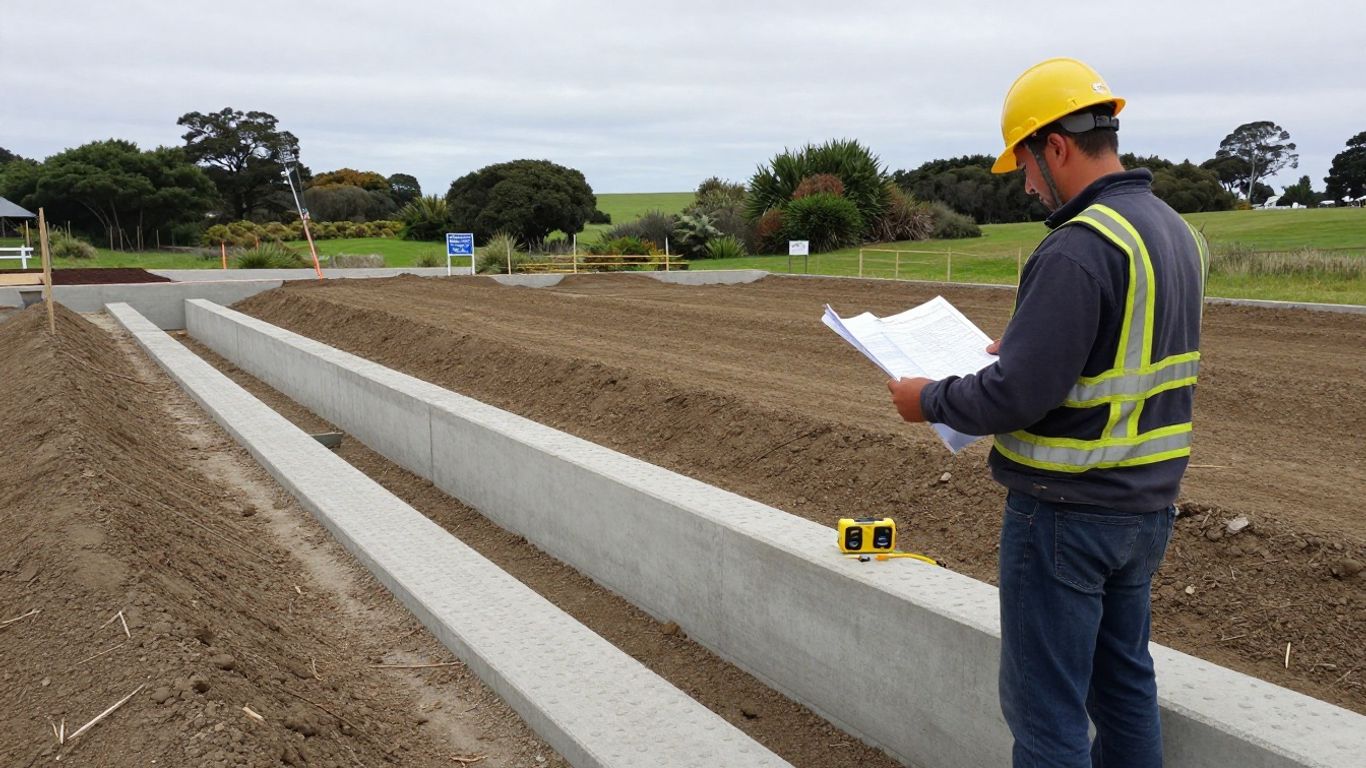
The main cost drivers include the size and shape of the area, the selected finish, ground conditions, reinforcement, concrete volume, access, and the amount of edge or joint work. Existing slabs may require cleaning, repairs, removal of old coatings, or mechanical preparation before a texture can be created. Travel, disposal, pumping, and protection can also matter on constrained sites.
A quote should identify assumptions. For example, “site preparation included” is less helpful than a description of excavation depth, base preparation, spoil removal, and drainage work. For broader guidance on how surface condition, access, edge work, and finish specifications affect pricing, see this Tauranga concrete cost guide.
Comparing basic, decorative, and premium finishes
Basic finishes generally involve fewer colours, simpler texture, and less intricate layout. Decorative work may add integral colour, exposed aggregate, borders, stenciling, stamping, or special cutting. Premium outcomes often reflect more preparation, sampling, detailed edge work, tighter timing, and greater care during protection—not merely a more expensive material.
The following broad comparison can help frame conversations, although actual pricing depends on the site and specification:
| Finish level | Typical characteristics | Main price influences | Best suited to |
|---|---|---|---|
| Basic | Simple broom or lightly textured surface | Area, access, preparation | Paths, service areas, straightforward driveways |
| Decorative | Colour, exposed aggregate, patterns, or cutting | Design detail, timing, materials | Patios, entertaining areas, feature paths |
| Premium | Detailed layout, specialised texture, extensive preparation | Sampling, edge work, protection, site complexity | Pool surrounds, architectural or civic features |
This framework is useful when comparing like with like. A basic quote and a premium quote may not be competing for the same result, so ask which decisions and preparation steps account for the difference.
Additional costs for excavation, edging, and drainage
Excavation is affected by soil, existing paving, roots, buried services, and disposal requirements. Edging may involve formwork, kerbs, retaining details, or careful transitions to old concrete. Drainage can require channels, pits, pipework, reinstatement, and coordination with existing stormwater systems.
These items are not decorative extras. They protect the slab and surrounding property from movement and water problems. If they are excluded from a quote, obtain separate allowances before comparing totals.
How to request accurate quotes from local contractors
Send each contractor the same information: dimensions, photographs, access details, intended use, preferred finish, drainage concerns, and whether the slab is new or existing. Ask whether the price includes preparation, reinforcement, joints, colour, sealer, cleanup, disposal, and aftercare advice. A clear scope makes revisions easier when the site assessment reveals something unexpected.
Grinding Dynamics notes that some texturing work can be quoted without a site visit, depending on the information available. That can be useful for an initial discussion, but complex levels, drainage, damage, and access may still require closer assessment. Request samples or a site-specific recommendation before treating an early estimate as final.
Ways to balance appearance, durability, and budget
Begin with the non-negotiables: safe access, appropriate falls, structural suitability, and a finish that can be maintained. Then decide where decoration adds value. A simpler finish with excellent preparation may perform better than an elaborate pattern installed over an unsuitable base.
You can also phase work, reduce unnecessary borders, choose a restrained colour, or use a feature finish only in the most visible area. Keep enough budget for sealing, joints, protection, and drainage; cutting those items may create greater costs later.
Installation, curing, and quality considerations
Installation is a sequence rather than a single pour. The finished texture depends on ground preparation, concrete consistency, placement, screeding, timing, finishing, curing, and protection. Even a well-selected design cannot completely remove natural variation from the slab.
What to expect during site preparation
The crew should confirm levels, access, formwork, reinforcement, joints, drainage, and the condition of any existing concrete before placement begins. Loose material, vegetation, contaminated base, and unstable edges need to be addressed rather than covered. Where an existing slab is being textured, coatings and damage may need special treatment.
The site should also be ready for wet concrete movement and later curing. That may mean temporary access routes, protection for walls and planting, and a plan for keeping pets, vehicles, and other trades away from the area.
How contractors apply and finish the concrete
Fresh concrete is placed, distributed, screeded, and finished within a limited working window. Brooming, stamping, stenciling, aggregate exposure, or other texturing must happen at the right stage; too early or too late can produce inconsistent depth, tearing, weak paste, or unwanted marks. Edges and transitions require particular care because defects there are easy to see and can affect safety.
For mechanical texturing of existing concrete, the contractor should explain the equipment, intended profile, dust or slurry management, and how the result will be checked. Grinding Dynamics describes its TextureSafe work as creating texture in the concrete rather than relying on a coating that can wear away.
Recommended curing times before use
Concrete continues gaining strength after finishing, so the surface should not be treated as ready simply because it looks dry. The contractor should provide written guidance for foot traffic, vehicles, furniture, pressure washing, and sealing. Timing varies with the mix, weather, thickness, exposure, and the work being performed afterward.
For polished concrete, Grinding Dynamics specifies a minimum 28-day concrete age before polishing. Textured outdoor work may follow a different programme, but the same principle applies: allow the concrete to cure properly and follow the installer’s instructions rather than guessing from appearance.
Warning signs of poor workmanship
Watch for standing water, inconsistent texture, exposed weak paste, loose aggregate, rough or crumbling edges, uncontrolled cracking, staining trapped under sealer, and abrupt differences between adjoining pours. A pattern that drifts, joints that do not align, or drainage grates sitting below the finished level can also indicate inadequate planning.
Some colour and aggregate variation is normal. The concern is not that every square metre looks identical, but that defects are unexplained, unsafe, structurally significant, or outside the agreed sample and specification. Photograph concerns early and ask for a clear explanation.
Why professional installation matters for long-term performance
Professional work brings practical judgement to timing, levels, texture depth, curing, and protection. It also helps separate cosmetic variation from a genuine performance problem. This matters especially where a surface needs wet grip, carries vehicles, meets a building, or must coordinate with other construction trades.
A documented system can add clarity, but it does not override the condition of the slab or the quality of preparation. The best installation conversation is specific about what will be done, what may vary, and how the completed surface will be handed over.
Maintaining textured concrete over time
Textured concrete is durable, but it is not maintenance-free. Dirt settles in deeper profiles, shaded areas can stay damp, and sealers gradually experience traffic, sunlight, moisture, and chemical exposure. A simple routine helps preserve both appearance and traction.
Cleaning dirt, moss, and surface stains
Sweep regularly to remove grit before it is driven into the texture. Rinse with clean water and use a suitable mild cleaner for ordinary dirt; stubborn moss or organic growth may need controlled treatment and gentle agitation. Avoid aggressive pressure washing that strips paste, damages edges, or forces water into cracks.
Test any cleaner on a small inconspicuous area first. Oil, rust, leaf tannin, and salt marks may require different treatments, and a contractor or sealer manufacturer can advise on compatibility.
Sealing textured concrete and reapplication timing
Sealing can help reduce water, oil, and salt damage while affecting colour, sheen, and cleanability. The correct product depends on whether the area is interior or exterior, exposed to vehicles, beside a pool, or subject to strong sun and moisture. A sealer should not be selected only because it makes a sample look darker or glossier.
Grinding Dynamics offers eco-based or solvent-based sealing systems for concrete surfaces including driveways, patios, pool surrounds, and exposed aggregate. Its concrete sealing advice explains why environment and surface use matter. Reapplication timing depends on wear and product performance, so inspect the surface rather than following an arbitrary calendar.
Preventing cracks, chipping, and surface wear
Keep heavy vehicles within the design limits, avoid dragging metal furniture, and repair drainage problems promptly. Control joints should remain clear and should not be filled with incompatible material. Cracks may result from movement, settlement, drying, or existing slab conditions, so the correct repair depends on the cause.
Do not assume sealer can repair structural movement. It may improve stain resistance and appearance, but it cannot restore a badly failed base or stop an active crack from moving.
Improving traction in wet or shaded areas
Remove moss and organic buildup before it becomes slippery, especially on north-facing walls, under trees, and beside water. Keep downpipes and drains clear so the surface dries as intended. If the original profile is too smooth or has worn, a specialist may be able to assess whether mechanical texturing is suitable.
Texture should remain comfortable and cleanable. Increasing roughness without considering barefoot use, wheelchairs, prams, or maintenance can create a different problem, so the target should be reliable grip for the people using the area.
When repairs or resurfacing may be necessary
Repair may be appropriate for isolated cracks, chipped edges, stains, or localised surface wear. More extensive damage, widespread settlement, failed coatings, or poor drainage may require a broader assessment. Existing concrete is not automatically unsuitable, but its thickness, soundness, contamination, and previous treatments need to be understood.
A contractor should explain what can be changed and what will remain visible. A sample area or test section can help establish whether cleaning, grinding, texturing, sealing, or replacement is likely to produce the result you want.
Choosing a textured concrete contractor in Tauranga
The right contractor should be able to discuss performance and appearance in equal measure. Look for someone who asks about use, wet conditions, levels, existing concrete, access, cleaning, and the surrounding property—not just the colour you prefer. A useful consultation should leave you with a clearer scope and fewer assumptions.
What to check in a contractor’s experience and portfolio
Ask to see work comparable in scale, finish, exposure, and use. A residential patio does not demonstrate the same judgement as a pool surround, ramp, driveway, or civic path. Look closely at edges, transitions, drainage, joints, texture consistency, and how the work meets walls or landscaping.
Grinding Dynamics is a Tauranga-based concrete finishing business working across residential, commercial, and civic projects. Its documented work includes ground, polished, sealed, textured, and rejuvenated concrete, so ask for examples that match the type of surface you are planning rather than relying on a general gallery.
Questions to ask about materials, finishes, and warranties
Ask what creates the texture, when colour is selected, which aggregate is being used, how the surface will be sealed, and what maintenance is expected. Clarify whether the finish is being created in new concrete or applied to an existing slab, and ask what limitations follow from that choice. Warranties should state what is covered, for how long, and which maintenance or site conditions may affect the claim.
A credible explanation should include natural variation and exclusions. Be cautious of guarantees that imply every slab will produce an identical result regardless of placement, curing, weather, or existing damage.
How to compare quotes and project timelines
Compare scopes line by line. Check concrete thickness, reinforcement, excavation, base preparation, drainage, joints, texture, colour, sealer, cleanup, curing restrictions, and protection. Timeline estimates should also identify dependencies such as weather, supplier availability, access, and other trades.
The cheapest quote may omit work that another contractor has included. Ask for allowances where the site is uncertain and confirm how variations will be approved before additional work begins.
Checking references, insurance, and workmanship standards
Request current references for similar projects and ask those clients about communication, site care, defects, maintenance, and how concerns were resolved. Confirm public liability cover, relevant trade experience, and written terms. If a specified system or approved applicator status is part of the proposal, ask what that means for the actual work and documentation.
Grinding Dynamics identifies itself as an approved applicator of the PeterFell TextureSafe System. That is a documented applicator status, not a promise that every site will look the same, so the project scope and sample remain essential.
Preparing for the consultation and site assessment
Before the meeting, gather measurements, photographs, plans, drainage information, and examples of finishes you like. Note where people walk barefoot, where vehicles turn, which areas stay shaded, and what must remain accessible during construction. If the slab already exists, disclose coatings, repairs, stains, cracks, and previous sealing.
Be ready to discuss priorities in order: safety, drainage, durability, maintenance, appearance, and budget. A well-prepared brief lets the contractor test the design against the site and recommend a finish that should remain useful long after the first clean, sunny day.
Conclusion
A successful textured concrete project in Tauranga begins with a realistic understanding of the slab, the site, and the conditions the surface will face. Choose the texture and colour with drainage, grip, maintenance, curing, and surrounding architecture in mind, then compare contractors by preparation and scope as carefully as by price. The most dependable outcome is a considered one: practical for daily use, attractive in context, and honest about the natural variation concrete brings.
Frequently Asked Questions
What is textured concrete?
Textured concrete is concrete finished with a deliberate surface profile, such as broom marks, exposed aggregate, a pattern, or mechanical texturing. The appropriate profile depends on appearance, grip, traffic, cleaning, and weather exposure.
Is textured concrete suitable for a driveway?
Yes, many textured finishes can suit driveways when the slab, thickness, reinforcement, base, joints, and drainage are designed for vehicle use. The surface should also be practical to clean and resistant to turning and braking wear.
Is textured concrete slippery when wet?
Texture can improve traction, but no finish should be judged by its name alone. Profile depth, contamination, slope, moss, sealer, footwear, and the specific wet environment all affect how secure the surface feels.
How much does textured concrete cost in Tauranga?
Cost varies with area, access, excavation, drainage, slab condition, finish, colour, aggregate, edging, sealing, and labour. A detailed quote based on a clear scope is more useful than a general price per square metre.
Can existing concrete be textured?
Sometimes. The slab must be assessed for soundness, thickness, cracks, contamination, coatings, and previous repairs. The available result depends on what is already in the concrete and how much surface treatment is appropriate.
How long should textured concrete cure before use?
The contractor should provide a staged access plan for walking, vehicles, furniture, cleaning, and sealing. Curing time varies with the mix, thickness, weather, and finish, so the surface should not be opened based only on how dry it looks.
How do you maintain textured concrete?
Sweep and clean it regularly, remove moss and organic buildup, keep drainage clear, and inspect the sealer and joints. Use compatible cleaning products and seek advice before pressure washing or applying chemicals to a textured surface.