
Polished concrete flooring cost NZ: What to budget and what affects the price
polished concrete flooring cost NZ: price factors, finish options, slab checks, and practical budgeting advice.
Published 12 October 2026
Key Takeaways
Polished concrete pricing depends on the slab as much as the finish you choose. Use a broad rate only to set an initial budget; a site assessment and a clearly scoped quote are more useful for making a decision.
- Published NZ price guides give a broad starting range, not a project-specific price.
- Floor area, slab condition, edge work, access, and finish all affect the quote.
- Deeper aggregate exposure generally requires more grinding than a minimal-exposure finish.
- Existing slabs should be assessed for coatings, cracks, flatness, and other preparation needs.
- Compare quotes by checking the same work, finish, repairs, and exclusions in each one.
Typical polished concrete flooring costs in NZ
The polished concrete flooring cost NZ homeowners and builders encounter can vary considerably because no two slabs are quite alike. A broad public guide puts concrete grinding and polishing at roughly NZ$40–$150 per square meter, but that range is only a budgeting reference, not a promise of what a particular floor will cost. The slab’s condition, the amount of preparation, the chosen finish, and site access all affect the final figure. A contractor’s assessment is the better basis for a reliable estimate.
How contractors commonly price polished concrete
Quotes are often presented as a rate per square meter, a fixed project price, or a combination of the two. The rate can be useful for comparing projects of similar size and condition, but it does not tell you what is included. A NZ cost guide can help set an early expectation; treat its indicative range as a starting point rather than a substitute for a site-specific quote.
For a rough estimate, it helps to separate the main pricing components instead of treating the rate as a single unexplained number. The table below shows the kinds of work that may sit behind a price; the actual scope will depend on the slab and specification.
| Quote component | What it may cover | Why it matters |
|---|---|---|
| Preparation | Removing old residues, coatings, or surface irregularities | The amount of preparation varies with the slab |
| Grinding and polishing | The planned cut depth and polish level | Deeper cuts and higher polish levels can require more work |
| Repairs and edges | Crack repairs, corners, and perimeter details | Hand work and repairs can add time |
| Protection and handover | Specified sealing or other protective treatment, plus cleanup | Confirm the product, scope, and care instructions |
A quote should make clear which of these components are included and which are provisional. If a contractor uses a square-meter rate, ask what conditions or extra tasks could change it.
What a basic finish may include
“Basic” is not a precise finish specification, so ask the contractor to describe the proposed process in ordinary terms. It may refer to a relatively modest amount of grinding, limited aggregate exposure, and a specified sheen or protective treatment, but the exact scope needs to be written down. The words alone do not tell you how much of the stone will show or how the existing slab will look after grinding.
Ask for the planned cut depth, exposure, sheen, repairs, and treatment to be identified in the quote. A sample grind on the actual concrete can help you assess the material before committing to a finish, since photographs and generic examples cannot predict the character of your slab.
Why quotes can vary between projects
A large, open floor may be quicker to work than a smaller area broken up by doorways, corners, fixtures, or tight access. Existing adhesive, coatings, damage, uneven areas, and the depth needed to reach the desired aggregate can also change the preparation involved. A new slab is not automatically a simple job: its flatness, surface finish, curing, and the timing of other trades still affect the result.
As a result, two quotes with the same total area can reasonably differ. For local context, the Tauranga cost factors include slab condition, grinding depth, edges, repairs, access, and sealer choice. Those details are more helpful than a rate comparison without an agreed scope.
How to compare estimates on a like-for-like basis
Before deciding, compare the written scope line by line. A PeterFell C2-approved applicator such as Grinding Dynamics can assess a slab, recommend a finish, and provide a no-obligation quote; the same level of detail is useful to request from any contractor. Look for a defined finish and treatment, not just a headline price.
A short comparison list can keep the discussion practical:
- Confirm the intended aggregate exposure, sheen, and grinding depth.
- Check whether repairs, edge work, and removal of residues are included.
- Ask what sealing or protective treatment is specified, if any.
- Clarify access needs, cleanup, exclusions, and how variations will be priced.
When each estimate answers those points, you can compare the actual work rather than guess at what a low or high figure represents.
Factors that influence the final price
The finish is made by working the concrete itself, so pricing begins with what is already there and what the chosen result requires. A contractor needs to understand the area, slab condition, access, and details before judging the likely amount of work. These factors can influence both the price and the appearance you can reasonably expect. A careful assessment helps identify uncertainties early, before they become surprises during the job.
Floor area and project scale
The total area matters, but a square-meter calculation does not tell the whole story. Larger open areas can allow equipment to work more continuously, while small rooms and interrupted layouts may involve more setup and careful work around boundaries. Thresholds, columns, fixed joinery, and narrow passages can add time even when the floor area is modest.
Provide accurate measurements and a plan showing openings and obstacles where possible. If the project includes multiple rooms or stages, ask whether the quote treats them as one continuous floor or separate areas, since setup and transitions may be handled differently.
Concrete condition and preparation needs
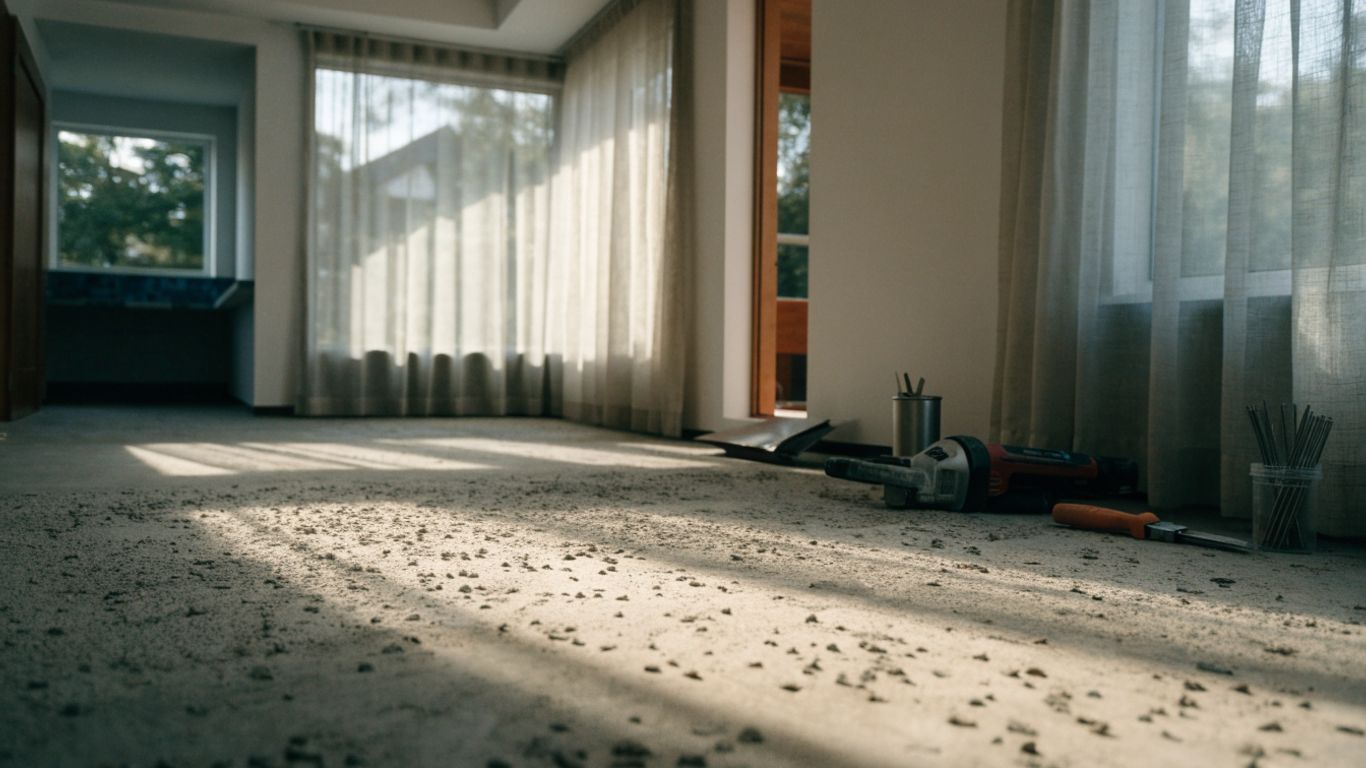
Existing concrete can carry residues from old flooring, coatings, adhesives, paint, or previous repairs. Cracks, high spots, patching, and unevenness may also affect how much preparation is needed and what can be achieved. A test grind can reveal more about the material and its appearance than a surface glance alone.
The existing-slab suitability guide explains why coatings, cracks, and repairs matter when deciding whether a slab can be polished or may need another approach. Even where polishing is feasible, the slab’s history and condition help set realistic expectations for variation in color and exposure.
Finish level, sheen, and aggregate exposure
The depth of the grind determines how much aggregate is revealed, while the polishing sequence influences the final sheen. A finish with little visible stone may involve a different cut from one that exposes more of the aggregate. More extensive grinding and polishing can add work, but the exact cost depends on the concrete and the contractor’s specified process.
Discuss the look in terms of cut depth, aggregate exposure, and sheen rather than relying on a broad label such as “polished.” These choices also influence how the floor will read across a large area, so a test patch can be useful when the appearance is a priority.
Access, location, and site complexity
The location and working conditions shape the practical scope of a job. Contractors may need to consider where equipment can be unloaded, how the work area is reached, whether other trades or occupants are present, and how edges or confined spaces will be handled. These details can affect labor and scheduling, even if the slab itself is in good condition.
Share site constraints before the quote is finalized. For a project away from a contractor’s usual service area, confirm any travel or staging costs in writing rather than assuming they are included in the square-meter rate.
Finish options and their cost implications
A polished floor can range from a subtle, cement-rich appearance to a more pronounced display of stone. The finish depends on the concrete mix and the depth of cut as well as the chosen polish and protective treatment. It is worth deciding what you want the floor to look like before setting a budget, because a different exposure level can mean different preparation. Samples from your own slab are especially useful when color and aggregate are central to the design.
Cream polish with minimal aggregate exposure
A cream polish aims to retain a more cement-rich surface with little aggregate visible. It can be a suitable preference when a quieter, more restrained look is desired, but the surface quality and concrete placement affect what can be achieved. The work still needs to be specified by cut and polish level; the word “cream” alone does not guarantee a uniform color.
Ask how the proposed cut relates to your actual slab and whether the contractor can prepare a sample area. That gives you a better view of the concrete’s natural marks and variation before choosing the finish across the whole floor.
Salt-and-pepper exposure
Salt-and-pepper finishes reveal small amounts of fine aggregate near the surface, giving the floor more visible texture and detail than a minimal-exposure look. The result depends on the aggregate in the mix and how consistently it sits through the slab. A test grind helps establish what is present and how much cutting may be needed to reveal it.
Bay of Plenty stone can influence the character of a floor; the local aggregate guide discusses how cut depth and a test grind help determine whether a salt-and-pepper or fuller exposure is achievable. Use that information to frame the conversation, not to assume every slab will produce the same appearance.
Full aggregate exposure
A deeper cut reveals more of the stone within the concrete and can create a busier, more terrazzo-like appearance. It may require more grinding than a shallow exposure, and the result depends on aggregate size, distribution, and slab thickness. The desired look should be weighed against the additional work and the material that needs to be removed.
Ask the contractor whether the specified depth is feasible for the slab and how a sample area looks. More exposure is not automatically better; it is a design decision that should suit the space and the concrete available.
Color, staining, and other custom effects
Color choices need to be considered alongside the cement, aggregate, cut depth, and sealer, especially when planning a new pour. Grinding Dynamics helps customers choose from PeterFell concrete color ranges using physical samples before the pour. A concrete color guide explains how pigment, aggregate exposure, grind depth, and sealer can shape the finished appearance.
Confirm the intended color and sample early enough for the pour and specification process. For an existing slab, ask what coloring or custom treatment is being proposed and how it interacts with the concrete; do not assume that a reference photo will predict the final result.
Existing concrete versus a new slab
An existing slab may be a good candidate for polishing, but its suitability cannot be determined from age or appearance alone. A new pour offers more opportunity to plan color, aggregate, flatness, and timing, yet it also needs careful coordination before the concrete is placed. In either case, the concrete itself sets important limits on the finish. An assessment can help you compare the practical costs and risks of working with what you have against planning a new slab.
When an existing slab can be polished
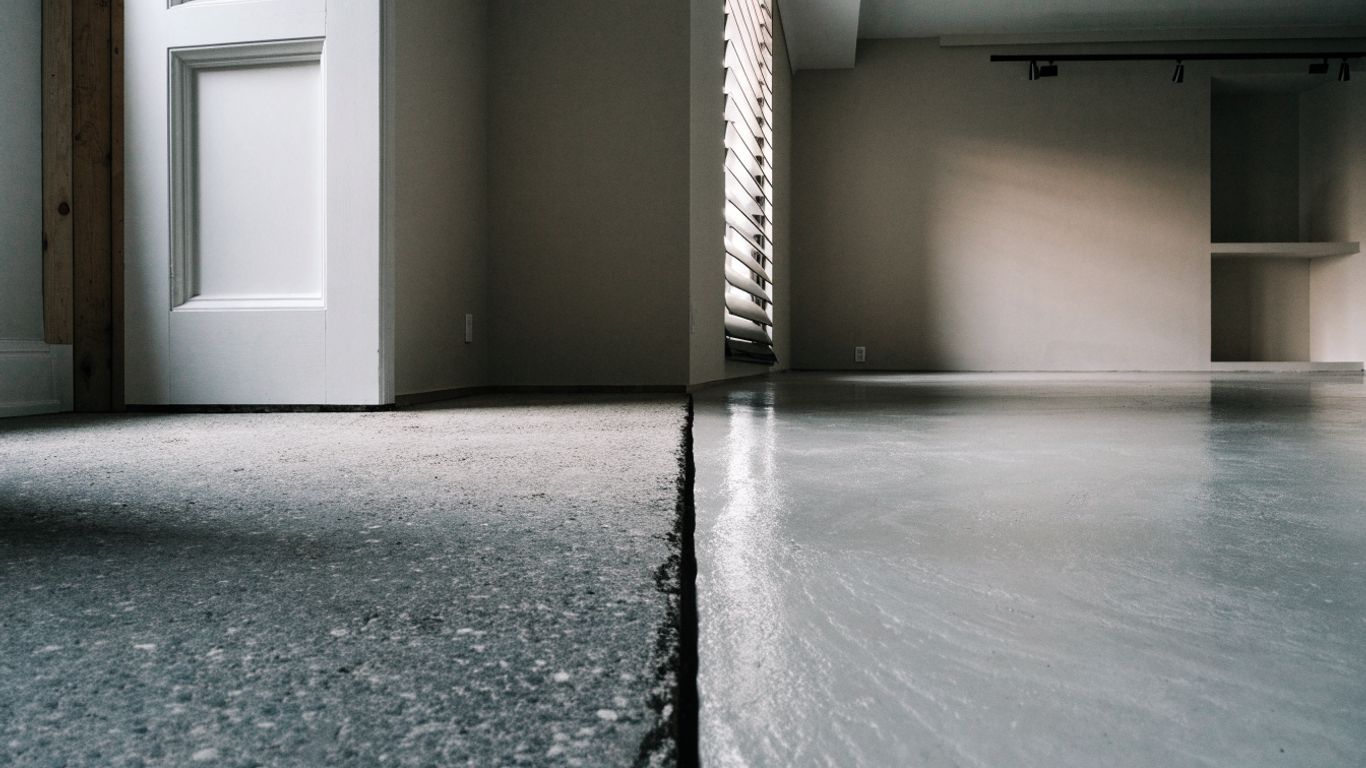
An existing slab is worth assessing when it is sound enough for the intended process and its surface can be prepared to the required finish. Previous flooring, coatings, repairs, or residues do not automatically rule it out, but they may change the work involved. A site visit and sample patch help establish what the slab can offer before a full quote is agreed.
Grinding Dynamics assesses existing floors with an on-site test patch and explains what may be achievable before quoting. Its existing-floor assessment describes that process and can help owners prepare useful questions about their own concrete.
Signs the slab may need repairs
Visible cracks, loose or damaged areas, old adhesive, paint, and uneven sections all deserve attention before work begins. Some imperfections may be repairable, while others can remain visible or affect the finish. The contractor should explain which items are included in the proposed scope and which require a decision or separate price.
Ask how repairs may appear after grinding and polishing. A repair can address a practical defect without disappearing visually, so clarity about the likely appearance is just as important as knowing the repair cost.
Costs and planning for a new concrete pour
A new slab shifts some decisions earlier in the project. The specification can consider color, aggregate, flatness, and the finish expected after grinding, but the pour and curing still influence the final result. Allow time for the concrete to reach the required age; Grinding Dynamics’ guidance specifies a minimum 28-day concrete age before polishing.
Before the pour, coordinate the slab specification and the polishing sequence with the builder and concrete team. The builder planning guide covers early specification, slab preparation, timing, site readiness, and trade coordination—details that can help avoid preventable delays and extra work.
Questions to ask before choosing either option
A practical conversation should establish the slab’s condition, the desired finish, and the work needed to reach it. For a new pour, include decisions that must be made before concrete is ordered; for an existing slab, focus on the test area and any repairs or residues. The answers can help you compare both routes on the same basis.
Ask the contractor:
- What does the sample grind show about the concrete and aggregate?
- Which repairs or preparation tasks are included in the estimate?
- What finish and sheen are achievable for this specific slab?
- What timing, access, and site preparation will the work require?
These answers will not remove every uncertainty, but they should make the main assumptions visible before you commit.
What a polished concrete quote should cover
A useful quote describes the process and the limits of the proposed work, rather than relying on a finish name alone. It should identify what happens to the slab, what appearance is intended, and how preparation or repairs are treated. It also needs to make clear what the customer must arrange before work starts. With those points written down, a price becomes much easier to compare and manage.
Grinding, polishing, and protective treatments
The scope should state the planned grinding and polishing approach, the intended aggregate exposure, and the sheen. If a densifier, sealer, or other protective treatment is specified, ask what it is and where it fits in the process. Treatment names and application details should be written into the estimate so expectations are clear.
A PeterFell C2-approved applicator such as Grinding Dynamics can assess the slab, recommend a finish, and provide a written quote. The quote should still identify the actual finish and work proposed for your floor rather than asking you to infer them from an approval or system name.
Repairs, edge work, and transitions
Repairs and perimeter details are easy to overlook when comparing headline rates. Ask whether crack repairs, patching, hand grinding at edges, work around fixtures, and transitions to adjoining floors are included. If a task is excluded, find out whether it can be priced now or will be treated as a variation if needed.
These details matter because the center of a large room may be straightforward while doorways and boundaries require careful work. A clear scope prevents the assumption that every visible edge or defect is automatically covered.
Site preparation and cleanup
The quote should explain what needs to be moved or protected before grinding begins and who is responsible for doing it. Confirm how dust is managed, what cleanup is included, and when the area can be used again. If access depends on other trades or building work, include those timing requirements in the plan.
A brief site-readiness discussion can prevent avoidable disruption. Make sure the contractor has the access, power, and work-area information needed to plan the job, and check what must be completed before the crew arrives.
Exclusions that may affect the total
Exclusions can be as significant as the listed tasks. Common points to clarify include removal of existing floor coverings, repair of hidden damage, moving furniture, work outside the agreed area, and additional preparation if the slab differs from what was visible during quoting. Ask how any variation will be approved and priced.
Do not treat an exclusion as a problem by itself; the key is knowing about it in advance. If an unknown condition could change the scope, ask for the contractor’s process for documenting it and obtaining approval before extra work proceeds.
Budgeting for a polished concrete floor
A sensible budget begins with an approximate area and a realistic description of the finish, then allows for what a site inspection may reveal. The published per-square-meter range can help orient early planning, but it cannot account for every slab or site condition. Request estimates based on the same scope and ask contractors to identify assumptions. That gives you a more useful figure than choosing from a generic rate alone.
Estimating costs for your floor area
Measure the area to be finished and note any separate rooms, thresholds, fixtures, or obstacles. You can multiply the approximate area by a broad guide rate to form an early budget envelope, but keep it provisional until the slab has been assessed. The Tauranga polishing overview describes how Grinding Dynamics assesses the slab, recommends a finish, and provides a no-obligation quote as a PeterFell C2-approved applicator.
Use the calculation to decide whether the project is in a workable range, not to set a firm allowance. If the floor includes complicated edges or known damage, tell the contractor early so the estimate reflects those details.
Allowing for repairs and other contingencies
Set aside room in the budget for conditions that may only become clear after inspection or test grinding. This does not mean assuming the worst; it means asking which uncertainties could change the scope and what the response would be. A written process for variations can help keep decisions controlled if hidden residues, repairs, or uneven areas are found.
Ask for a base price with any provisional or excluded tasks listed separately. That makes it easier to decide whether to address a repair now, accept a visible imperfection, or reconsider the finish before work begins.
Comparing polished concrete with alternative flooring
Compare polished concrete with other floors across the full ownership picture, not just the initial installation figure. Consider the required preparation, maintenance, comfort underfoot, expected use, and whether the existing slab makes the work practical. Concrete may be a poor fit for some spaces or preferences, and there is no need to force a comparison toward one answer.
The flooring options comparison looks at concrete alongside tile, vinyl, timber, and carpet across cost, lifespan, maintenance, comfort, and suitability. Use it to identify the trade-offs most relevant to your room and budget.
Getting accurate quotes from NZ contractors
Accurate quotes come from sharing useful information and asking for a defined scope. Provide floor dimensions, photos of the area and any visible damage, details of old floor coverings or coatings, site access constraints, and the finish you have in mind. For a new slab, involve the polishing contractor early enough to discuss color, aggregate, flatness, and timing before the pour.
Request a site assessment where appropriate and ask each contractor to quote the same finish and work. A specific estimate should state included preparation, repairs, polishing, treatments, cleanup, exclusions, and how changes will be handled; that is the basis for a fair comparison.
Conclusion
Polished concrete costs in New Zealand depend on the amount of preparation, the slab’s condition, the finish, and the practical details of the site. Treat broad square-meter rates as an early guide, then budget from a written quote that describes the process, repairs, treatments, and exclusions. The clearest decisions come from assessing the actual concrete and agreeing on a finish that suits both the slab and the space.
Frequently Asked Questions
How much does polished concrete flooring cost in NZ?
A broad public guide gives an indicative range of about NZ$40–$150 per square meter for grinding and polishing. The actual price depends on the slab, preparation, finish, area, access, and quote scope, so request a project-specific estimate.
What is the biggest factor affecting polished concrete cost?
There is no single factor for every project. Slab condition and preparation can make a substantial difference, while finish depth, floor layout, edge work, and access also affect the work required.
Is polishing an existing concrete slab cheaper than pouring a new one?
It depends on the condition and suitability of the existing slab and on the cost of preparing it. A new pour involves its own materials, construction, timing, and specification requirements, so compare both options using project-specific quotes.
Does full aggregate exposure cost more than a cream polish?
A deeper cut to reveal more aggregate can involve more grinding than a minimal-exposure finish, but the cost depends on the slab and the specified process. Ask for the difference to be described and priced for your concrete.
Can cracks be repaired before a concrete floor is polished?
Some cracks and damaged areas may be repairable, but the repair’s appearance and suitability depend on the slab and the defect. Ask which repairs are included and how they may look after grinding and polishing.
How long should a new concrete slab cure before polishing?
The project guidance in this article specifies a minimum concrete age of 28 days before polishing. Confirm the timing with the contractor for your particular slab and construction sequence.
What should I compare when reviewing polished concrete quotes?
Compare the same finish, aggregate exposure, grinding and polishing scope, repairs, edge work, protective treatments, cleanup, exclusions, and variation process. A written scope is more useful than comparing headline rates alone.